Story8′
An Evening at It's Just Another Pop-up
A self-reflexive surprise in a sea of pop-ups
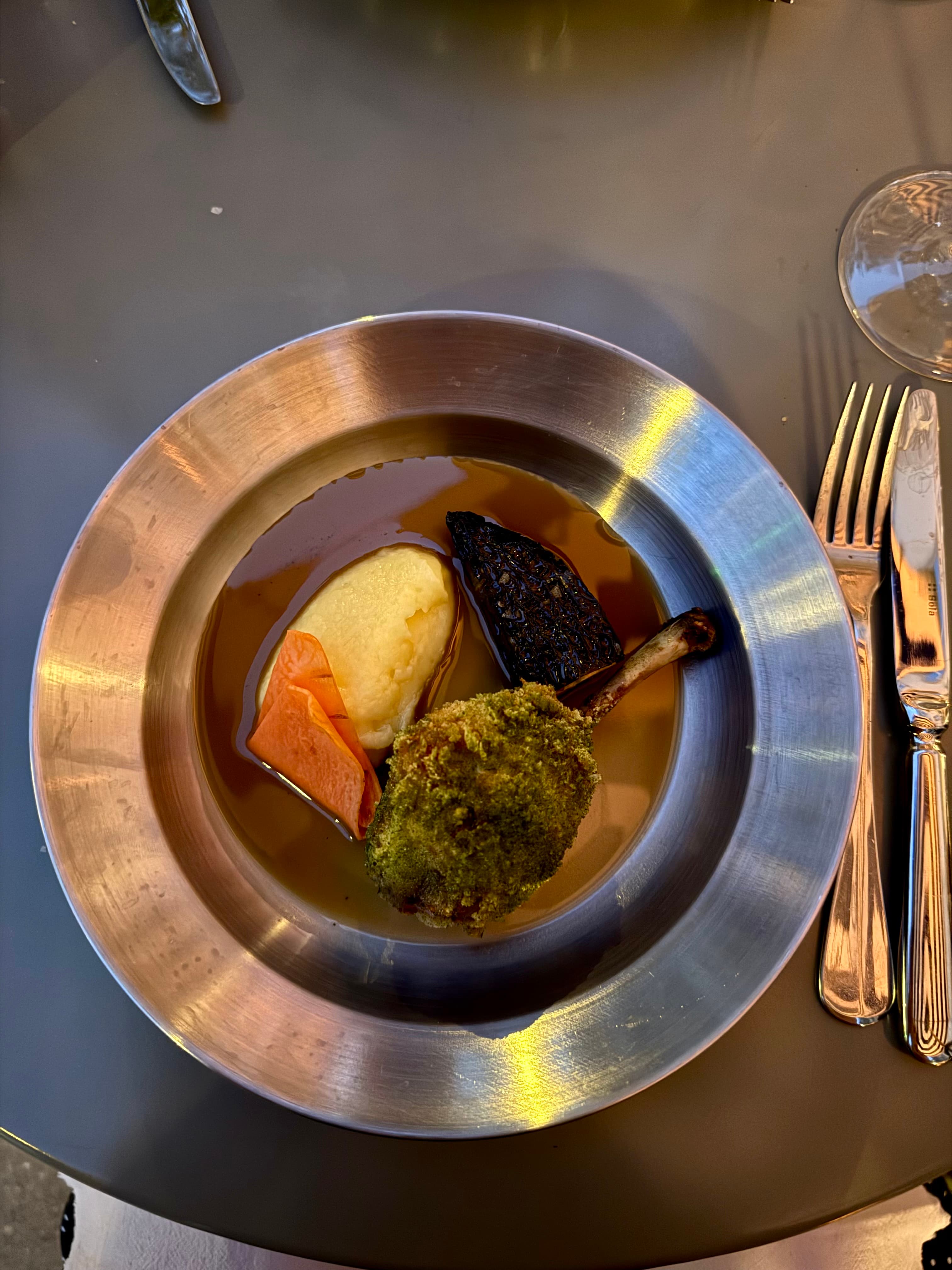
Chicken drumstick with morel, mashed potatoes, pickled carrots and a poultry velouté (velouté de volaille).
A self-reflexive surprise in a sea of pop-ups
Chicken drumstick with morel, mashed potatoes, pickled carrots and a poultry velouté (velouté de volaille).
New business openings in the neighborhood or even in the city always get me excited, especially if it’s a restaurant or a tavern. The ever-rising costs of opening a restaurant have created a need for ambitious people to set up restaurants which pop-up, like the term for them suggests. In the 90s in Cuba, many such small private restaurants operated out of homes, known as paladares. In the late 2000s, this concept also became popular in North America and Europe. Today, this ephemeral nature of a restaurant is a trend in many major cities, such as New York, London, Tokyo, and Paris.
In Zurich, I found myself at “It’s Just Another Pop-up,” a concept that is exactly the opposite of what its self-reflexive name implies. Upon arriving at Belmondo, the café-bar that hosted “It’s Just Another Pop-up” in June, we were greeted by Francis and the staff, along with the menu on the table. Maciej Kubala, the mind behind the pop-up with the cynical name, soon joined us to welcome us. We said yes to the three wines that came with the menu as an optional pairing, and soon our table was filled with small sharing plates, a concept I particularly appreciate and always prefer when eating with friends.
Zurich, Switzerland
Röschibachstrasse 75, 8037 Zurich
A café-bar in Zurich’s Wipkigen neighborhood, open all day, with a cool atmosphere and staff who always have a recommendation for you from their wine or cocktail menu.
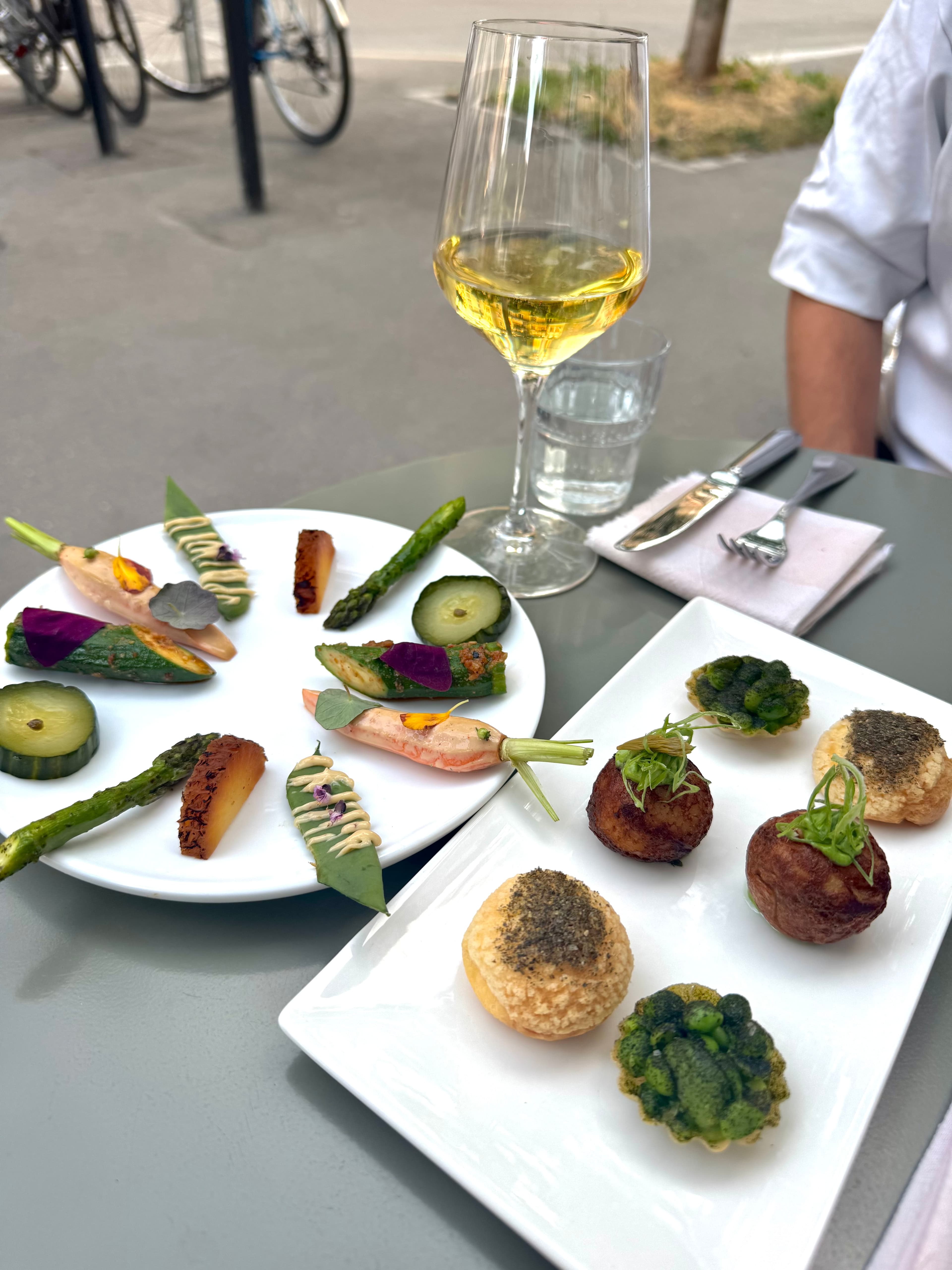
This time, Maciej whetted our appetites with a selection of bites consisting of takoyaki (たこ焼き), octopus meatballs, a tartlet topped with green peas, and a choux stuffed with Gruyère. A crudité, a plate of raw vegetables, carefully prepared, either pickled or dressed with a vinaigrette, was served alongside the selection of bites. Starting from the bottom, I was very impressed by the fact that the vegetables were hand-selected one by one and paired well with each other, as each one offered a distinct flavor inspired by the chef’s creativity. The wine pairing for these first courses was an aromatic Gewürztraminer from Georg Lingenfelder.
Georg Lingenfelder
Germany · Pfalz · Gewürztraminer · 2022 · 12.5%
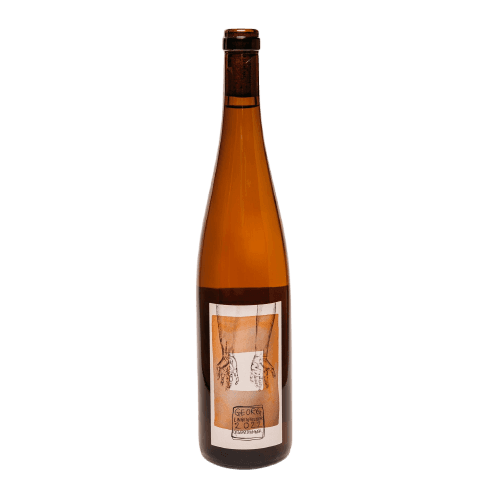
An intensely aromatic Gewürztraminer with a crisp and dry palate
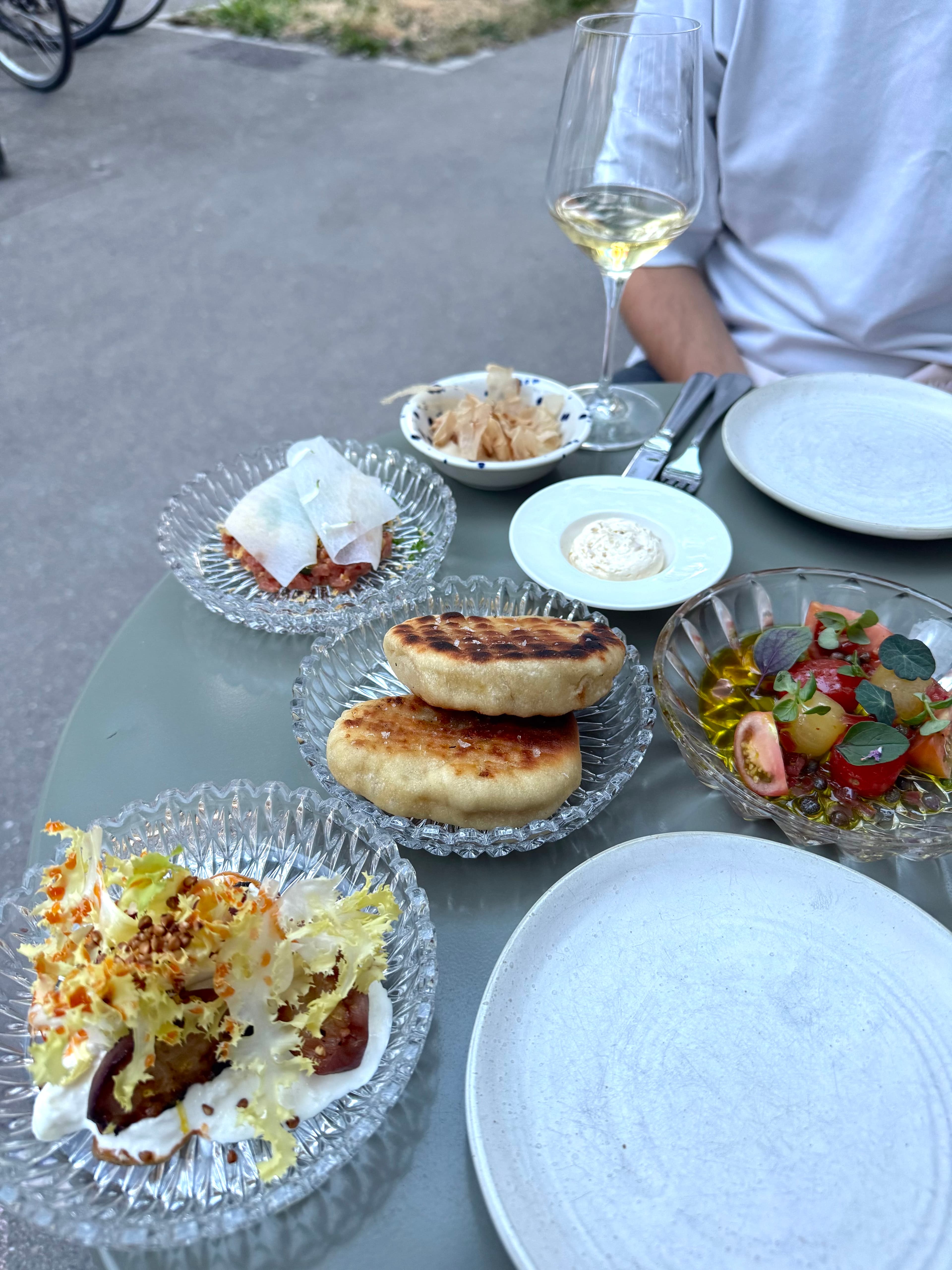
The next round featured some of my favorite dishes of the evening. So I’ll start with those: a very fluffy bread made from fermented potatoes and cream butter, the dish that showcases the chef’s Polish heritage like no other, and a salad with juicy peaches, stracciatella, and hot honey. The cherry tomatoes were a very refreshing addition to the table and were truly delicious, while the beef tartare with thin slices of daikon (大根), the Japanese radish, and cucumber, paired beautifully with the rest of the dishes. Finally, we tried a version of tonnato sauce with bonito flakes, while the wine pairing for this course was a blend organic wine from Marto.
The problem with the bread was that we each ate only one piece, but maybe it was better that way so we could comfortably move on to the rest of the dishes.
Marto
Germany · Rheinhessen · Silvaner, Chardonnay, Pinot Blanc, Pinot Noir · 2023 · 13.0%
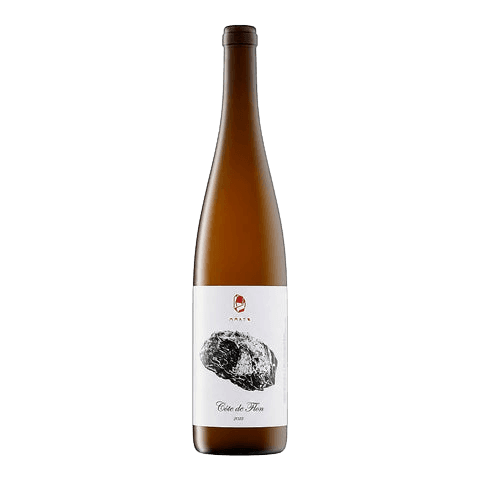
A dry white blend with pineapple aspects and high acidity
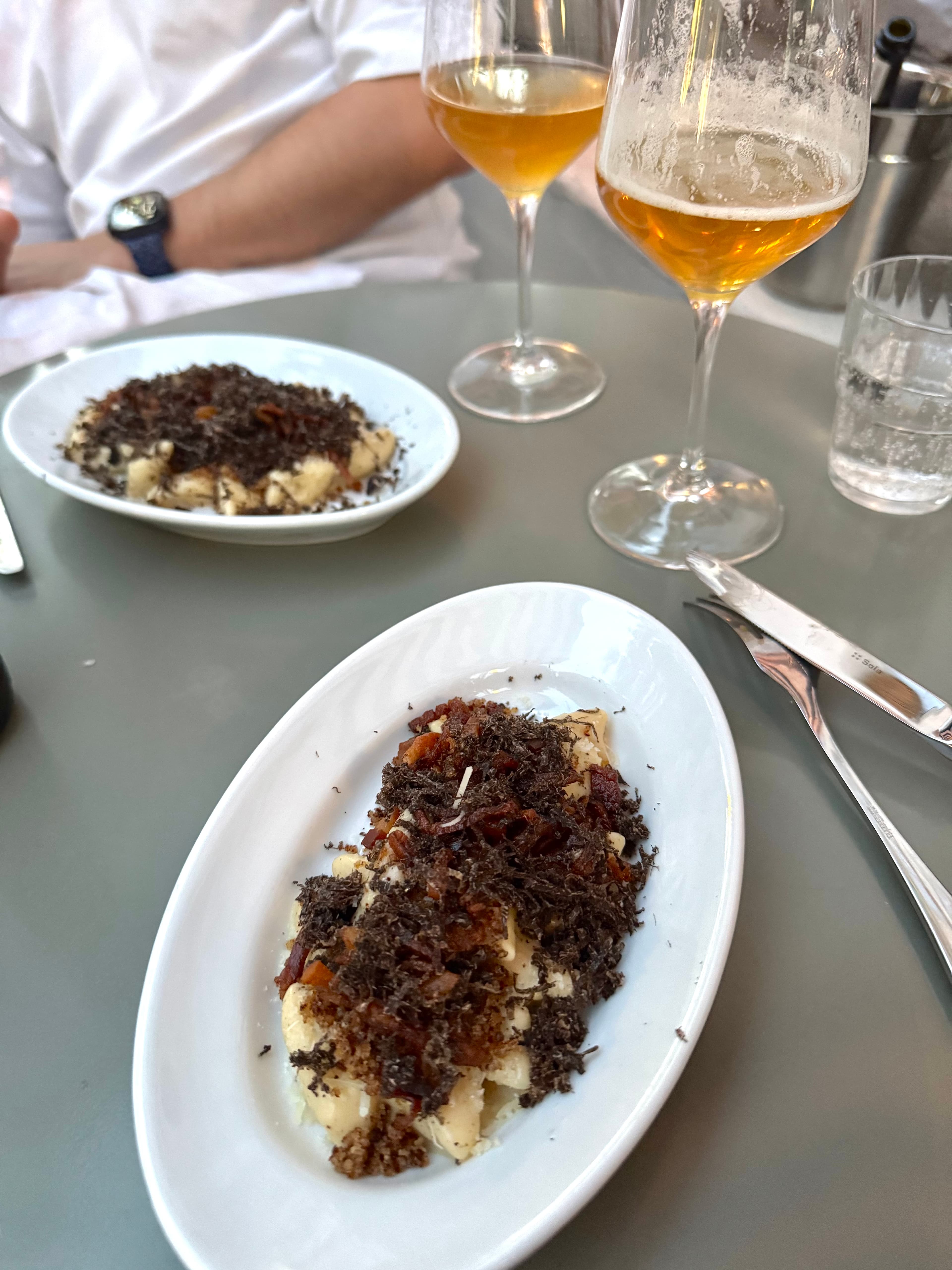
What followed was, admittedly, the surprise of the evening: the menu had one more addition that we hadn’t seen on Instagram. Gnocchi with guanciale and cacio e pepe, that is, pecorino cheese and pepper. Traditionally, the recipe isn’t made with gnocchi but with other types of pasta, but ever since I tried them for the first time, I’ve loved them. I love them even more when they’re handmade, and in this case, they also had truffle, which paired very well with the crispy guanciale. The second surprise alongside the gnocchi was the final wine of the evening, Hop(e), a play on words due to the addition of hops, which was a very refreshing choice reminiscent of an IPA-style beer.
Pure Joy Botanicals
Austria · Kremstal · Grüner Veltliner, Weißburgunder · 10.5%
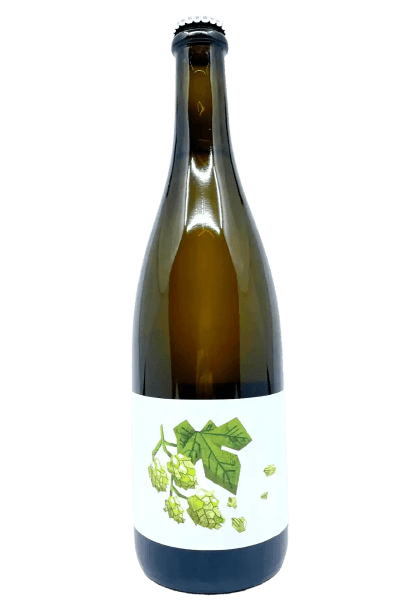
A herbal, sparkling wine with a light flavor reminiscent of an IPA-style beer due to its hops infusion
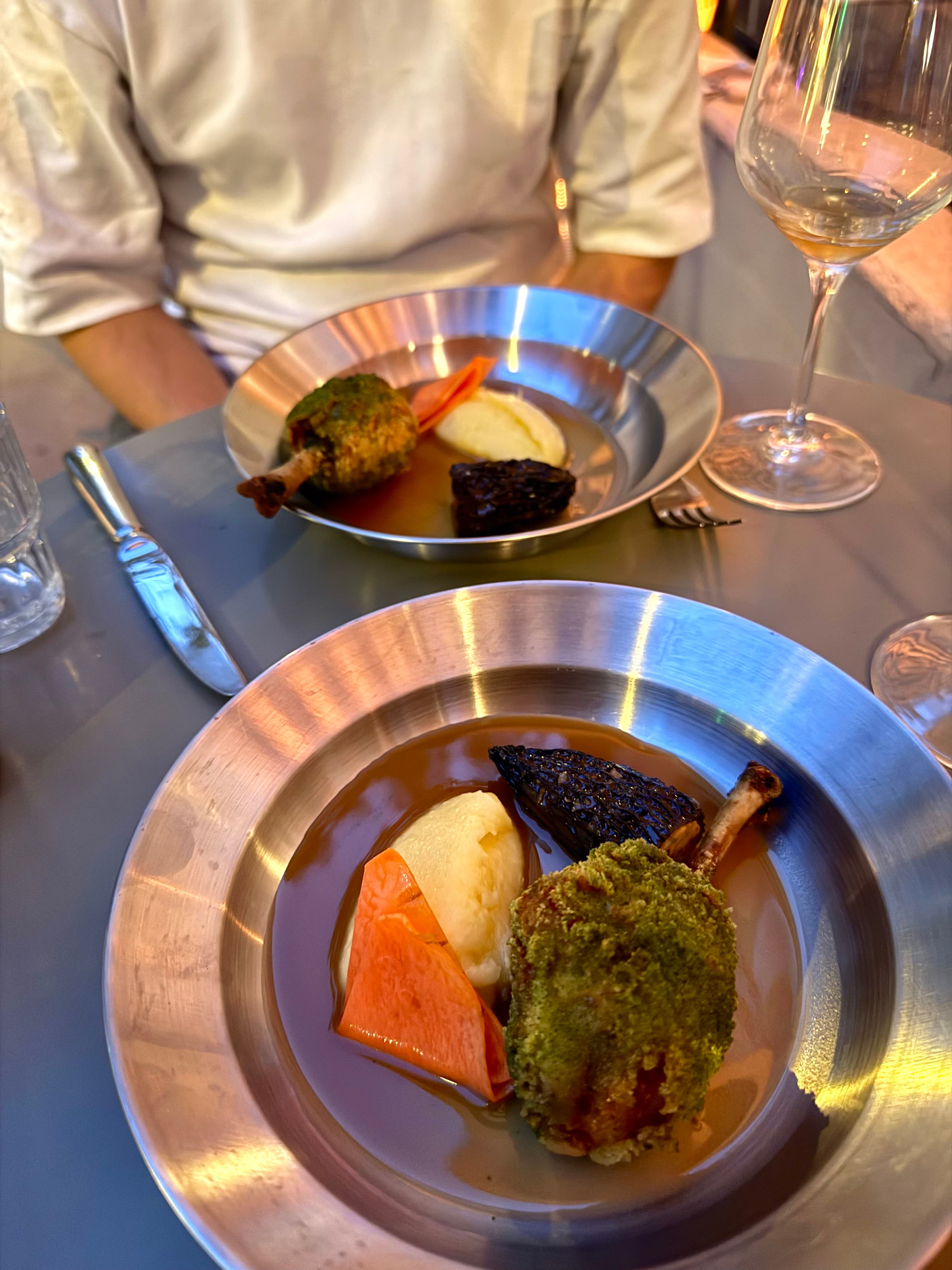
And now for the final dish, which takes center stage as it graces the cover of this feature. Chicken drumstick with morel, mashed potatoes, pickled carrots and a poultry velouté (velouté de volaille). The chicken had been marinated for 24 hours in buttermilk and koji (麹) solution, then coated in tempura batter and fine panko. The chef gave us instructions on the steps to follow to enjoy the dish:
Use a fork to pick up the morel and dip it into the buttery mashed potatoes. Then pick up the drumstick with our hands and devour it, dipping it now and then into the velouté at the bottom of the plate. We save the carrots for last and, of course, lick our fingers.
Let’s talk a little about the unfamiliar words I encountered when this particular dish was served. It was the first time I’d tried morels, and now I rank them very high on my list of favorite mushrooms, a list that wasn’t particularly long to begin with. Koji is a filamentous fungus traditionally used in Japanese cuisine to ferment foods such as miso, sake, and soy sauce; and here it gave Maciej’s dish an explosive flavor.
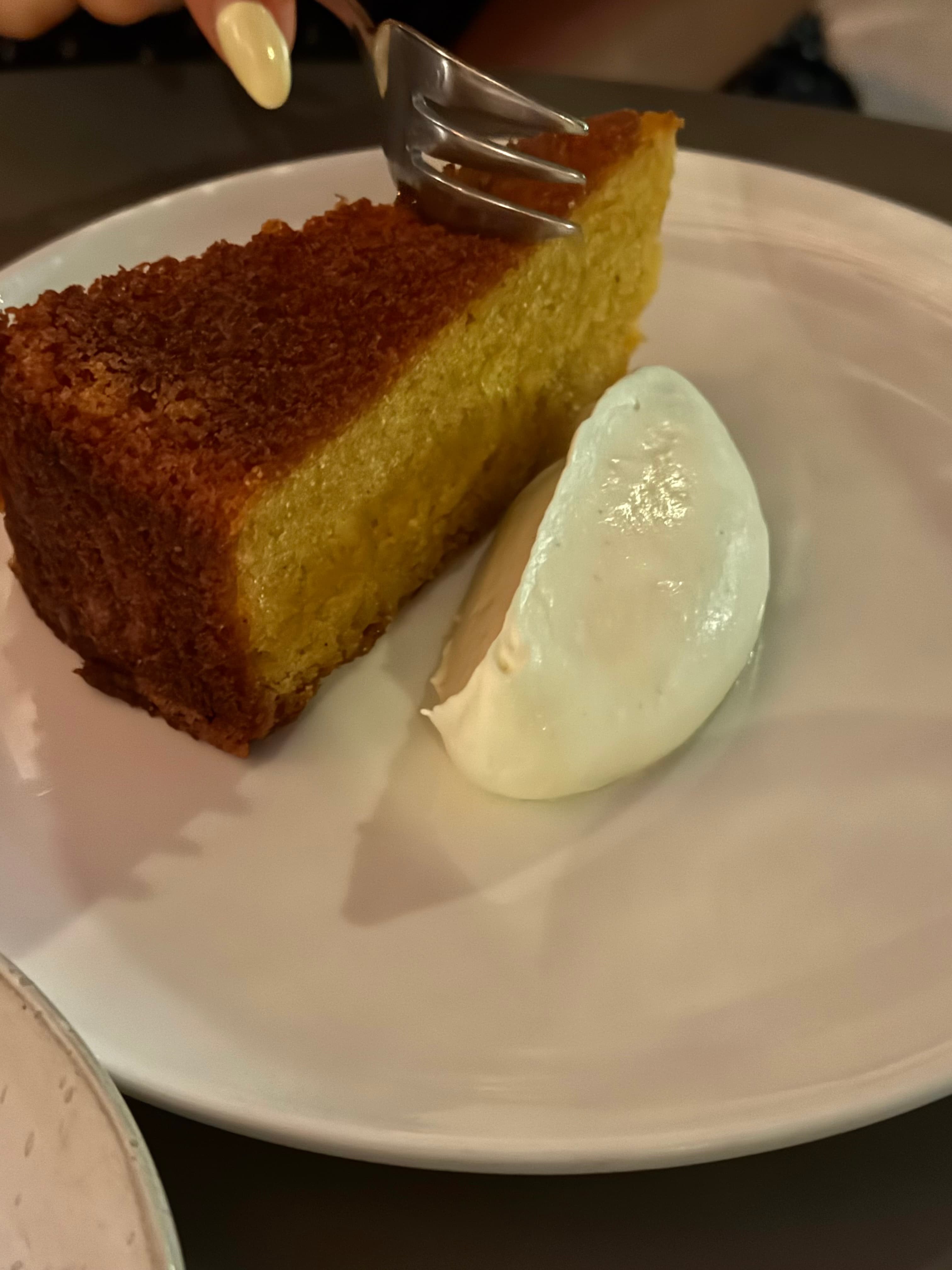
Unfortunately, the time eventually came for dessert, which Maciej had announced would be our final course. We’d caught a glimpse of it as it was being served to other tables that had started their dinner earlier than we had, and we couldn’t figure out what it was. On the menu, it was listed as gâteau normand, a cake typically made with apples in Normandy, France, but we didn’t see any apples and had to wait until we tasted it to figure out what it was. First, a shot of homemade kombucha made by Maciej was brought to our table, and we were encouraged to try a little at first and then pair it with the dessert. The cake arrived with some crème fraîche, and we didn’t hesitate to try it.
With each bite of the cake, a sip of kombucha, light and refreshing flavors that blended harmoniously with the rich crème fraîche on every forkful.
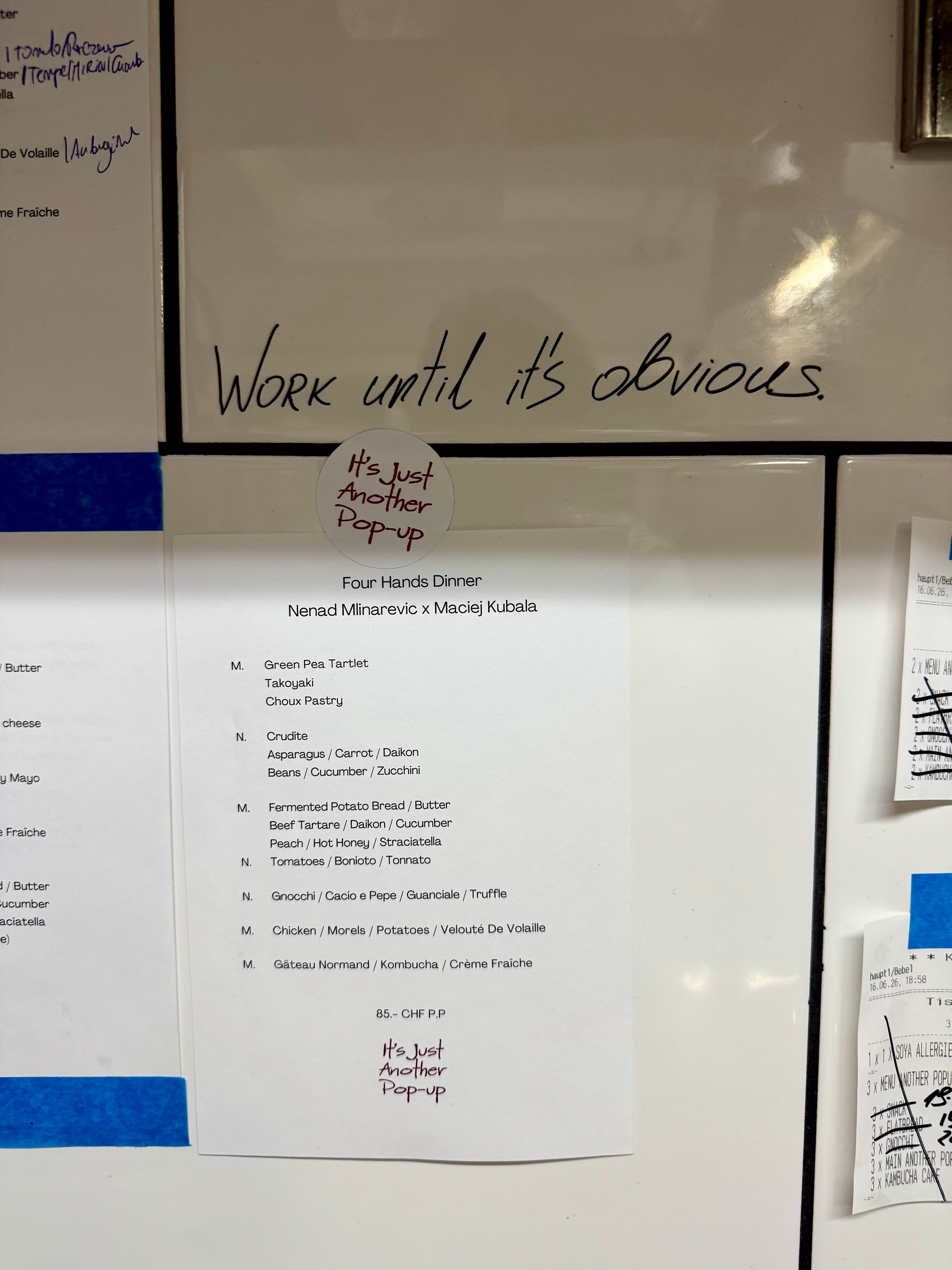
All good things must come to an end, but you can move on to other things that are just as good. Just before we got the check, Maciej invited us into the kitchen, which was located behind a door on the ground floor of the building that houses Belmondo. For the purposes of “It’s Just Another Pop-up”, Maciej and Aitor, whom we met in the kitchen, cleaned and prepared the kitchen that Belmondo doesn’t use on a daily basis. We saw a spotless prep station with all the ingredients neatly arranged in their proper places, as well as the dough for the bread made with mashed potatoes, which was clearly the dish on the menu that made Maciej beam with pride. The phrase they wrote on the wall with a marker explains why we liked this particular project so much: “Work until it’s obvious.”
The love with which this project was built is felt by those who visited and tasted the food. We were also lucky enough to have stolen one last bite before leaving Maciej and Aitor's kitchen.
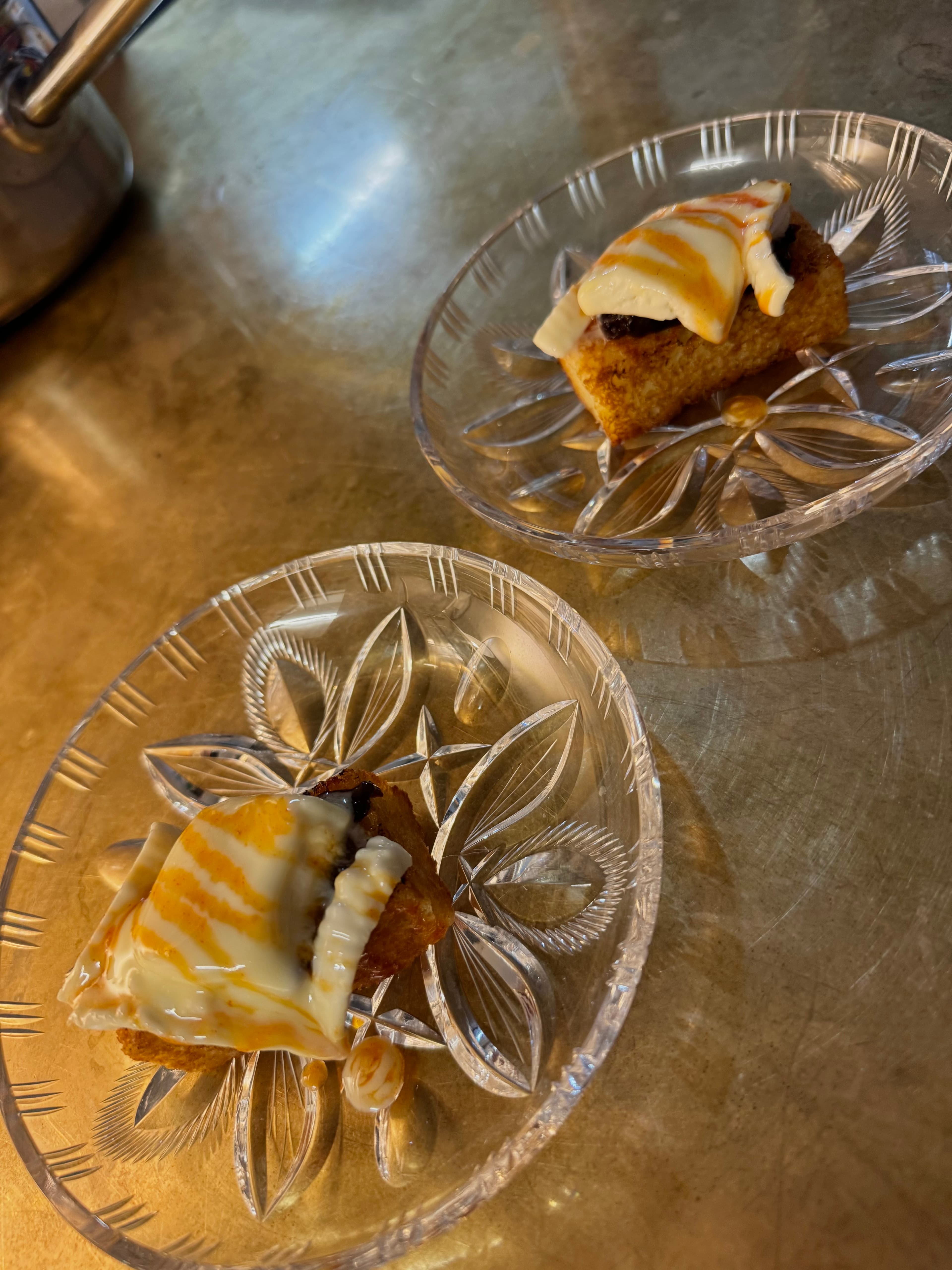
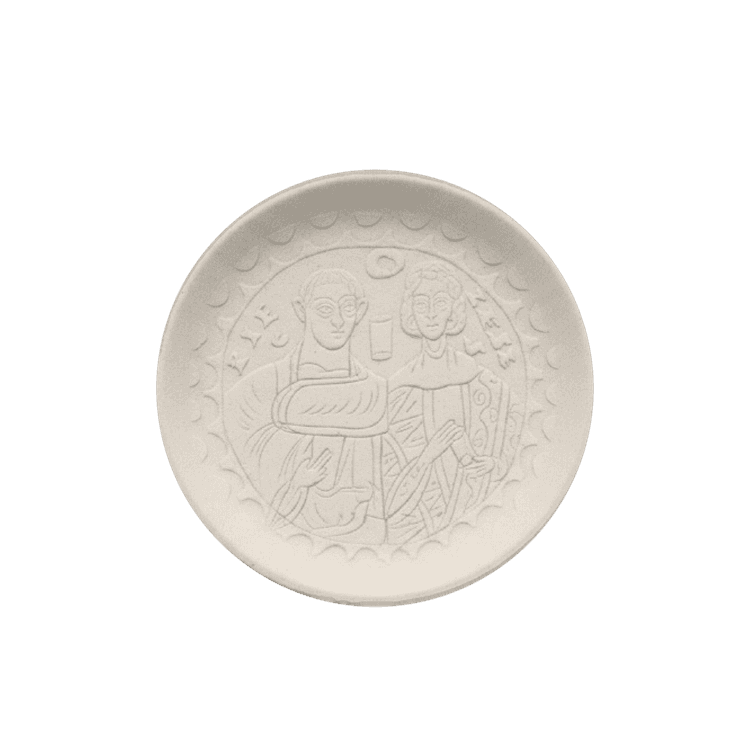
The farewell dish, a spur-of-the-moment creation, was a shokupan (食パン) with handmade plum jam from Maciej’s grandmother, topped with brillat-savarin melted with a blowtorch and fermented honey. Throughout the evening, the plates looked like ones my grandmother would have hidden in a cupboard to use for special occasions, and this particular dish with Maciej’s grandmother’s jam, it rounded out the experience, and we tried very hard not to make it disappear in one bite. Brillat-Savarin is the chef’s favorite cheese, as he told us, a French cheese made from triple-cream, lightly soft-ripened cow’s milk, and I’m really looking forward to seeing where else I’ll get to eat this cheese because I’m still thinking about it.
Maciej may have stopped bringing us his dishes that night, but we wanted to learn more about how he built this particular project, while of course always looking forward to our next meeting. So we asked him right there in his kitchen. And with these answers, we’ll say goodbye to him, only for now.
Q: What drove you to create a pop-up that is made for reappearing in spots across the city?
Working in restaurants means constantly adapting to rules and routines. With this project the only constant is change. It’s dynamic, exciting, and I love the thrill of constantly creating something new.
Q: What motivates you to come up with dishes and what are your gastronomic influences?
Have you ever been working on your computer when, out of nowhere, a window pops up and starts playing music in the background? That’s a bit like how ideas for new dishes come to me. I’ll be thinking about something completely different, and suddenly a flavour combination, a memory, or a technique appears in my mind. Once that happens, I can’t stop thinking about it until I’ve explored it.
My biggest gastronomic influences come from my experiences, the places I’ve lived and travelled, and the people I’ve cooked with. I don’t try to recreate specific dishes. I prefer to let those experiences shape something that feels new.
Q: What do you feel is lacking in Zurich today?
There are too many food influencers and not enough food critics with real knowledge. I think there’s a difference between creating content and offering thoughtful, informed criticism. Honest, knowledgeable feedback helps chefs grow and pushes the dining scene forward.
Q: What can we expect from your next pop-up venture?
As usual: sexy food and me in the kitchen.
Zurich, Switzerland
A traveling pop-up featuring dishes that blend the influences and culinary background of chef Maciej Kubala, appearing at various locations throughout Zurich.