Story8′
Food as a ritual
4 meals I'll never forget from Japan
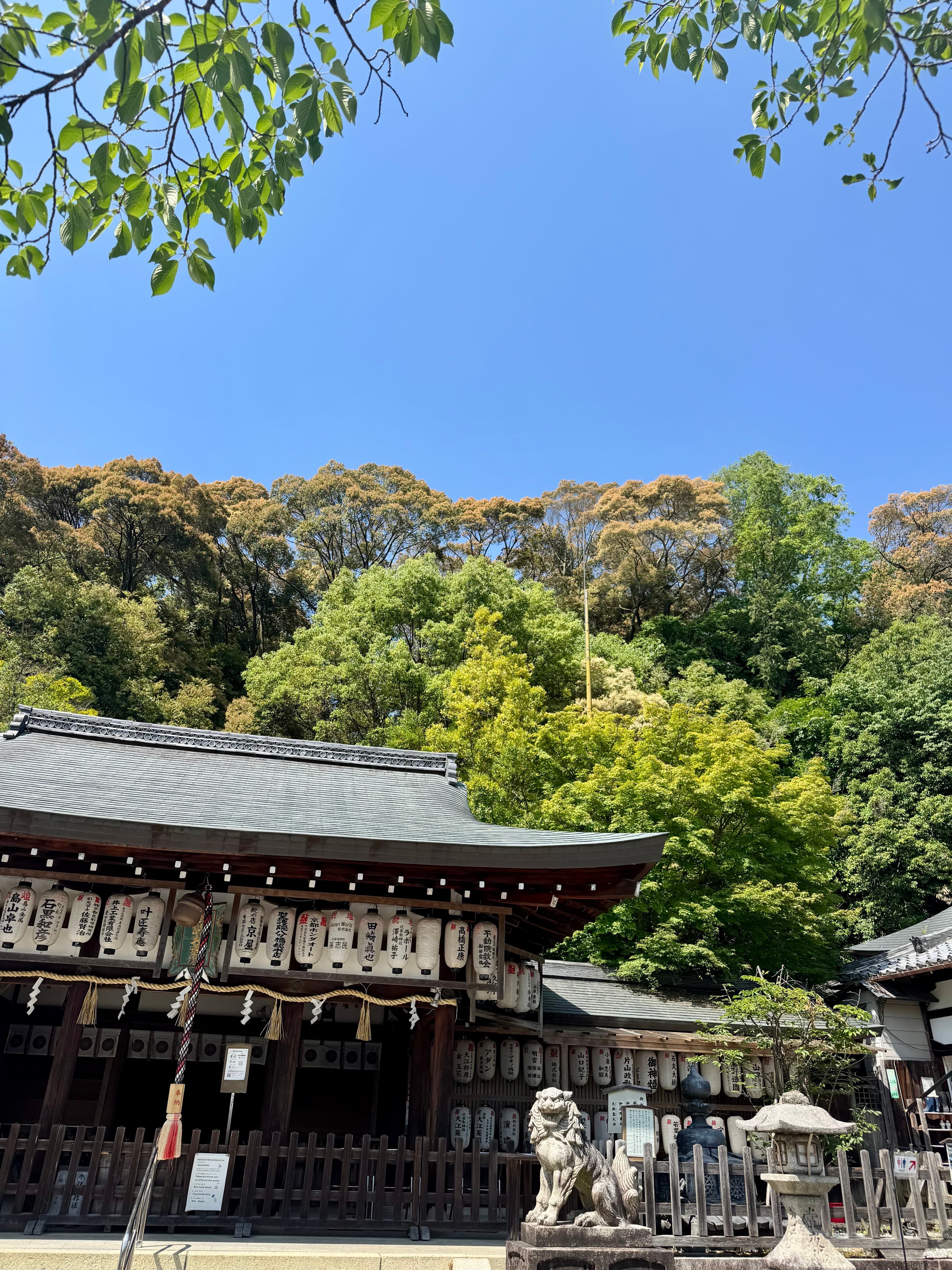
The Kumano Nyakuoji Jinja shrine (熊野若王子神社) in Kyoto, one of the three shrines dedicated to the Kumano Gongen (熊野権現) deity.
4 meals I'll never forget from Japan
The Kumano Nyakuoji Jinja shrine (熊野若王子神社) in Kyoto, one of the three shrines dedicated to the Kumano Gongen (熊野権現) deity.
Every time I watched an anime character eat or drink with enthusiasm, my desire to explore gastronomy in Japan grew a little stronger. The ritual of a meal draws me automatically into a culture. The gastronomic experience always begins the moment you walk into a place, whether it's the growl of your stomach if you're hungry or a knot in your stomach wondering if you'll find a table. The question is always the same. Can this place accommodate you and your group? If yes, prepare yourself for a series of experiences you'll carry with you for a long time.
Of course, the Western habit of booking ahead helps, especially when we're talking about a space with limited seats, which is hardly unusual in Japan. It's perhaps also connected to your chances of finding a menu that has been fully translated into English: the smaller the restaurant, the fewer those chances. Once you're seated, though, certain differences become easy to notice.
The best places are the ones you find tucked away in alleyways, where you end up using your hands to communicate.
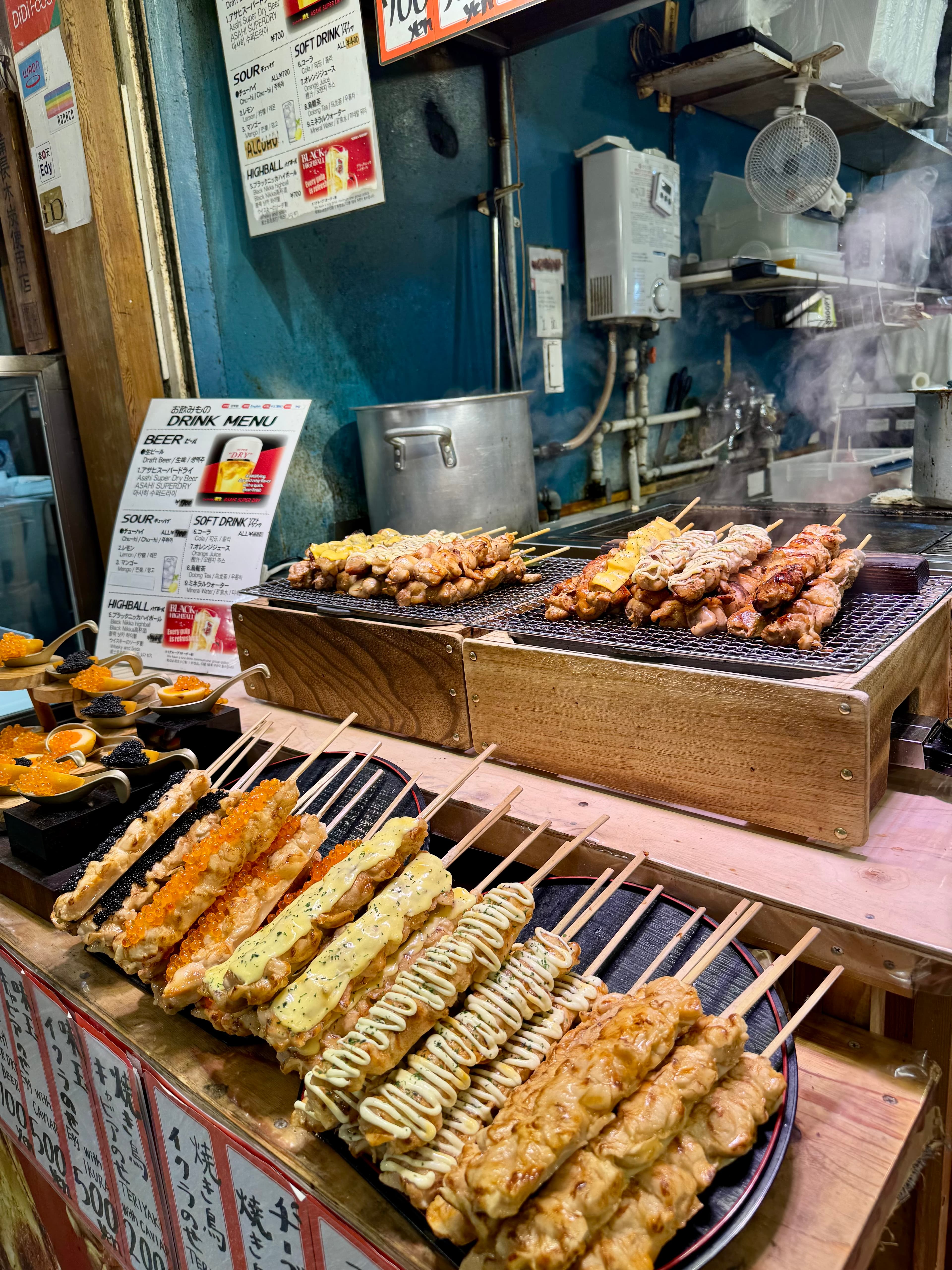
It quickly becomes clear that the primary goal of most establishments is to offer you warmth alongside your meal. The oshibori (おしぼり), which are damp towels, sometimes warm and sometimes less so, sometimes scented with mint or tea leaves, are almost always the first thing to arrive at your table.
Then, or perhaps simultaneously, the menus arrive. Sometimes you'll need to translate them with your phone, and sometimes they'll earn you a spontaneous laugh because of their machine translation. The horumonyaki (ホルモン焼き) dishes, translated in some menus as “hormone beef,” were probably the funniest.
You'll often find a QR code you can scan to order immediately, which streamlines things nicely since everyone in the group can add items to the list. If you ask for recommendations, your hosts will suggest a dish with particular enthusiasm.
Something that gave me great pleasure was how much care went into serving them ice cold for maximum enjoyment. Beers from Japan's Big Four are available worldwide. But drinking them from a frozen glass in Japan was always one of the favourite moments of the day.
It came as no surprise that we were largely in the dark when it came to the various types of sake (酒). Sake, however, is made from fermented rice and has a lower alcohol content than drinks I'm used to having. What struck me was that proprietors called it nihonshu (日本酒), meaning Japanese drink. My personal standout was the Ohmine 3 Grain, made with yamada nishiki (山田錦), a rice variety typically cultivated in Hyogo Prefecture. This rice is known for its water-absorbing qualities, and the sake takes on a very elegant flavour that is strongly reminiscent of muscat.
Ohmine
Japan · Mine, Yamaguchi · Yamada Nishiki (山田錦) · 14.5%
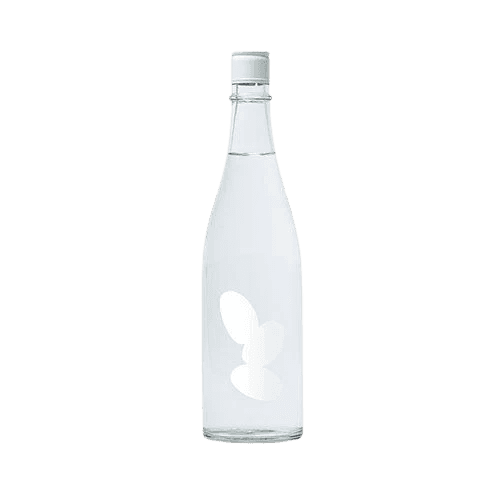
A sake with an elegant flavour, strongly reminiscent of muscat
Back to the food: I can say that a beautiful chaos reigns in my head. In Japan, restaurants are a sacred matter and visits to them a daily ritual. Every day included a visit for lunch and one for dinner. So as not to do anyone a disservice, and also so that I can actually close this article sometime this year, I'll limit myself to writing about 4 experiences that stood out in my heart. I begin in no particular order:
Tokyo, Japan
4 Chome-14-13 Tsukiji, Chuo City, Tokyo 104-0045
A tiny sushi shop in the Tsukiji Fish Market. It serves delicious sushi made with fresh fish sourced directly from the market. There are also sushi options with wagyu beef for those who don’t eat fish. The entire staff, and especially the chefs behind the counter, make the experience unique. Visit the market and this particular shop after 8 p.m.
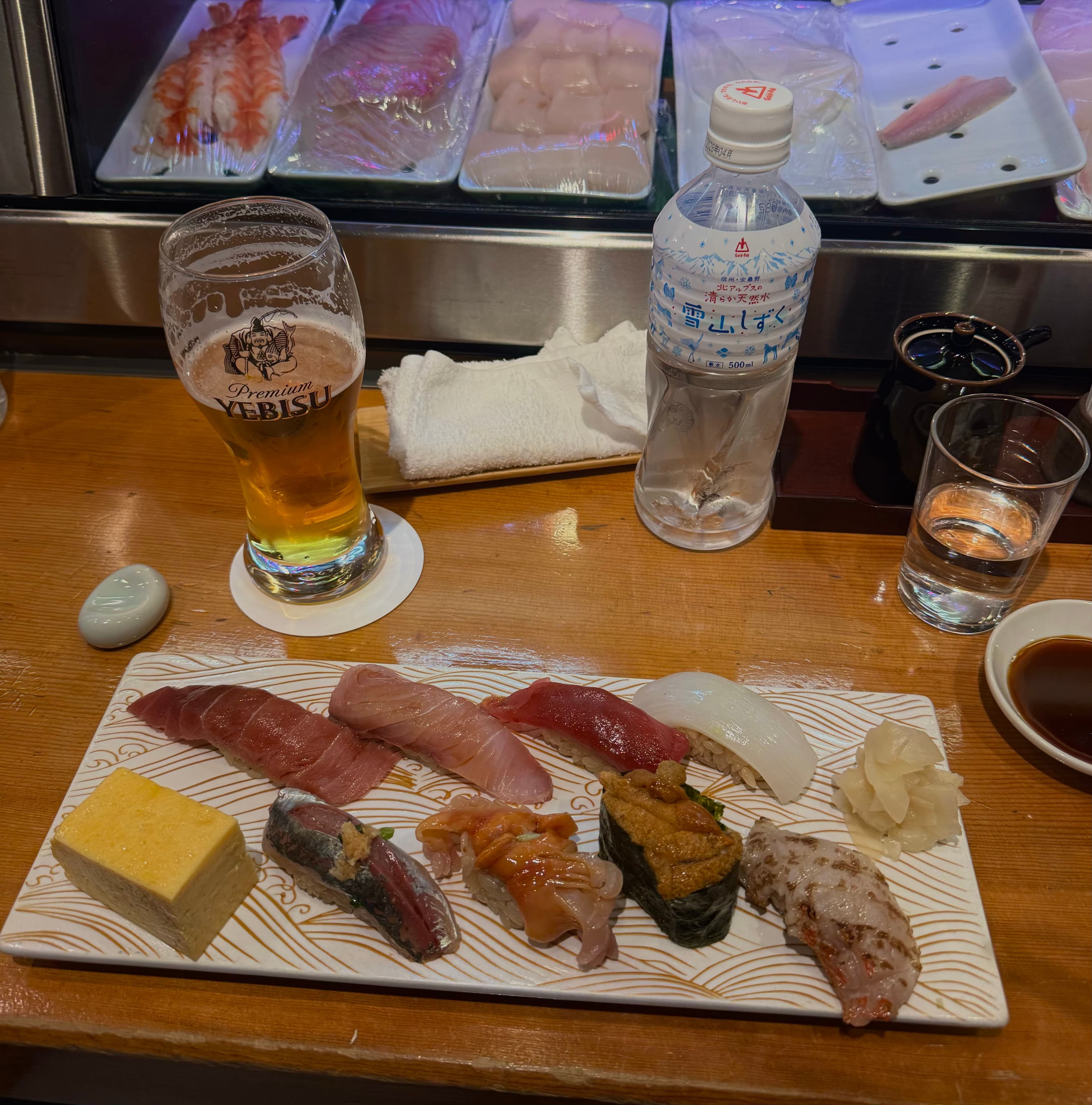
A unique discovery in travels far from the familiar is that the clichés of a place don't translate one to one. That evening at Tsukiji in Tokyo I was hungry and spotted a gentleman outside a sushi restaurant calling for customers. An automatic no from my European-conditioned brain. After asking whether they served wagyu sushi, because one member of our group doesn't eat fish, we went in. The staff greeted us warmly and we sat at the traditional bar to eat, being perhaps the last customers of the day. We ordered an assortment of sushi with various fresh fish from the local market, and beers.
Very quickly, the sushi assortments arrived in front of us. The staff thanked us again and again for our presence, as though we were the first customers of the day. The reason this place stands out for me is that fish often carries a strong smell; here, everything was as fresh as you can imagine. Alongside the sushi, the only accompaniments were pieces of pickled ginger and that particular Japanese delicacy of the slightly sweet egg omelette, tamagoyaki (卵焼き).
When I told them that my limited Japanese was the result of years of watching anime, and mentioned that my childhood favourite was Dragon Ball, one of the itamae (板前) proceeded to act out Majin Buu's line.
チョコになっちゃえ!
Turn into chocolate!
Like children eating chocolate, we left behind empty plates and walked away with full stomachs and full hearts. Nothing compares to seeing someone who works in gastronomy genuinely happy.
Kyoto, Japan
266 Nishinishikikojicho, Nakagyo Ward, Kyoto 604-8226
An izakaya with the typical bar in the middle, as well as other tables for larger groups. The dishes are small but perfect for ordering the entire menu, featuring classic Japanese flavors that harmoniously blend with Western touches. The Bingo team will explain the dishes as they bring them out and will also recommend local beer and sake selections.
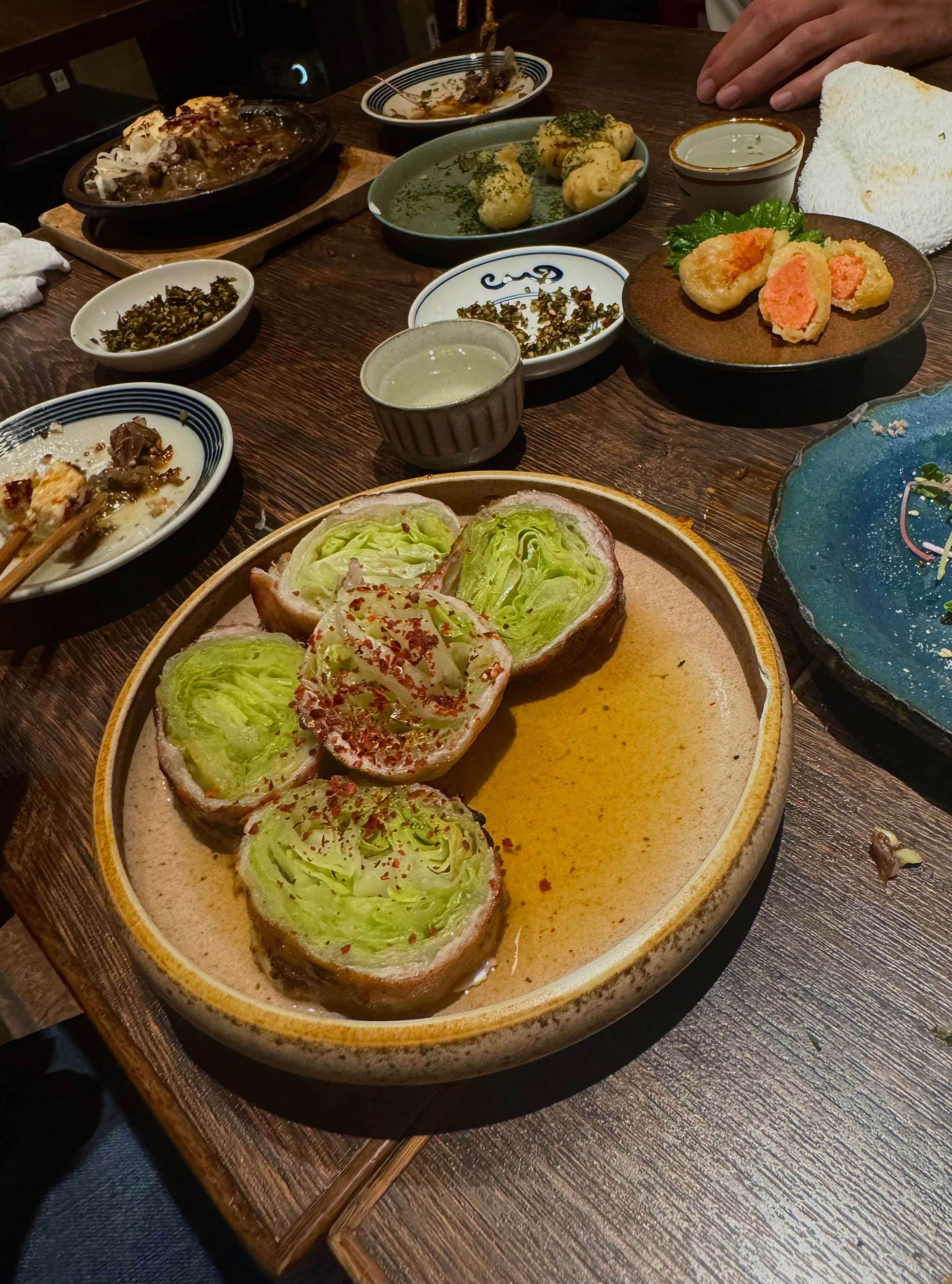
The saying “ask and you’ll find your way” didn’t come about by accident. We found ourselves on Nishinishiki-kojitso street after asking the barman at Mononoma where to eat. That's how we stumbled upon the izakaya (居酒屋) Bingo in Kyoto. I walked in confidently thinking it's the spot they told us at the bar and only realized it wasn't while writing this post. It reminded me a little of the concept of a gastro-taverna, where traditional dishes made room for new ideas and flavours. After settling into a table towards the back of the restaurant and glancing at the menu, we decided to order the whole thing. Alright, maybe 2 or 3 dishes escaped us and a few others had run out, but you get the idea.
We didn't miss the tomato salad that had run out, and although I'm not generally fond of tofu, one outstanding dish was the steaming slow-cooked beef with tofu. The walnuts with sweet miso, the soft-boiled eggs with truffle mayonnaise, the spring rolls with chorizo, and especially the pork belly slices wrapped in lettuce left us open-mouthed.
I would go back to try the dishes that had run out, and to eat the pork belly and lettuce rolls again, which we had probably ordered 3 times.
The charming plates on which the small dishes are served give the space a very familiar aesthetic; and how could you not feel at home when the dishes arrive quickly and without pause so that no one is left wanting.
Osaka, Japan
1 Chome-2-11 Kawarayamachi, Chuo Ward, Osaka 542-0066
A must-try spot for sandwiches in a narrow alleyway in southern Osaka. A small but exceptional selection on a menu featuring sandwiches that are bursting with flavor in every bite. Stop by Tokito for lunch, and they’ll be happy to make it on the grill right in front of you.
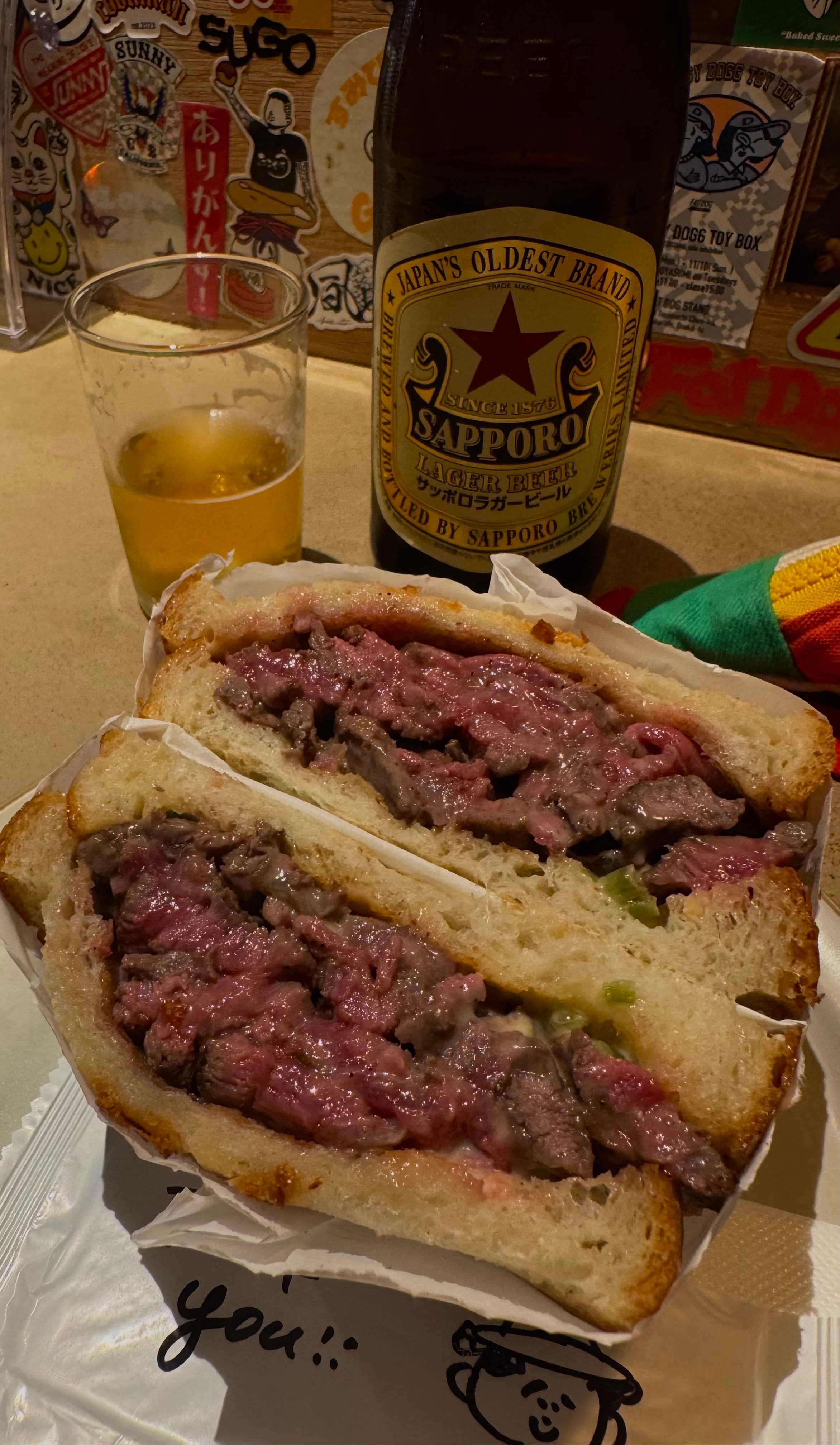
Actions speak louder than words, and here Tokito triumphs with sandwiches of 3 to 5 ingredients. Walking in, you find limited seats to enjoy one of 5 sandwich options: egg, chicken, or wagyu (和牛) beef, which between us is what makes this place unmissable. Wagyu beef steak and wasabi (ワサビ) mayonnaise inside a fluffy shokupan (食パン), the cloud-soft bread that became popular in Japan after the Second World War due to rice shortages. The egg sandwich is equally airy, and the eggs have a whipped-cream texture that makes you want to learn how to make it at home.
The wagyu sandwich stands out for one simple reason. It says a great deal with very few ingredients. The wasabi mayonnaise is what holds the bread’s slices together around the beef, doing exactly what it needs to and no more, and each bite brings both a moment of joy and a sense of sadness as you watch the sandwich disappear.
Strictly available in small quantities, it's a sandwich I think about often and can't wait to try again someday.
Osaka, Japan
2-5 Yamazakicho, Kita Ward, Osaka 530-0024
A place for authentic Japanese ramen, made with great care by the chef and owner. Head there for a quiet dinner paired with cold draft beer and to enjoy a dining experience just like a meal prepared by a family member.
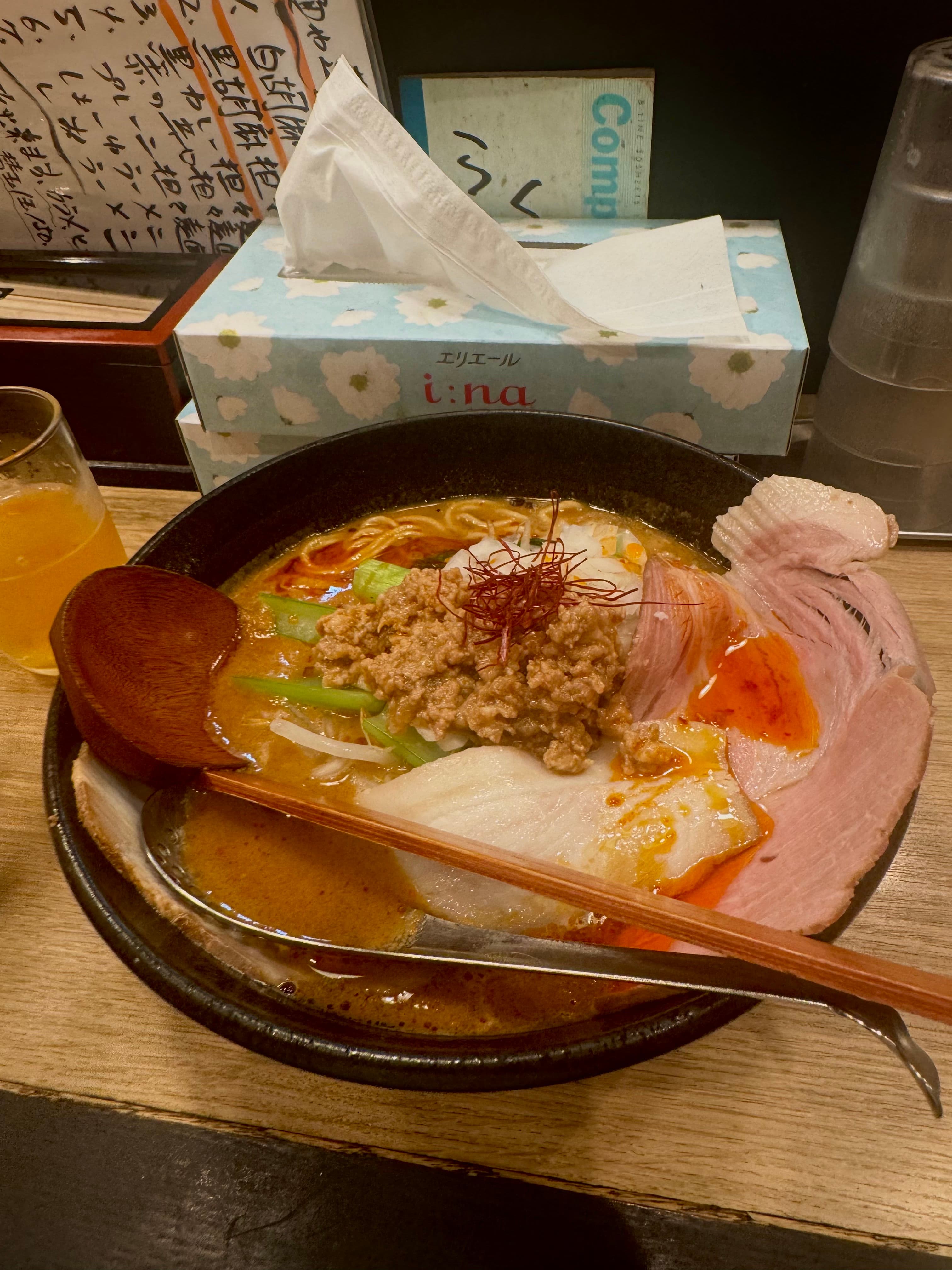
Noodle tavern: Lotus, Dignity and Kindness. Sometimes the language barrier is what holds us back from understanding the meaning behind the name of a restaurant we visited. In this menya (麺や), the noodle tavern with such an imaginative name, we discovered what these words truly mean. The owner is a tall, slender man who presides between the wooden bar and his kitchen, cooking ramen to earn his living. He settled for a heartfelt arigatou (ありがとう) when I told him it was the best ramen I had ever eaten.
Without much preamble, we started with some gyoza (餃子), steamed dumplings filled with vegetables and meat that melted in the mouth. The undisputed star, however, was a rich, slightly spicy ramen. Swimming in the broth were ground meat, spring onions, nori (海苔), which is dried seaweed, and thin slices of chashu (チャーシュー), the slow-braised pork so characteristic of Japanese cuisine. With the first sip of the broth, I immediately felt the warmth the owner was trying to convey.
After the customary exchange of thank-yous, the owner asked us to write our names on a small wooden plaque along with a message in our own languages. He wanted to hang it on the wall alongside other small plaques left by previous guests. When we asked if there was any sake, he told us he didn't sell it, but that he would give it to us as a gift.
The gratitude we received simply for accepting his hospitality is something I will keep in my heart forever. And that is what made this ramen so delicious.
That's all folks, but for me a door opened into a world I had only glimpsed from a distance. I ate as noisily as the most enthusiastic characters in manga for teenagers and clinked my beer and sake with a smile. I deliberately excluded any mention on the coffee culture, as we've experienced it every day in Japan, but this chapter of the trip deserves its own story. It was only the beginning, and if you too are looking for hospitality in places far from the familiar, Japan is somewhere that lovers of food will be rewarded beyond measure.