Story9′
Sunday Cheese Hunt in Paris
From the Batignolles-Monceau markets to the table
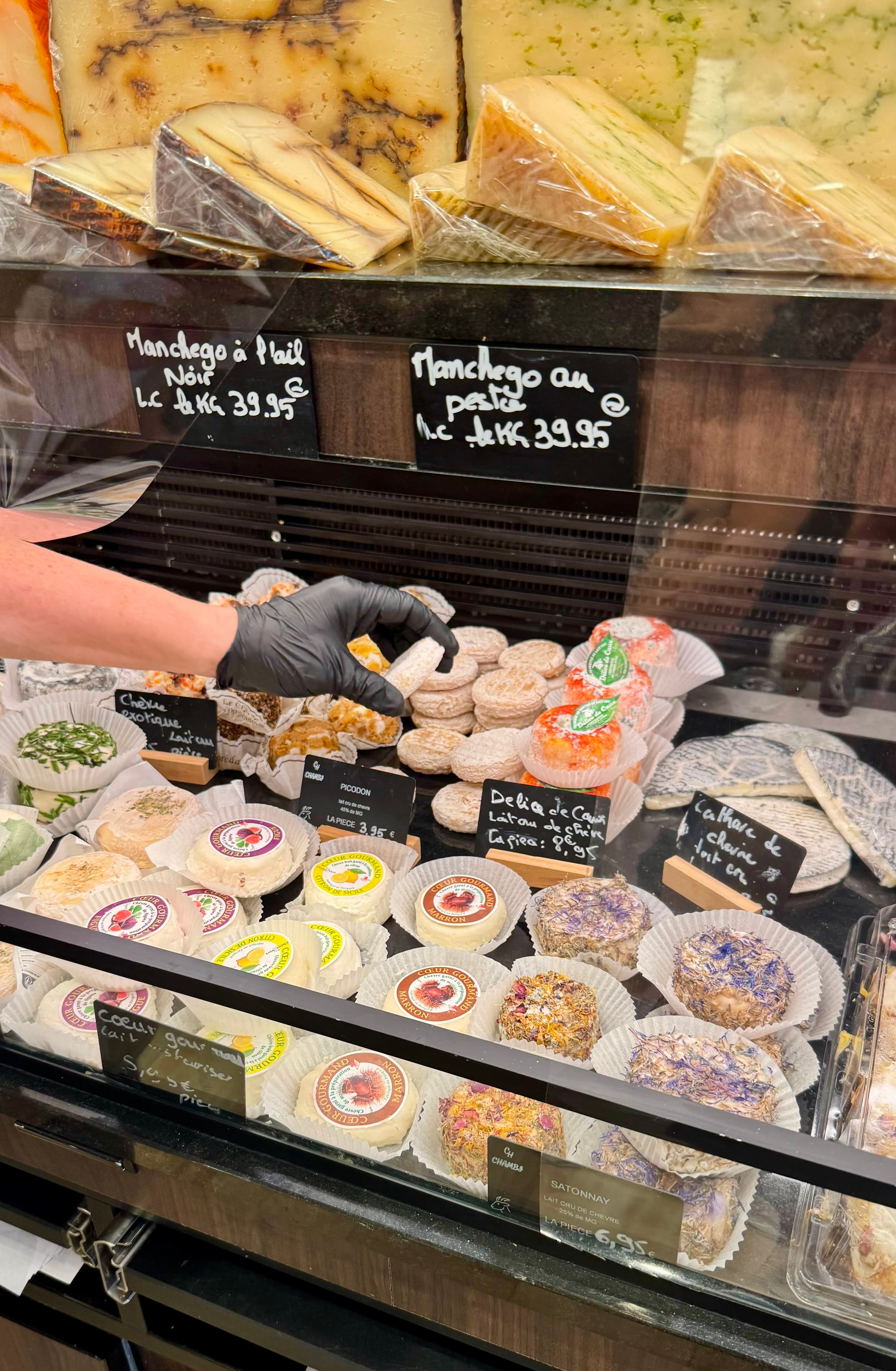
The cheese seller picks up a piece of cheese from one of Chambi's display cases.
From the Batignolles-Monceau markets to the table
The cheese seller picks up a piece of cheese from one of Chambi's display cases.
Stereotypes usually have some basis in reality, though that doesn’t mean they aren’t reinforced by their constant repetition, whether by word of mouth or, increasingly, online. And while in France and Paris you often see people holding a baguette in their hand, you’ll see the same thing in many other parts of the world where bread is part of the culture. The baguette stands out because it’s quite long and sticks out of the paper bag.
But having read the title, you might be wondering why I’m writing about bread and stereotypes. The search for the traditional baguette (baguette tradition) is driven by the need to pair it with the cheese that makes up the cheese platter on the table every day, and on Sundays, too. The Sunday table can be set very casually with a trip to the markets, and that’s exactly what I’ll be sharing today.
I have sat at countless Sunday dinners around the world, especially in Greece, Italy, and Spain, where the preparations take the host quite a bit of time and may even require some advance work. That Sunday, somewhere in Batignolles-Monceau, things were quite different. We met around ten in the morning in front of the Chambi cheese shop to pick out—or, in my case, to just browse—cheeses from the display case.
With the exception of a few items such as wines and marmalade, the shop was packed from the entrance with display cases full of every kind of cheese. The international cheeses were mainly located in the outdoor area of the shop, while inside we saw mostly French cheeses, with the exception of manchego and its many varieties. The bottles of wine had already been selected the day before and were waiting for us in the refrigerator the previous evening: two white wines from the medieval town of Sancerre.
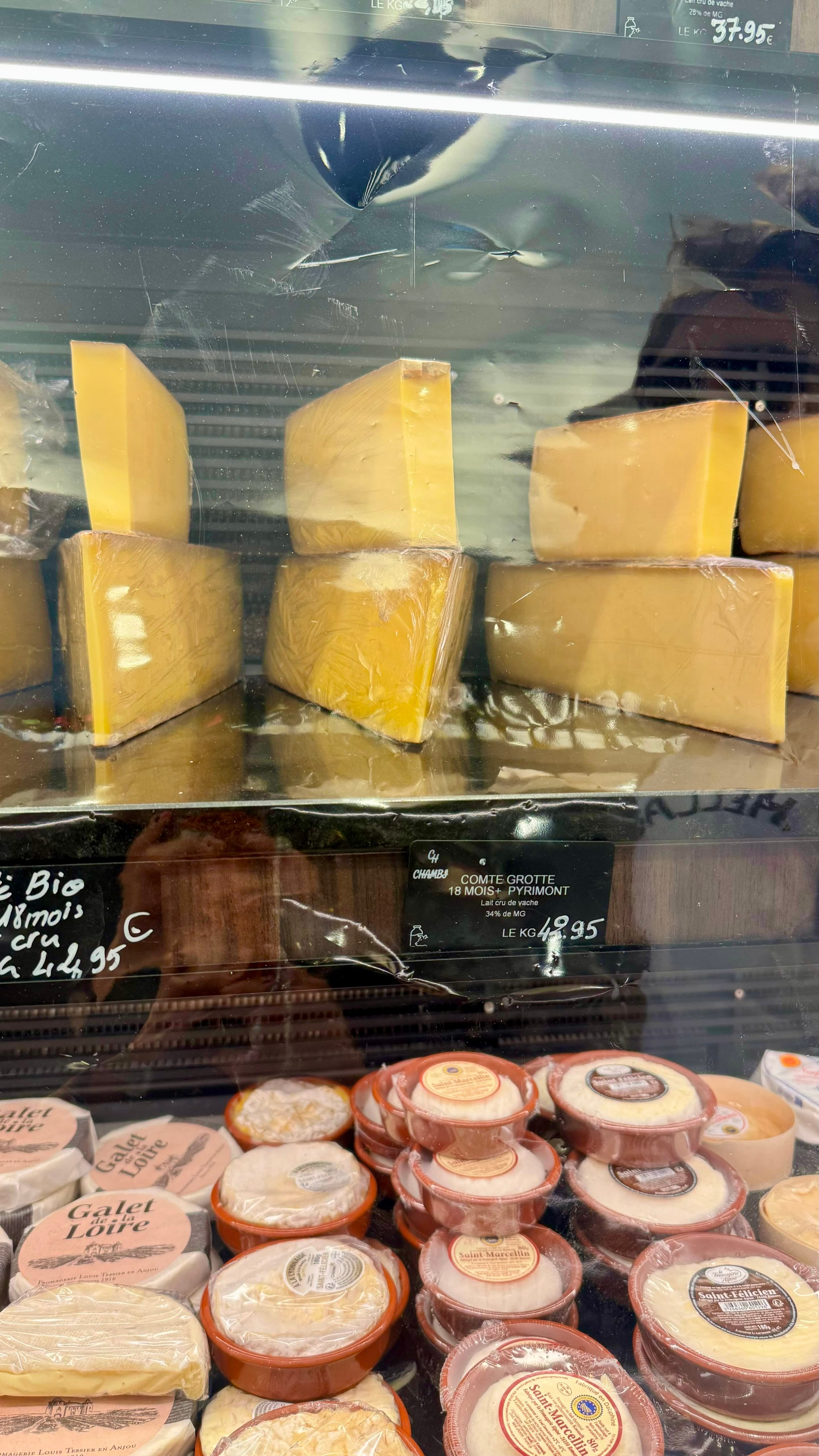
So we were looking for cheeses that would pair well with our wines, and the two people at the shop were there to help us. As I mentioned earlier, I was merely an observer, watching the selection process and listening to the conversations that took place during it. I was impressed by how seriously both the staff and the customers took this process, which took just as long as choosing a new cell phone at a similar store.
The most important part of enjoying food, from a simple piece of cheese to the most elaborate recipe, is passion for food itself.
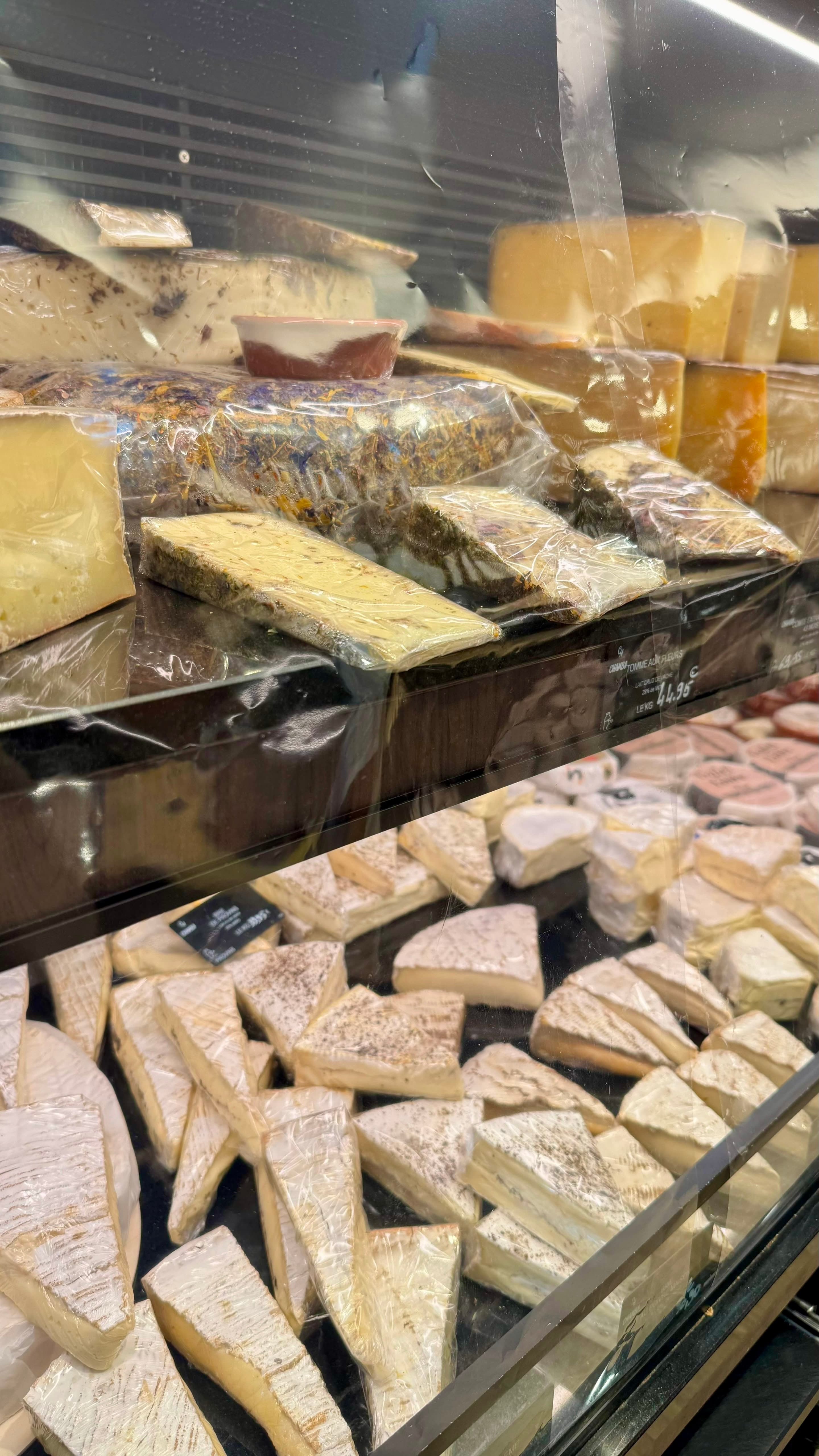
This specific cheese shop wasn’t particularly large, but it would have taken me hours to choose cheeses, since I'm very fond of them and I wouldn't want to pass up a single one. In the end, with the cheesemonger’s recommendations, we settled on six cheeses, each unique in texture, flavor, and appearance, which promised to spark lively discussions at the table. It wasn’t the first time I tried cheese in Paris, but this time I wanted to see the purchasing process as well. Something I really enjoy is hearing how people react in their own language while they’re eating or trying to decide what to eat. And the desire for goat cheese was constantly expressed with one phrase, as if it were the most common sentence in the French language.
On prend du chèvre?
Should we get some goat cheese?
Paris, France
81 Av. de Saint-Ouen, 75017 Paris, France
A neighborhood cheese shop in Paris's 17th arrondissement with friendly service that offers a wide selection of French and international cheeses.
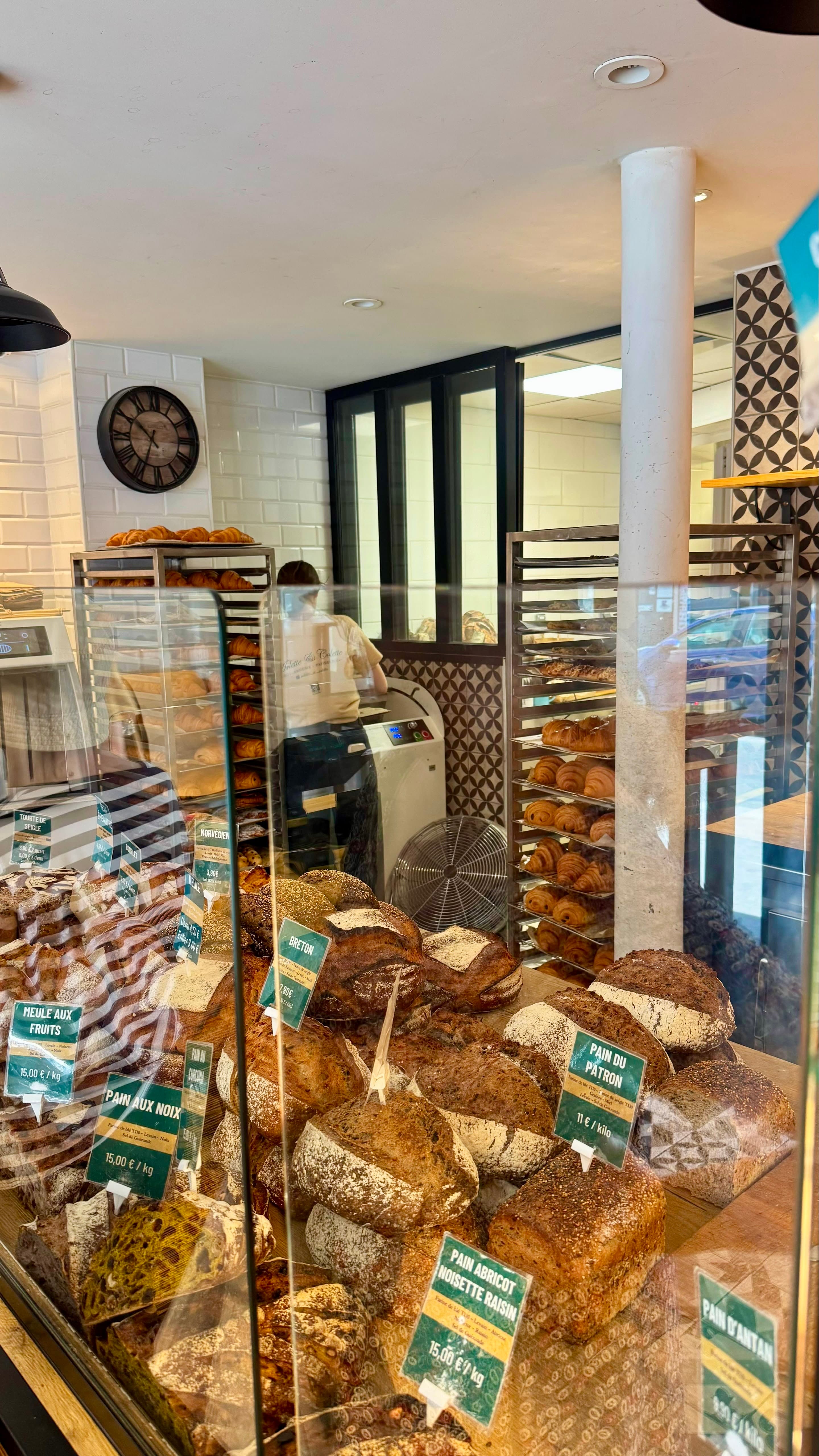
I may have started this post with the baguettes, but buying the actual bread ended up coming last. After picking up our cheeses, we headed down a side street very close to the cheese shop, where there was a bakery and pastry shop with a very cheerful name: Arlette et Colette. Upon entering the bakery, we saw a crowd of people waiting in line for bread while simultaneously casting sidelong glances at the display cases, perhaps to make up their minds or simply to catch a glimpse of the delicious treats. Not abandoning my observing role, I eventually learned that in addition to the essential traditional baguette, we’d also be getting pain d’antan. This bread is essentially made the old-fashioned way and is an integral part of the table in France. It’s a sourdough bread that’s left in the kitchen for many hours to rise before baking. Finally, we gathered all the pieces to set this table and made plans to meet again in a few hours to enjoy them.
Paris, France
4 Rue de La Jonquière, 75017 Paris, France
A bakery and pastry shop in Paris’s 17th arrondissement that focuses on local products and their production. Behind the business are two friends who run a total of three stores.
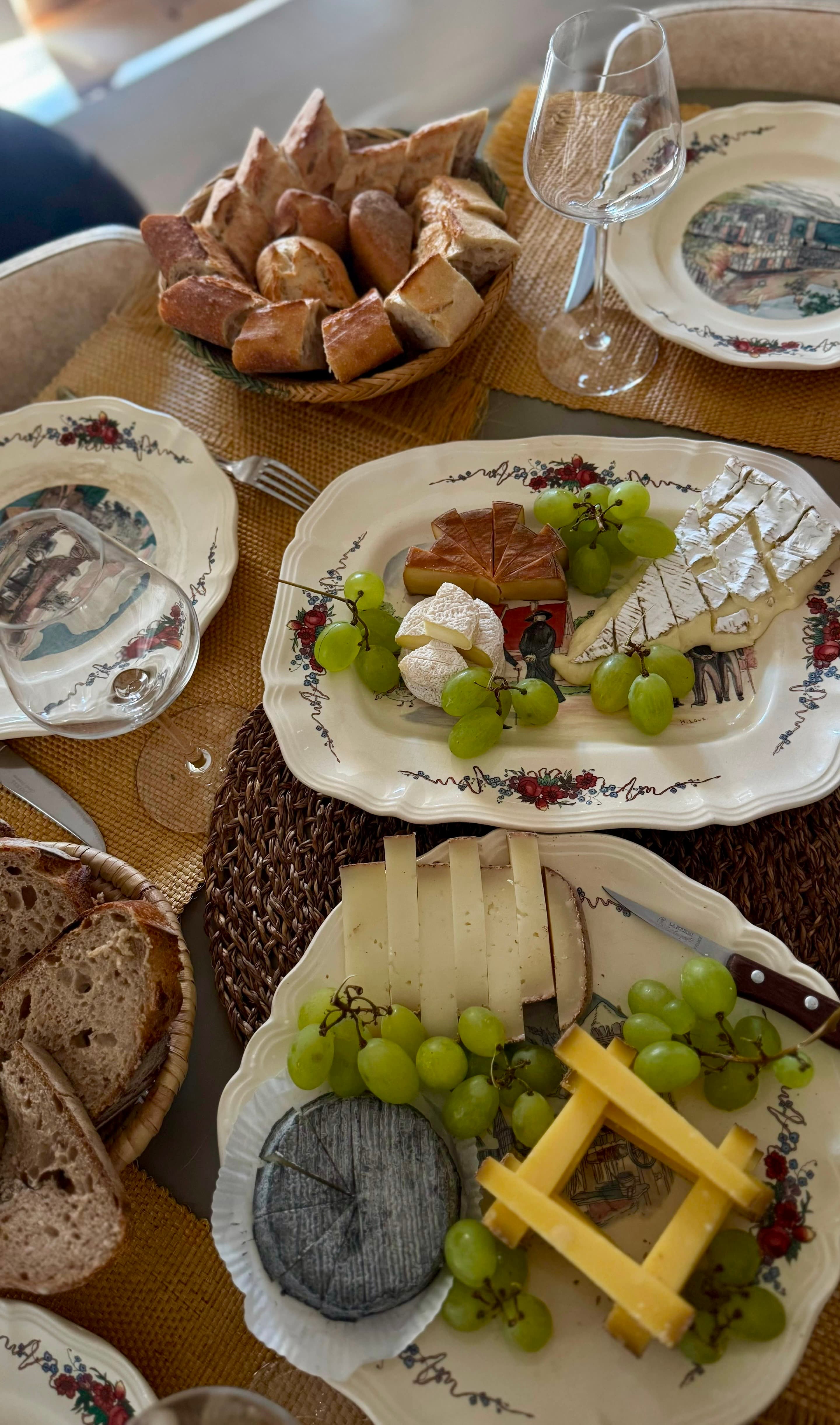
When we got home and started taking the cheeses out of the fridge, that’s when we realized we’d bought six cheeses instead of seven, which didn’t particularly surprise me. Apparently, Parisians avoid an even number of cheeses when they put together a platter like this. We ignored it because we were absolutely starving, so we headed to the table. The table was set with cloth placemats for each of us and our plates, where we would place the pieces of cheese, while right in the middle was space for the plates that would hold the cheeses. Next to them were loaves of bread, already sliced and arranged in baskets, and, of course, glasses for wine. The wine selections had already been made the previous day, and the bottles were already chilled and ready to drink. This time, the spotlight was on two Sauvignon Blancs from Sancerre, a small town in the heart of the Loire Valley that has lent its name to this wine variety with a protected designation of origin (PDO).
Berthier Family
France · Centre-Val de Loire · Sauvignon Blanc · 2024 · 13.0%
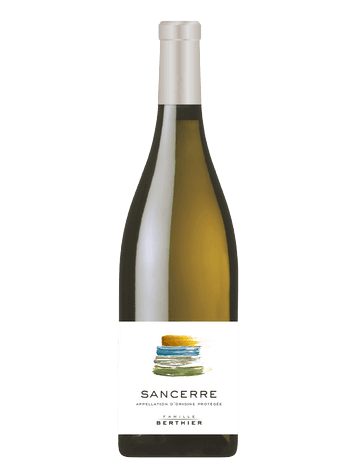
Citrus and white peach, with a mineral aftertaste and a crisp acidity
With no particular order of preference yet, these were the six cheeses:
The presentation? Two plates were placed in the middle of the table, each containing pieces of the cheeses we had bought, arranged in a specific way according to their texture: hard and semi-hard cheeses cut into strips and stacked either side by side or on top of one another, while the soft cheeses were roughly cut into irregular shapes or triangles. Next to them were a few green grapes, a delicious decorative touch that really helps balance out the cheeses. The sequence of actions at a cheese table is pretty much the usual one: take some bread, take some cheese, and eat; no particular rules.
For me, there is no such thing as pleasure when every movement is controlled, driven by some etiquette that has nothing to do with pleasure itself.
Cave des Vins de Sancerre
France · Centre-Val de Loire · Sauvignon Blanc · 2023 · 12.5%
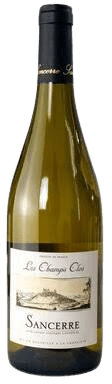
Citrus and mineral notes, with a hint of herbs and a clean finish
Perhaps because it was the first wine of the meal, my favorite was the Sancerre, named after the region where the grapes used to make it are grown, because it was exactly what I needed on that hot July day, and nothing else on the table suited the cheese selection quite as well. The second wine was also delicious, also a Sancerre, with the additional designation meaning “enclosed vineyard,” which refers to estates traditionally surrounded by a stone wall. But let me also talk about the cheeses that stood out to me.
Like the rest of the group, I’m always drawn to goat cheese, and I find it hard to come across goat cheese that I don’t like. At this table, I was particularly impressed by the Selles-sur-Cher with its soft texture, you can easily spread it with your fork onto bread and take a bite, while its ashy rind gives it a tangy character. Among the other cheeses, Comté is probably one of my favorite French cheeses, and if you haven’t tried it yet, look for it at your nearest cheese shop. The surprise was Timanoix, a unique cheese that leaves an aftertaste reminiscent of a well-known walnut liqueur but doesn’t lose its milky character. But of course there's always a special place in our stomach for something sweet.
I'd say the most important difference of a table like this compared to others is that satiation comes before all the cheese and bread is finished.
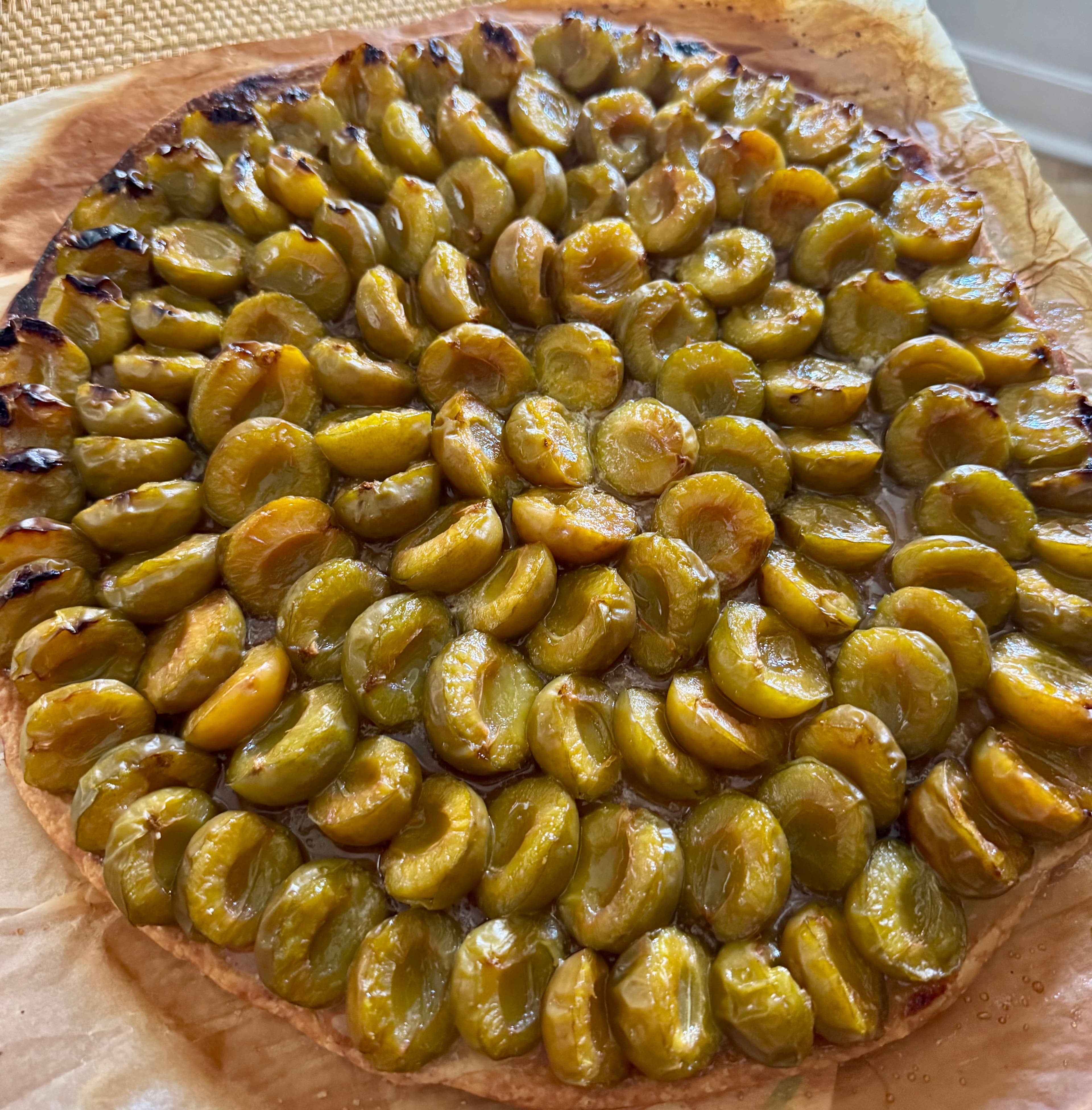
Tarts are very popular in France and easy to make, though that doesn’t mean they lack in flavor. After the cheeses and wines, we tried a tart with greengage, a fruit I must admit I’d forgotten about. In the town where I grew up, we had many greengage trees, and thanks to this tart, I learned that in French this small, green, and sweet-and-sour fruit is called reine-claude and was named after a queen of France. The biggest surprise, however, was that this fruit is related to the plum, yet another piece of information that shows how our languages shape our specific ideas about fruits and their relatives.
The heat kept me from eating more than one slice, but this tart with fruit that caramelized during baking is a recipe I want to try again and with more fruit. At least this time, the greengage went into a recipe and weren’t thrown at someone during a schoolyard fight between classmates. Don’t ask me why, but that was the memory that I recalled while I was eating this delicious tart.
You don't have to be in Paris or France to try making a quick meal with different cheeses, breads, or even local products. Gather your friends, find a few shops in your neighborhood that sell things you want to try, and set up a simple table on a Sunday, or any other day. Everything that made its way onto our table shows us that simple things are almost always capable of bringing us joy, especially when those simple things are cheeses that embody centuries of expertise and delicious flavor.