Place6′
Visiting Domaine Jean-Jacques Girard
A brief look at the wine community of Savigny-lès-Beaune

The sign of Domaine Jean-Jacques Girard in Savigny-lès-Beaune: tasting and sales.
6 November 2026

A brief look at the wine community of Savigny-lès-Beaune
The sign of Domaine Jean-Jacques Girard in Savigny-lès-Beaune: tasting and sales.
When you visit a winery, it’s always a good idea to have a designated driver who will take the wheel on the way back. In mid-September, after a morning at the Dijon market that was already full of wine, we headed to Savigny-lès-Beaune, a historic wine village in Burgundy. During the harvest, you have to call well in advance to get into Domaine Jean-Jacques Girard, but somehow we managed it.
François, our host during the visit, told us that it’s a family business going back six or seven generations, to the 16th century. For centuries they only grew vines and sold the grapes to wine merchants. His great-grandfather, Edmond, began making wine at the start of the 20th century. Grapes can be sold while still on the vine, already picked, or as must, and the must only for white wine. Red wine gets its colour from the grape skins. Pressing pinot noir gives you white juice and leaves the red skins behind, which is how white wine is made from it. In Champagne, this is called blanc de noirs, meaning white wine from black grapes.
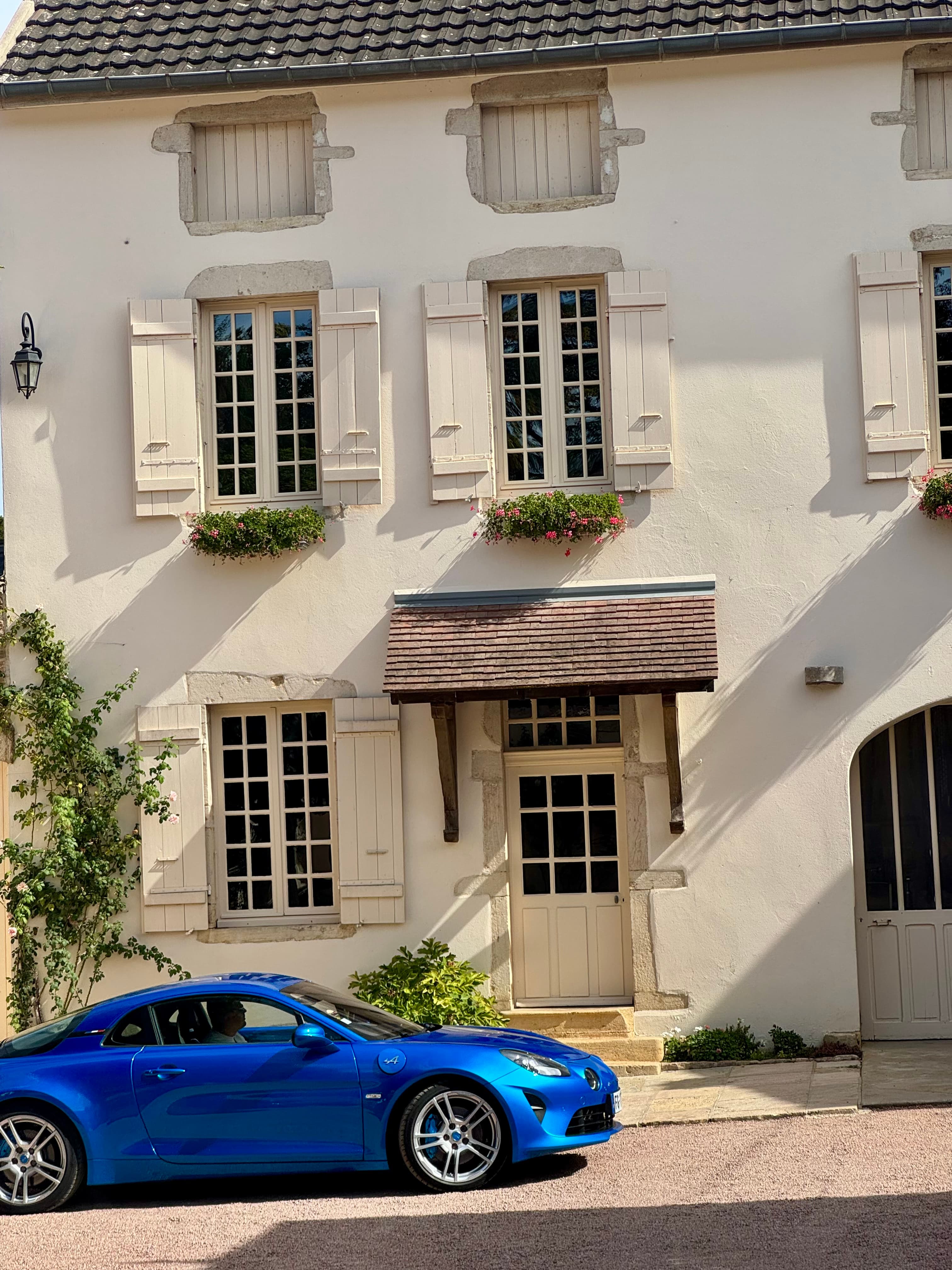
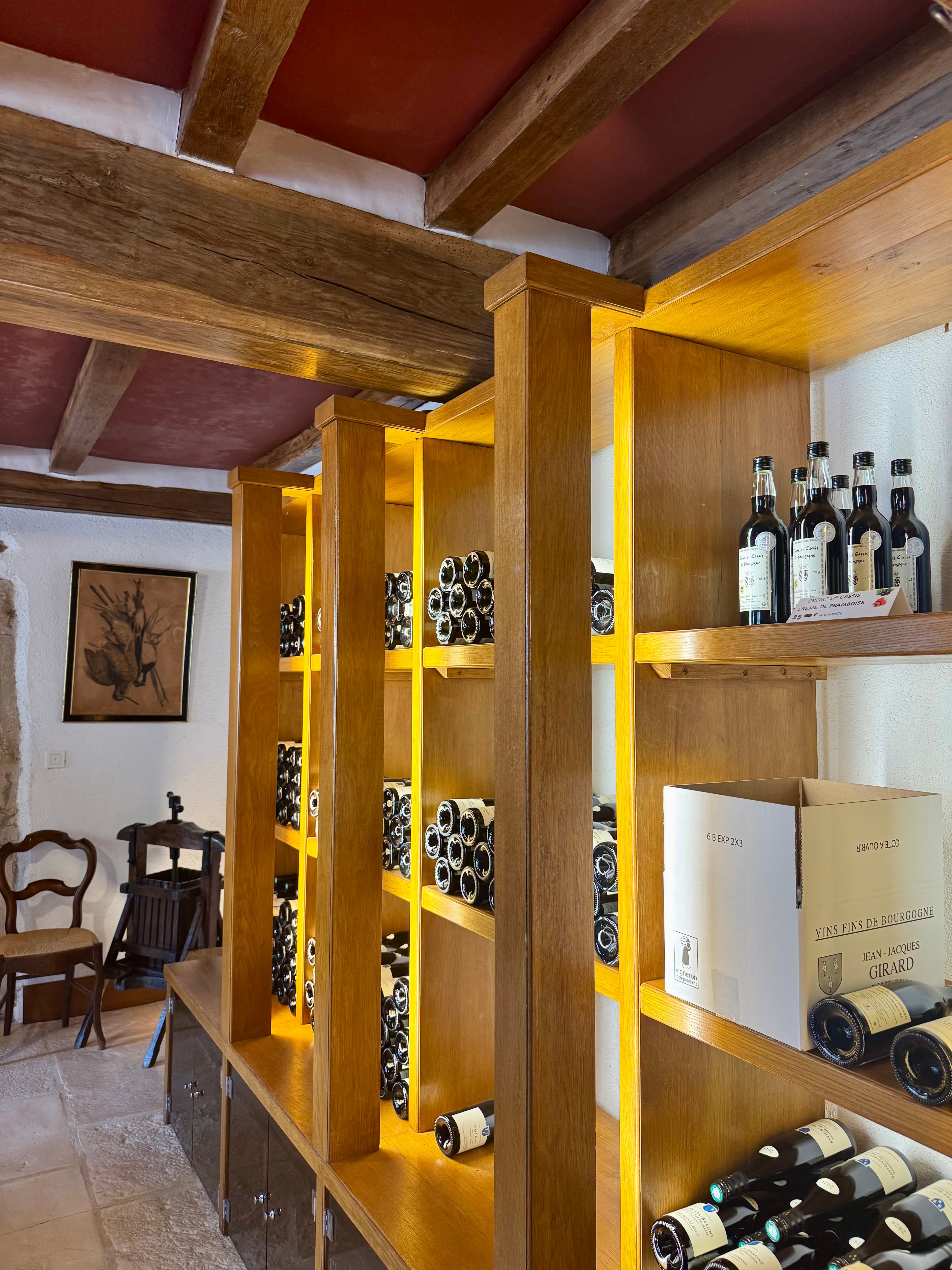
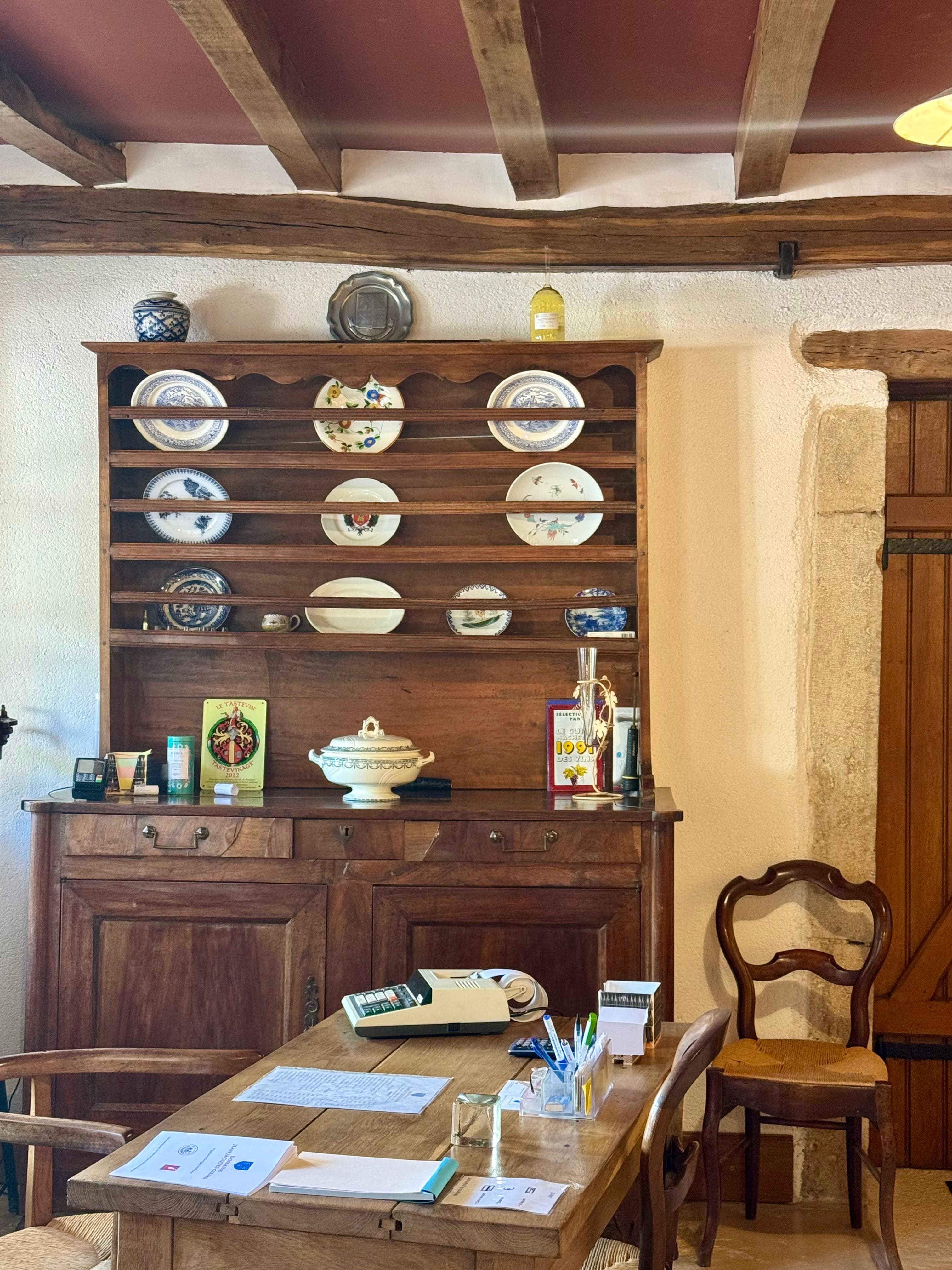
After we stepped into the room where we would taste the wines, François told us a few things about the estate and its vineyards, which total around 20 hectares. In a good year they can produce up to 200,000 bottles, half of which are sold within France, partly in bulk to wine merchants. Two thirds of the production is red wine made from pinot noir, while the rest, aligoté and chardonnay, makes white wine. The business employs 10 people in total, including the family. When I asked François why he chose to work in the family business, he told me he hated school as a child and preferred the vines; he went to a viticulture school at 15, where he also did work placements alongside his studies.
 1
 2
 3
What I liked about this winery was that we tasted the wines while also learning a great deal about the vineyards and about the method they use to taste them. The tasting had its own rhythm so that we would remember the previous wine, and at the end they always pour the first wine again, because your palate isn’t quite ready for it at the start. Before we even began, all the wines were lined up on a table.
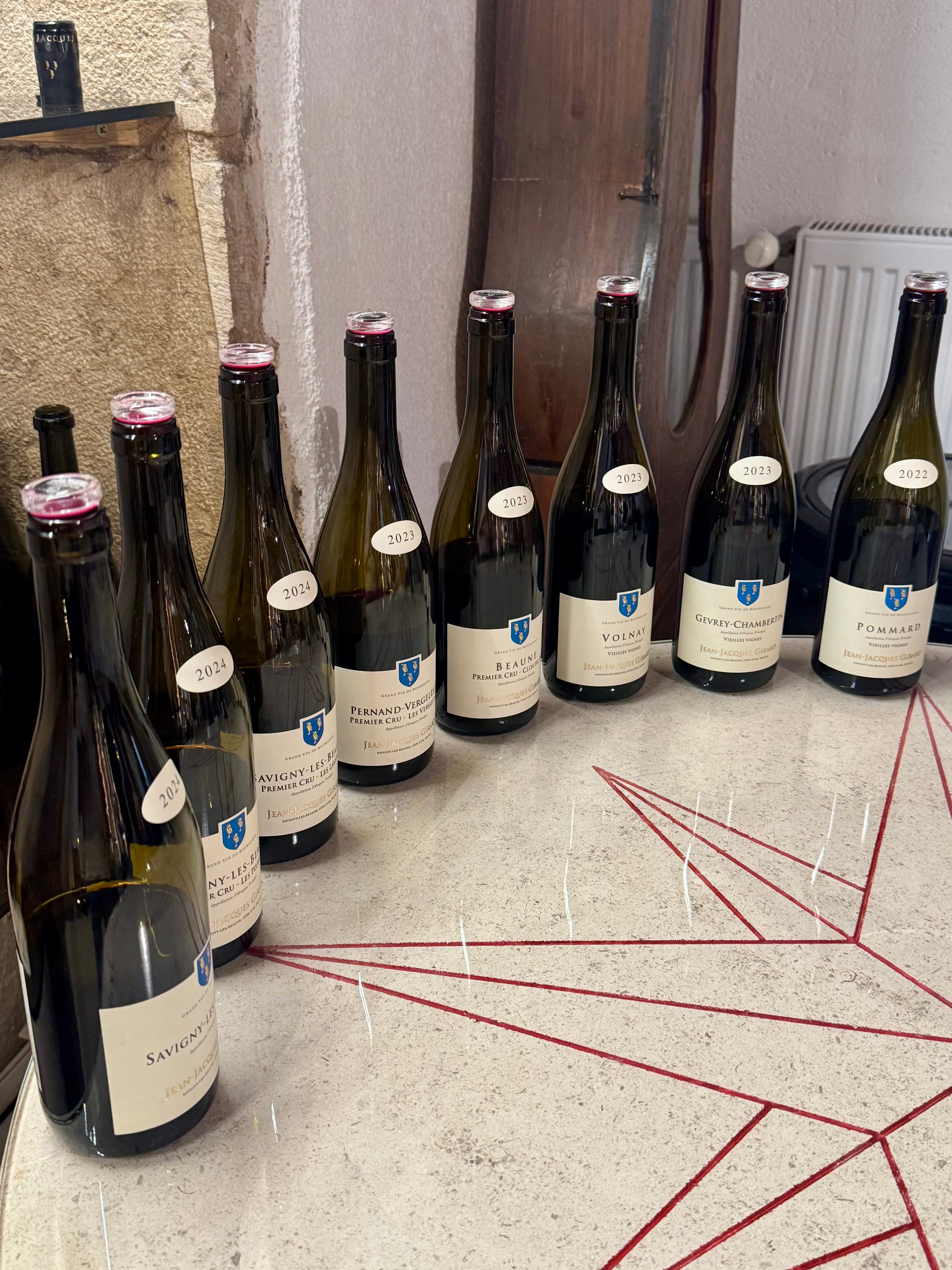
This is the order in which we tasted them:
Blanc sur rouge, rien ne bouge. Rouge sur blanc, tout fout le camp.
White after red, nothing budges. Red after white, everything falls apart.
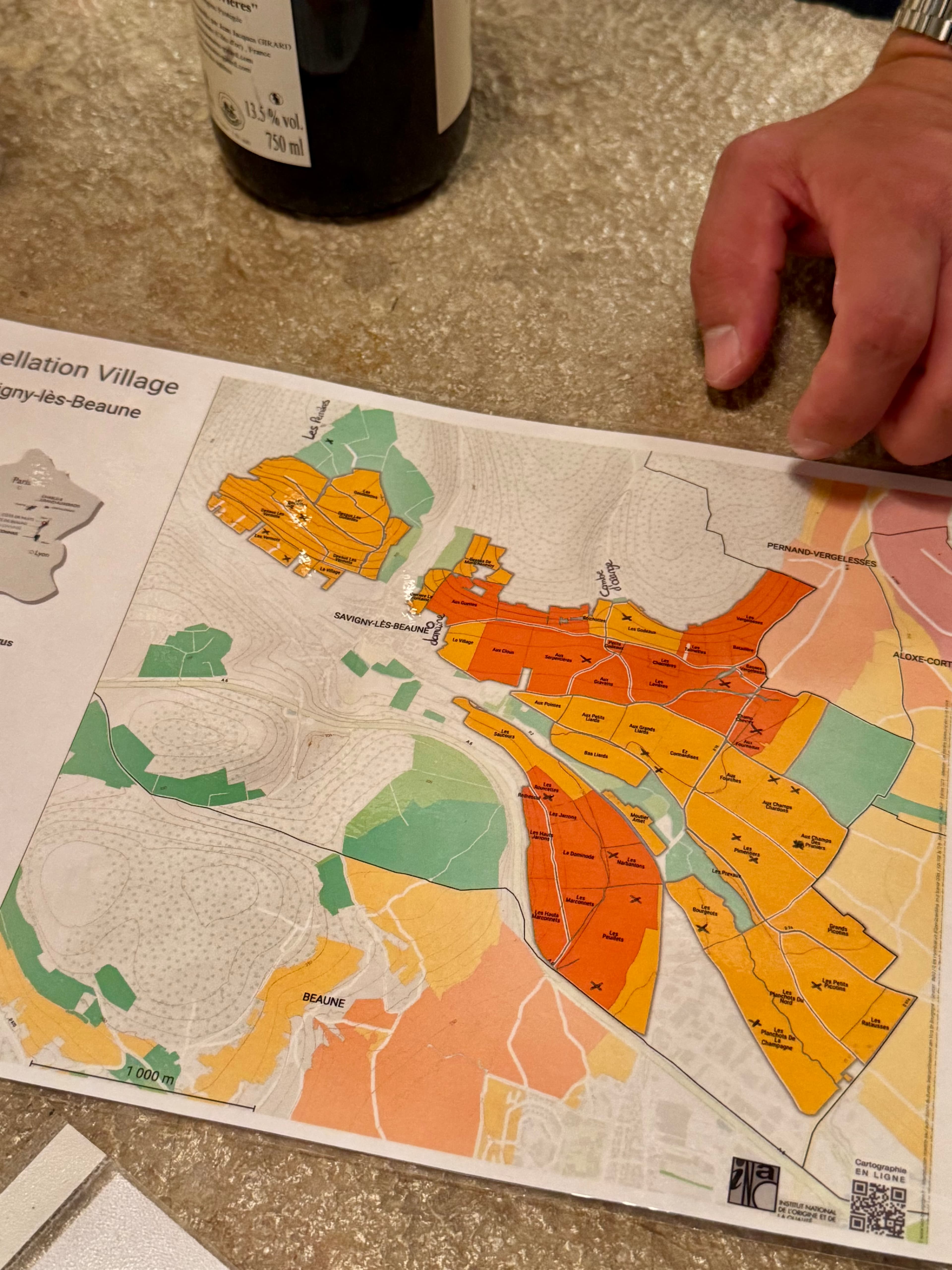
Dylan, a friend of François, was with us for the tasting and took it upon himself to talk us through the terroir of the vineyards with the help of a map from the National Institute of Origin and Quality (INAO, for short in French). Many winegrowers use the same climat names for different parcels. Parcels with different orientations, such as Les Peuillets and Les Lavières, produce grapes that taste different once they become wine. Pernand-Vergelesses lies just after Savigny, and part of the Corton-Charlemagne and Corton wines come from there. One of the wines we took home was a white Pernand-Vergelesses, the most drinkable of everything we tasted. Something else I learned during the visit is that Burgundy sells its wines by village and parcel, not simply as “Burgundy”, unlike Bordeaux, where the name of the region appears on every wine. That makes perfect sense when you consider that the Climats of Burgundy are on UNESCO’s World Heritage list, because of the close link between soil, climate and know-how.
A climat is where a tiny parcel of land, its soil, its weather, its exposure, human know-how and the work of the vines meet.
Jean-Jacques Girard
France · Burgundy, Côte de Beaune · Chardonnay · 2025 · 13.5%
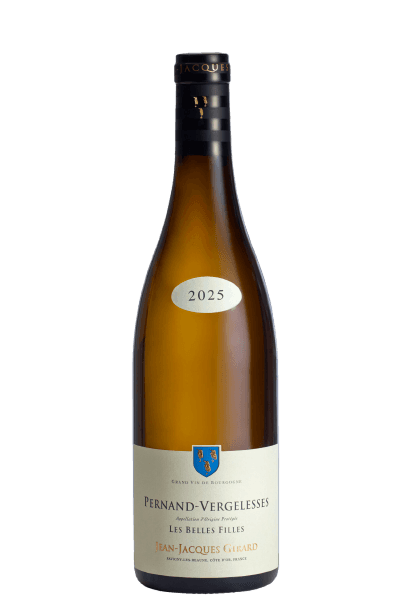
Straw-gold, with flint and fruit on the palate, clearly typical of Pernand. Aged 10 months in oak.
 1
 2
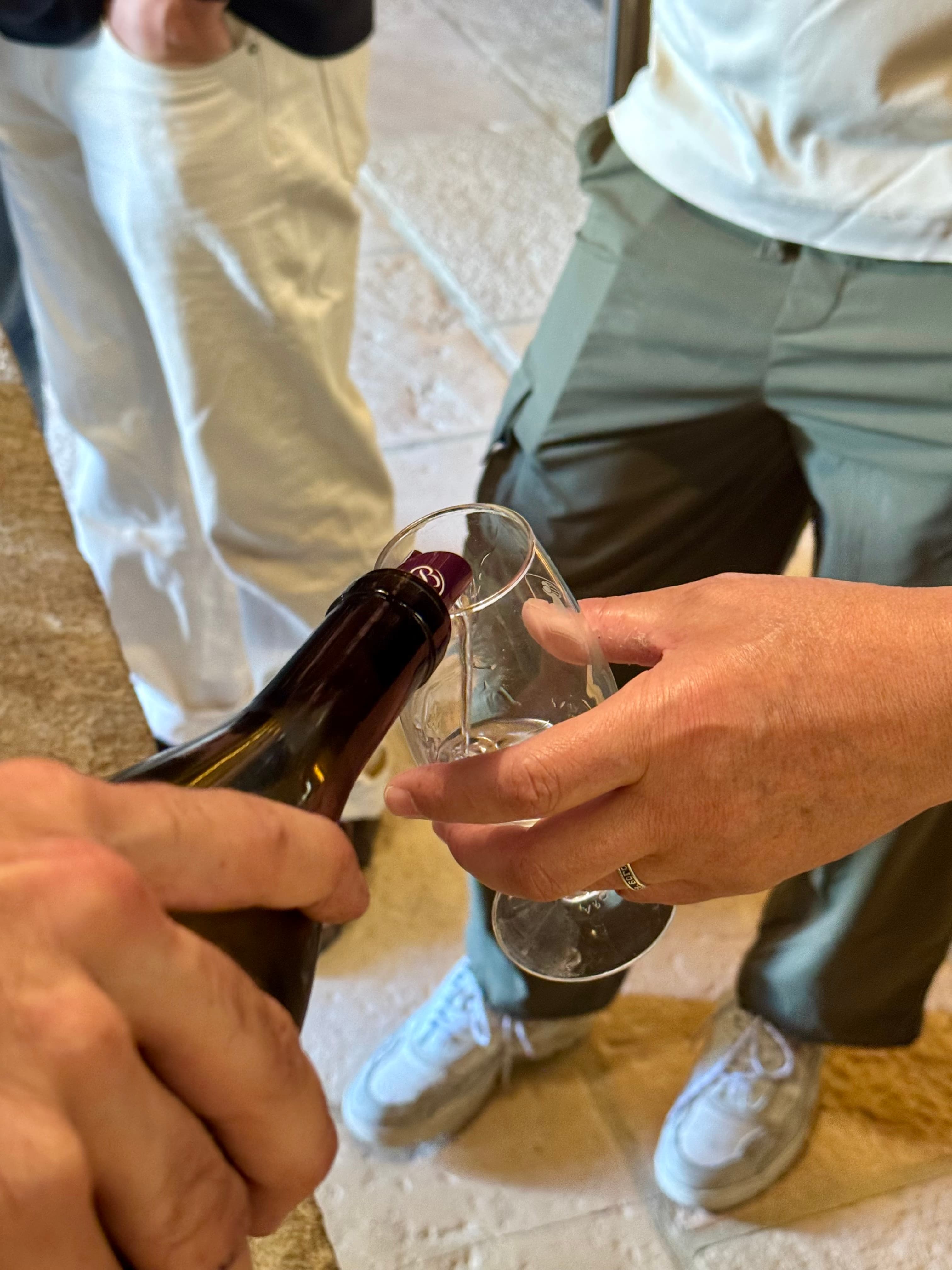
Dylan also told us about the tasting approach of the Confrérie des Chevaliers du Tastevin, founded in 1934 to promote the wines of Burgundy. A tastevin is essentially a vessel that winemakers used to check the quality of a wine. His own method goes like this:
You first observe the colour against a white background, a napkin for example. A bright red or purple suggests a young wine, while a paler shade suggests an older one. You swirl the glass: the “legs” hint at alcohol. On the first nose, you check for defects such as cork taint or fruit flies. You swirl the glass again for a second nose. Then you taste the wine, aerate it in your mouth, and follow with the retro-olfaction and one last nose before putting the glass down. But the most important question is:
Would you offer this wine to your friends?
Jean-Jacques Girard
France · Burgundy, Côte de Beaune · Pinot Noir · 2024 · 13.5%
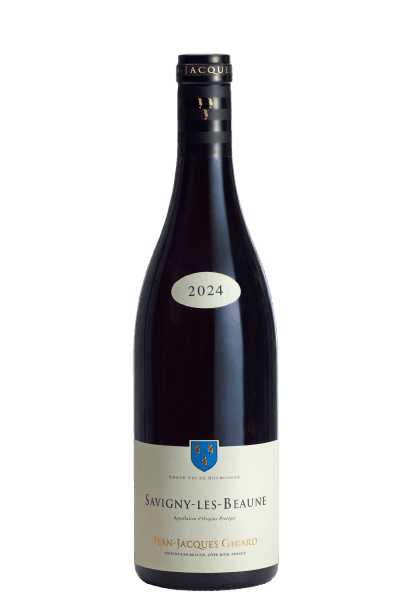
Deep cherry-red, soft, fine and fruity. Aged about 15 months in oak.
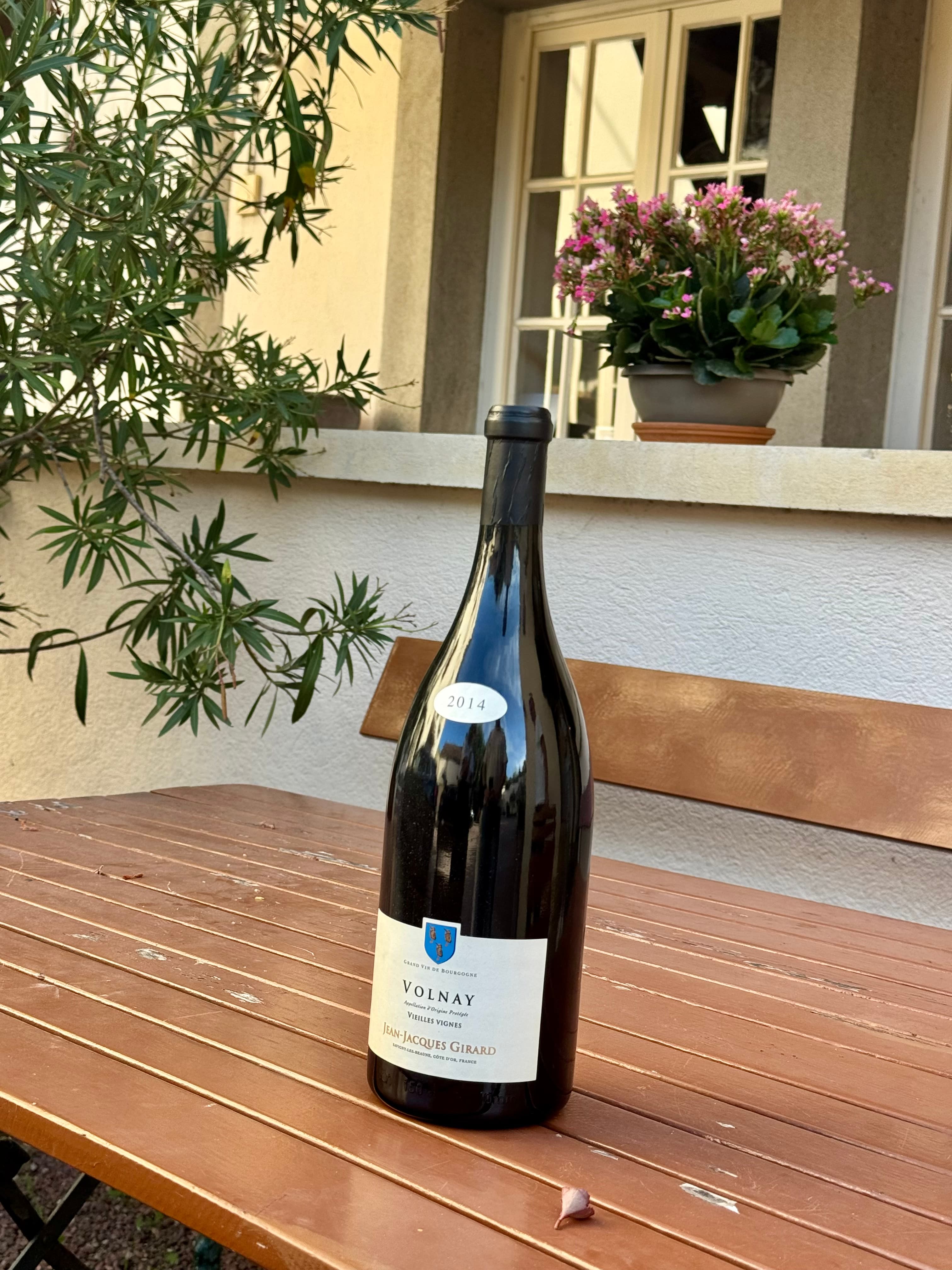
As for the reds, a wine I’d definitely serve to friends would be the Savigny-lès-Beaune, as well as the Volnay. We brought both of them home with us and will open them sometime in the near future. As for the Volnay, we were told we were lucky to have tasted it because it’s not usually part of the tasting lineup.
Jean-Jacques Girard
France · Burgundy, Côte de Beaune · Pinot Noir · 2024 · 13.5%
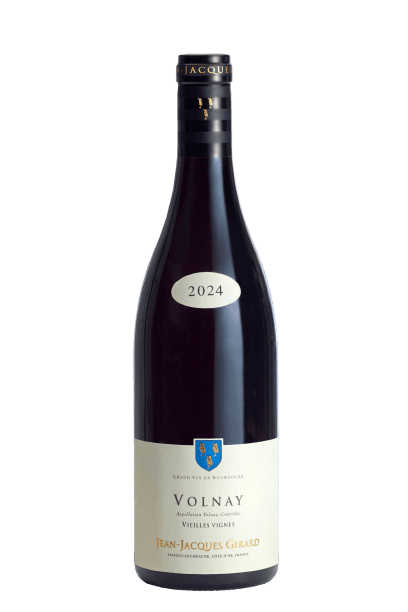
Bright, clear ruby with red fruit on the nose. Silky and elegant, with the fruit still present. Aged about 15 months in oak.
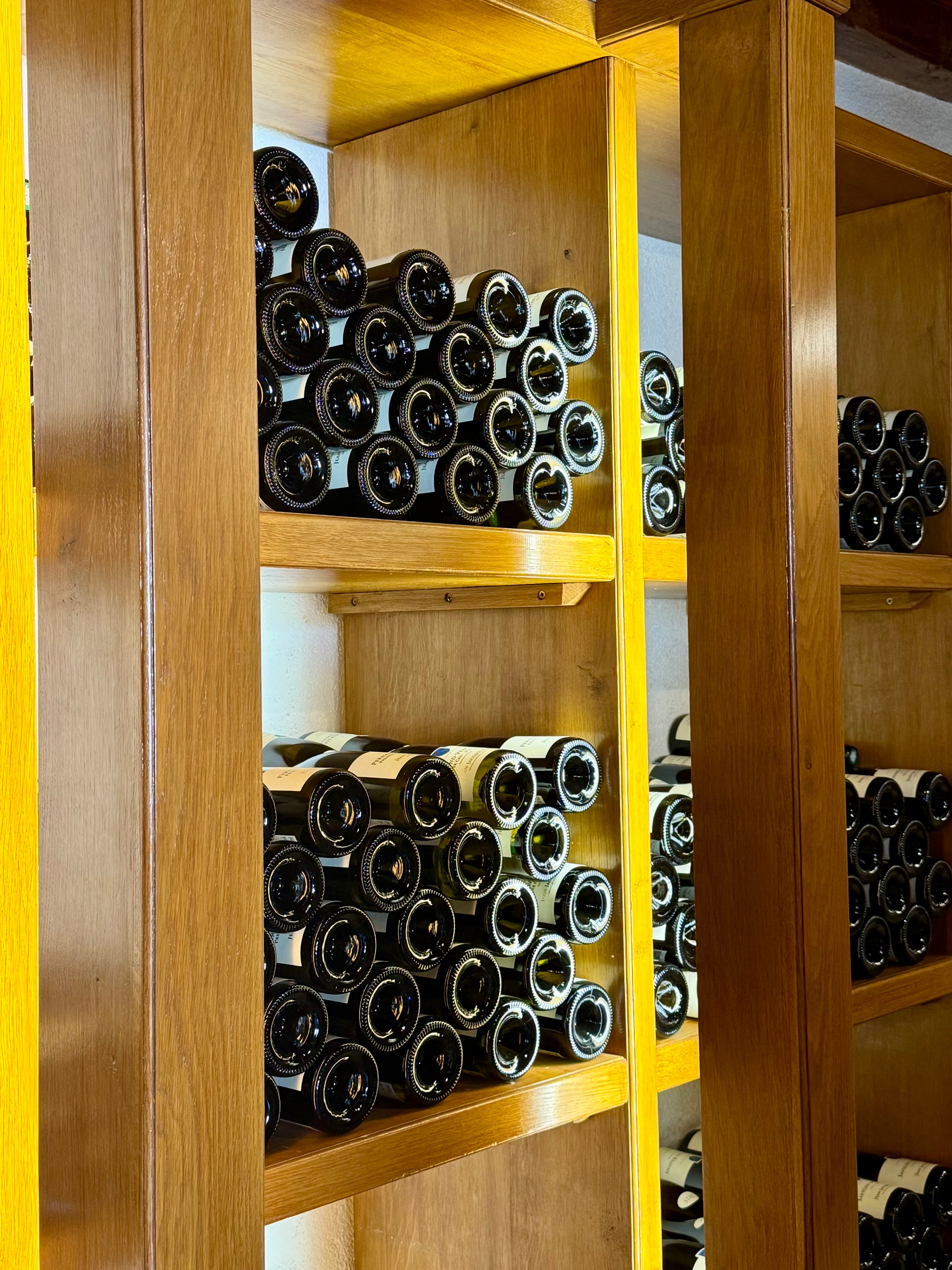
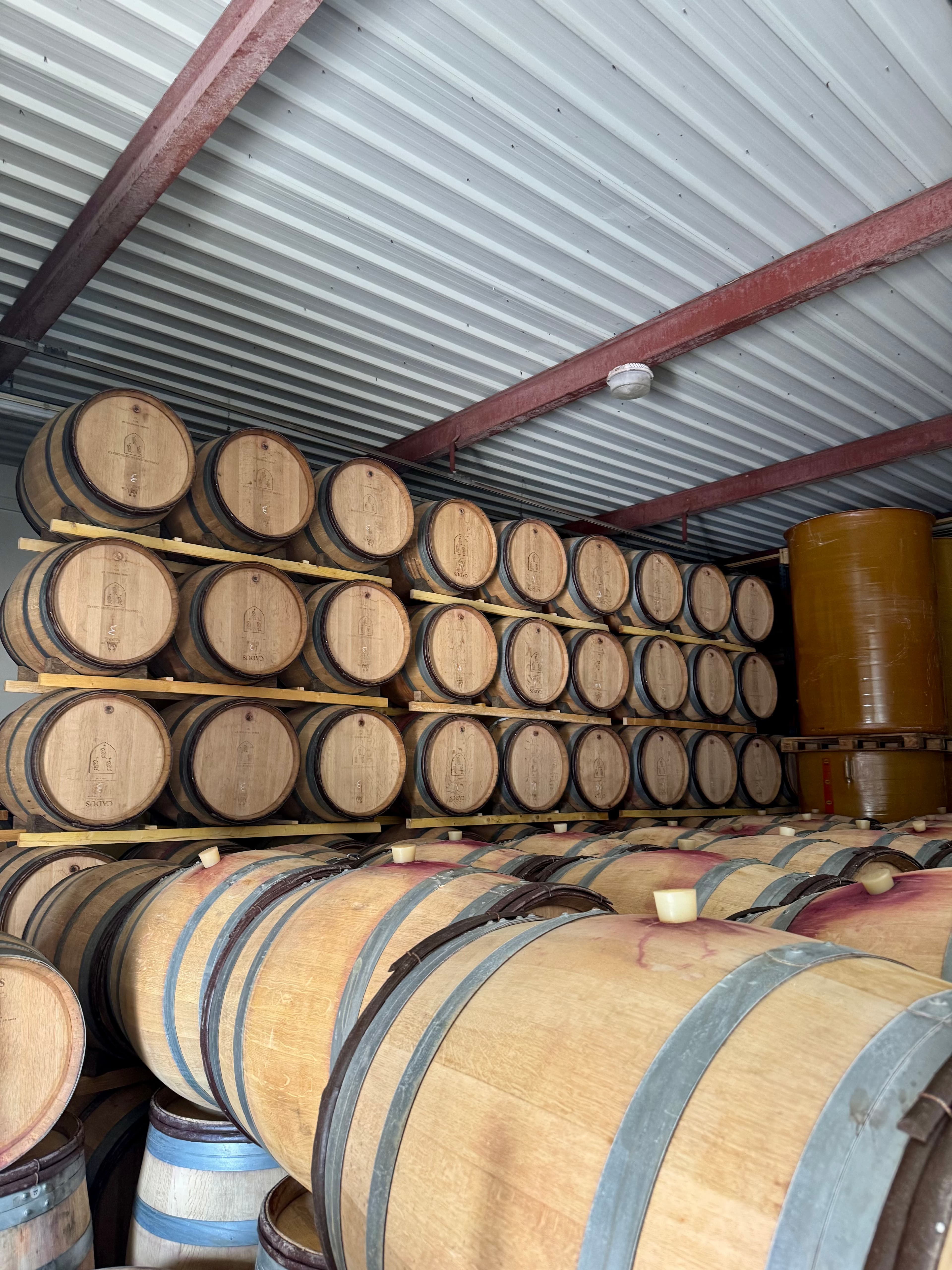
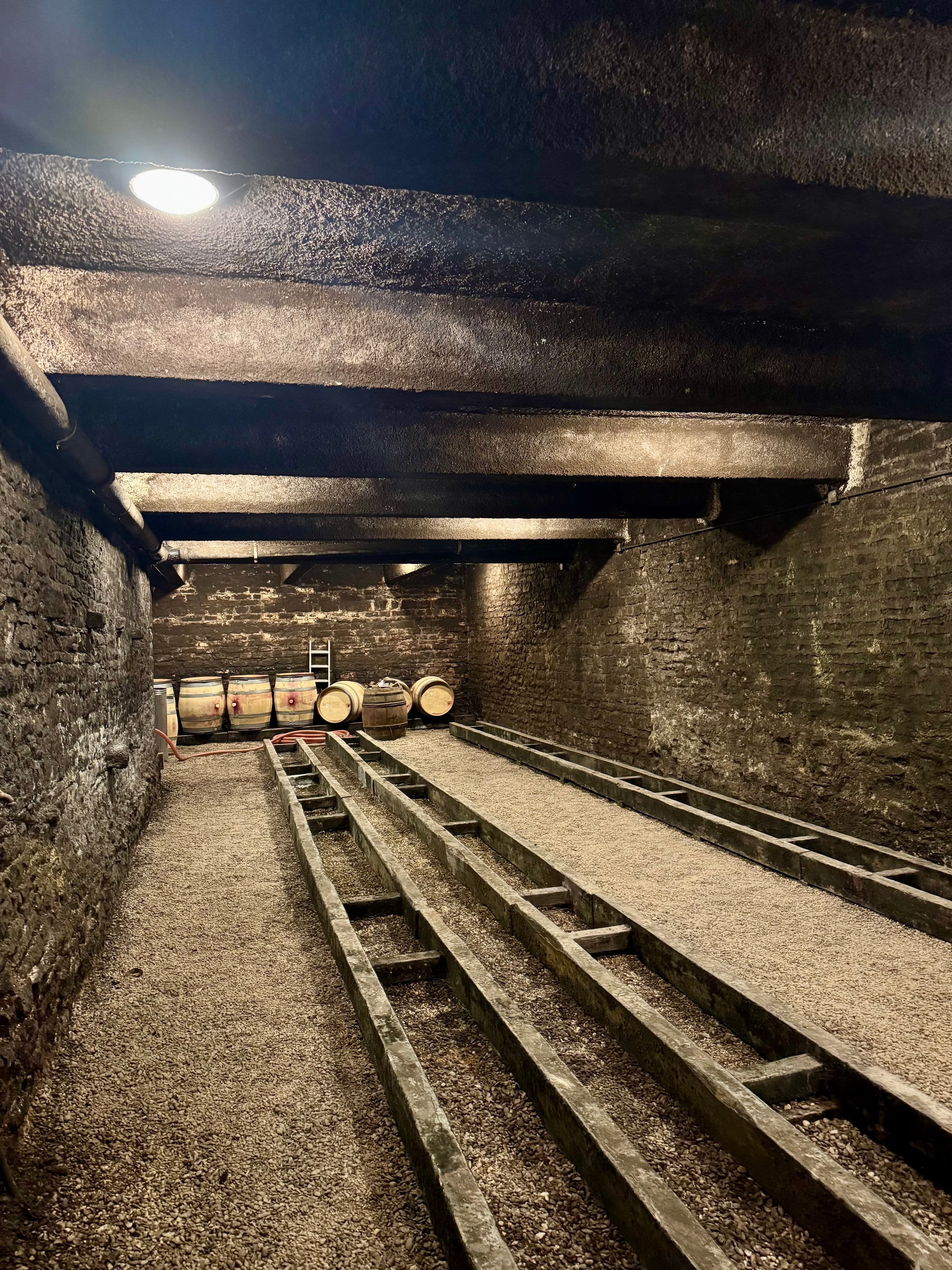
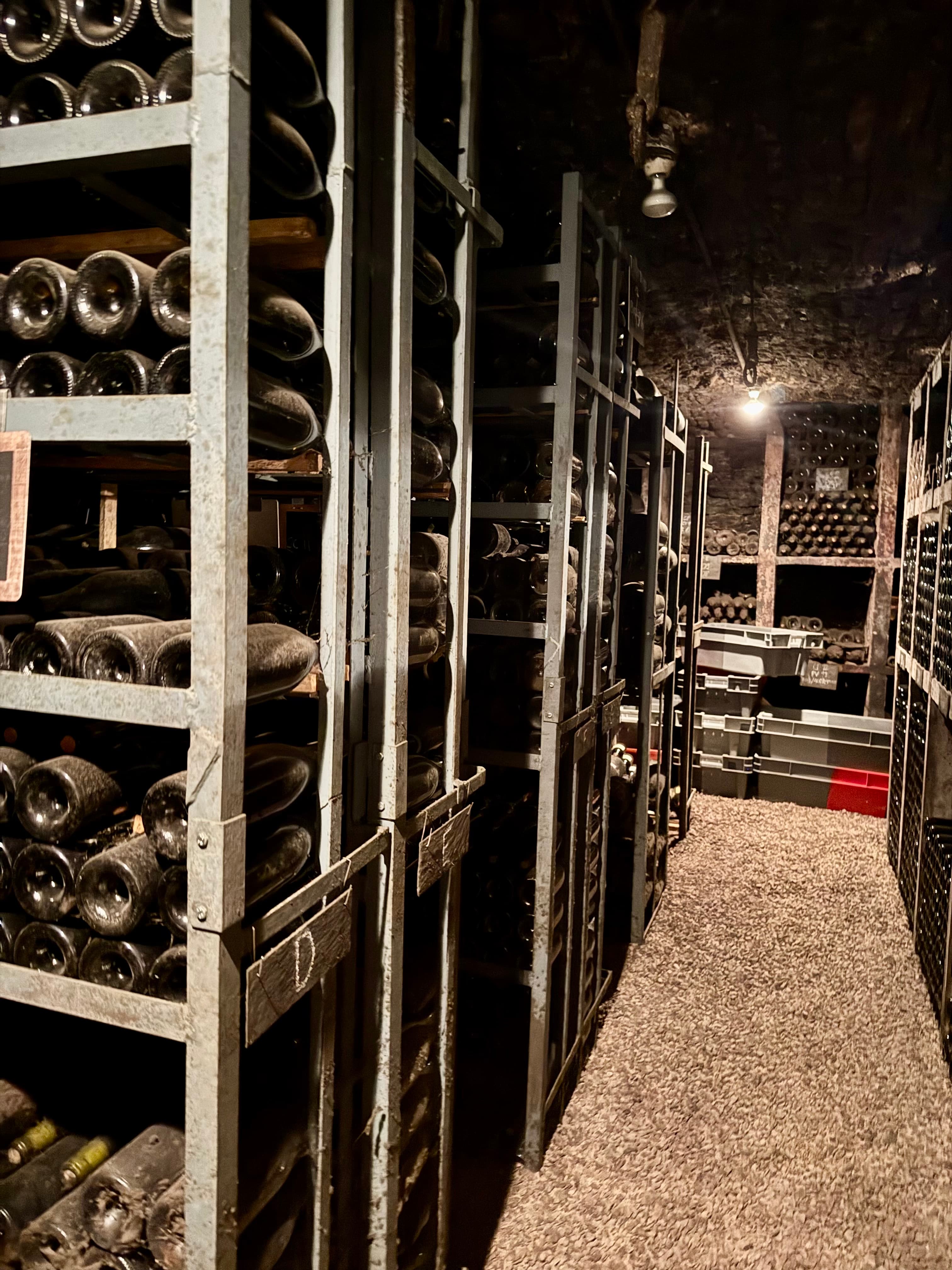
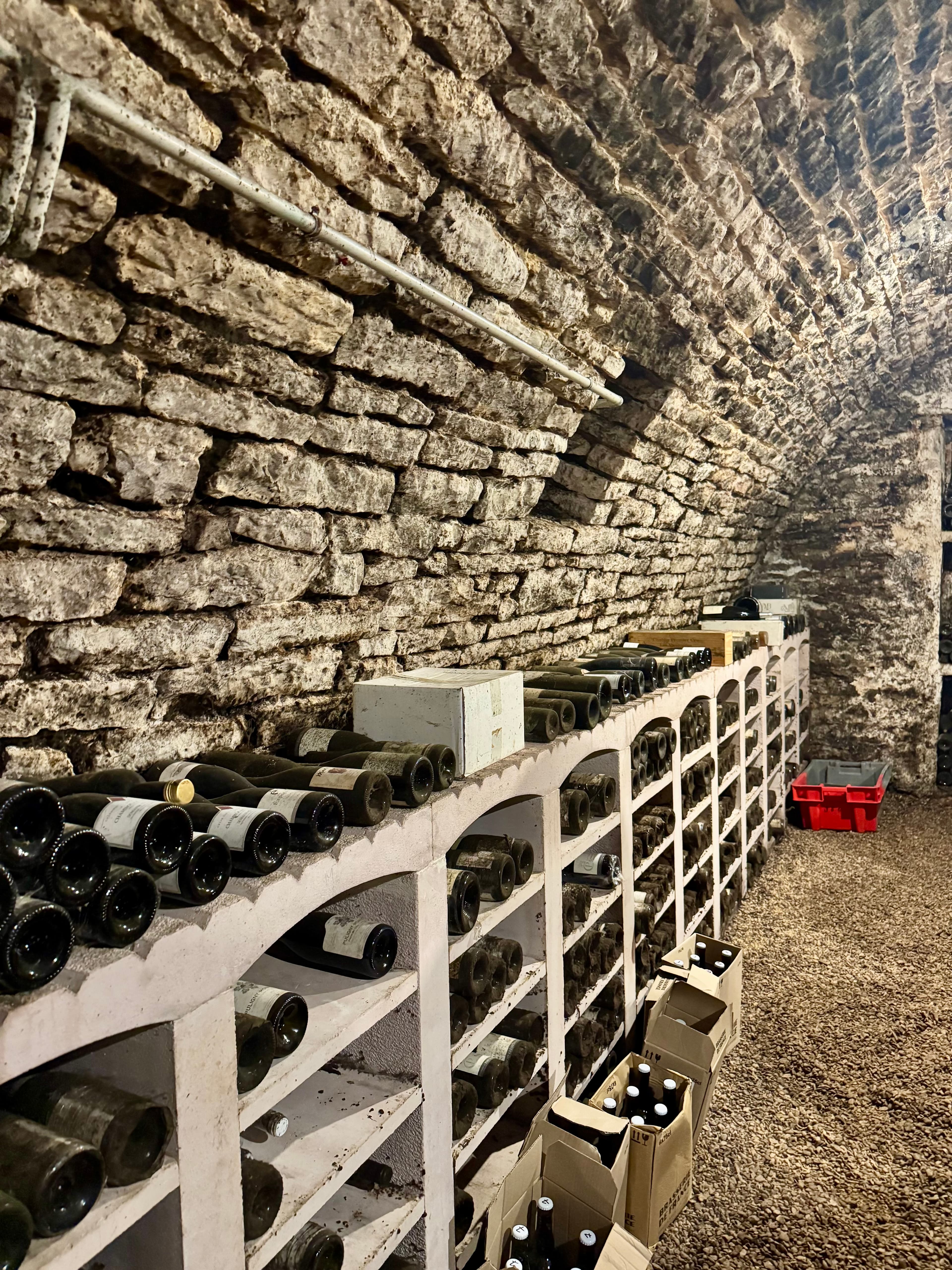
After tasting all the wines and before buying the bottles we were going to take home, we went down to the domaine’s remarkable wine cellar. Aside from the barrels, which were a common sight, the cellar was built of stone and had bottles of unknown age scattered across some of the shelves, giving the impression that they had been there since medieval times. Nowadays, many people prefer newer wines—myself included—but it was a truly impressive sight to see the history of a domaine kept in those bottles.
Get new posts in your inbox, every Saturday
No spam. Just new stories, recipes, and places, in one email every Saturday.
 1
 2
 3
Savigny-lès-Beaune, France
16 rue de Cîteaux, 21420 Savigny-lès-Beaune, France
A family estate in Savigny-lès-Beaune, with vineyards across the Côte de Beaune and roots going back to the 1500s. Tastings and sales at the property.
The order goes against the usual rule of starting with whites: we began with the reds and moved on to the whites afterwards, because in the Côte de Beaune the whites are more powerful. At least we followed the famous French saying:
