Place13′
Tasting Nissos in Its Birthplace
August at the Cycladic Brewery on Tinos
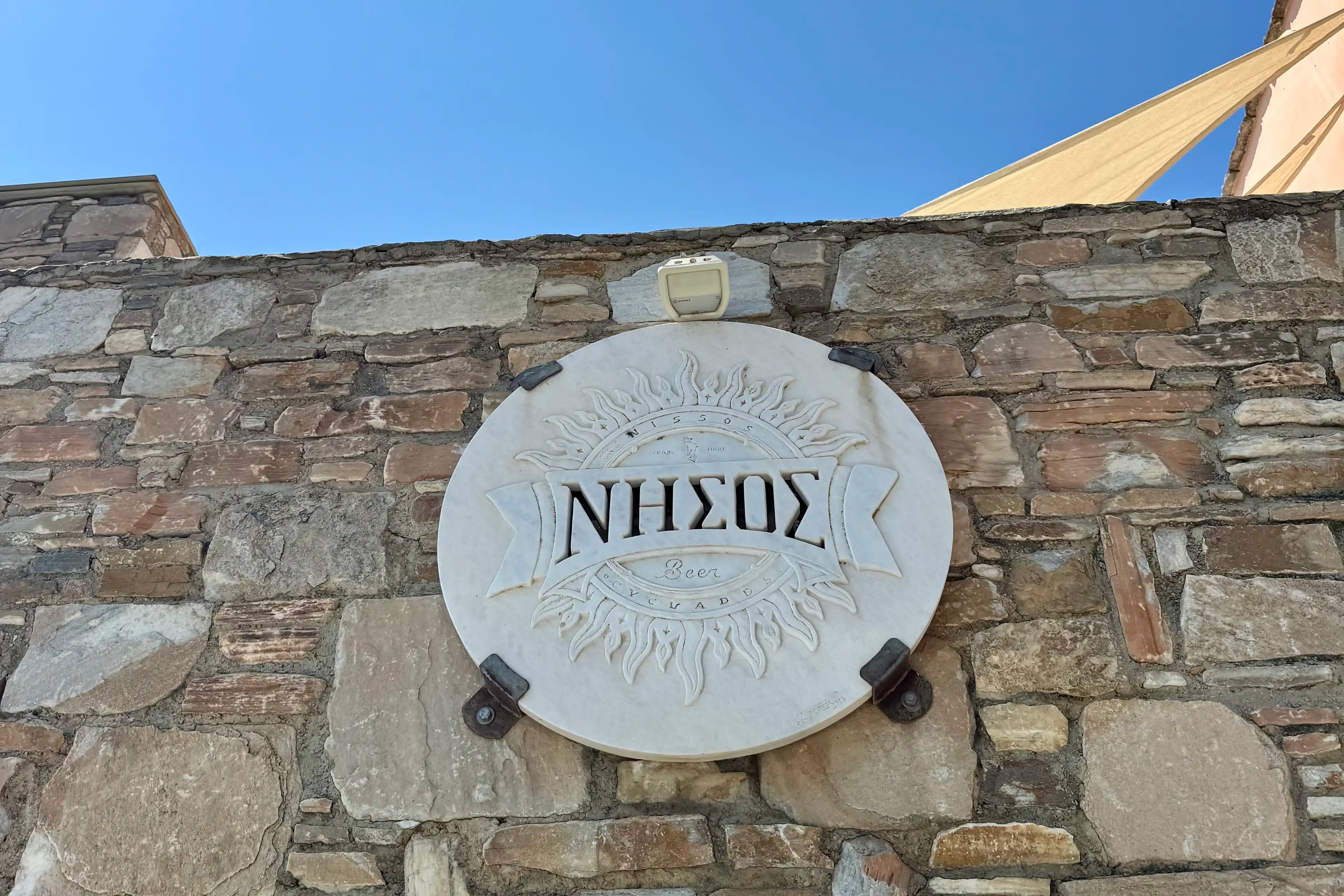
The beer logo carved into marble at the entrance to the brewery.
9 October 2026
August at the Cycladic Brewery on Tinos
The beer logo carved into marble at the entrance to the brewery.
Every August for the past few years, I’ve been going to Tinos, one of the most up-and-coming islands in the Cyclades right now. It all started completely by chance in 2023 when I found myself there for just two days, making a stopover before heading to the next islands, and I quickly realized I’d made a mistake. I was impressed by the local gastronomy scene as well as by how the people on the island treated me, so I’ve been coming back every year. This year, I also managed to visit the place where it all began for one of my favorite Greek beers. So this is the story of Nissos.
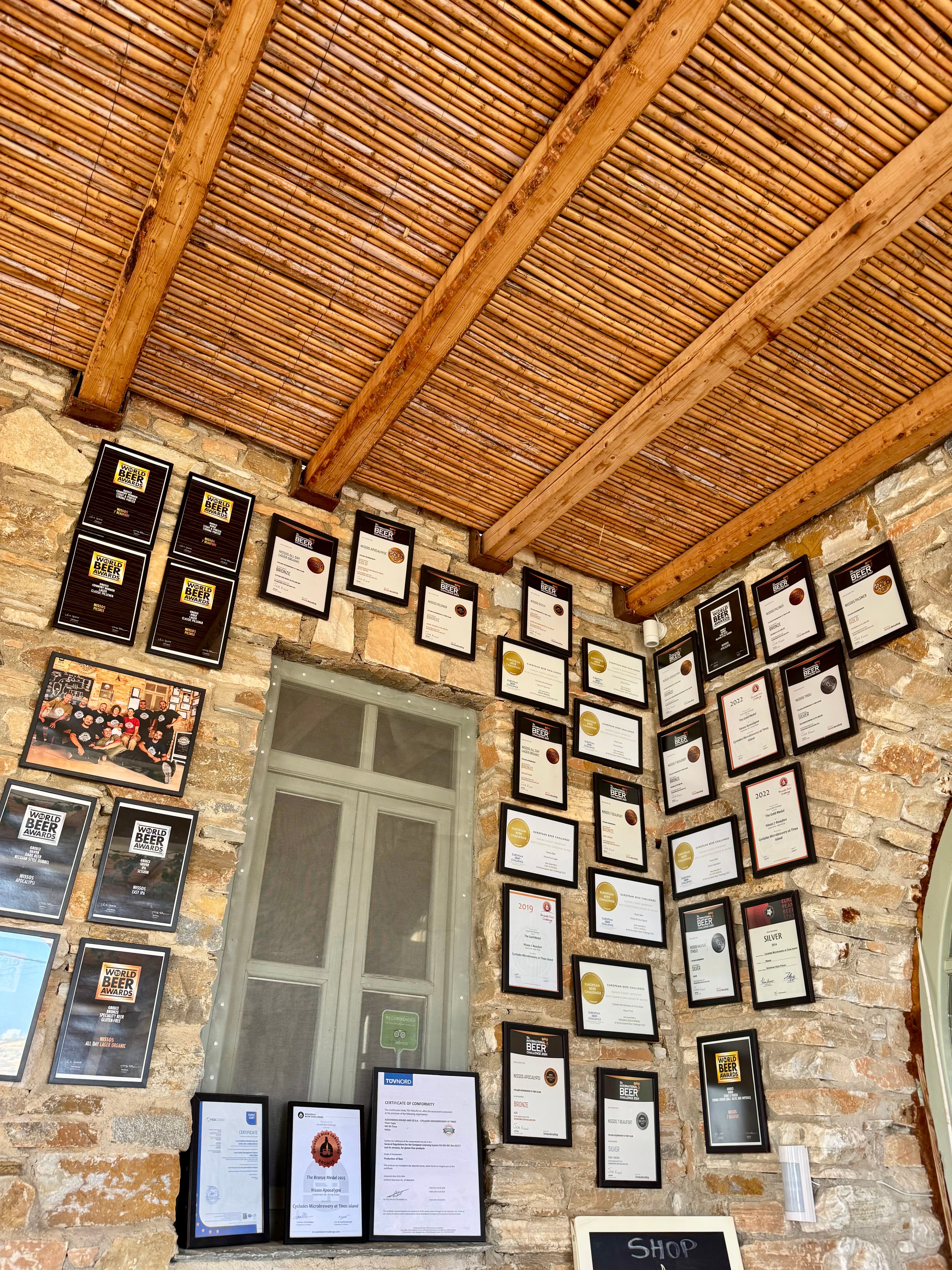
Sometime in 2012, I remember various microbreweries starting to pop up in Greece, so I began trying out different brands myself. Nissos got its start that same year, in an old restaurant on Tinos that was converted into a brewery by Alexandros Kouris. As Tonia, who welcomed us and gave us a tour, told us, Kouris fell in love with the island through the eyes of his wife, Maya Tsokli. And so, in the midst of the economic crisis that was—and still is—plaguing Greece, a crazy and romantic idea took root, which has since become the most award-winning beer in the country.
Many people ask Tonia: why did the Kouris decide to make the brewery here instead of somewhere in mainland Greece in the first place? Tinos has a water shortage issue, and also, the brewery has to use the imported hops and imported malt. However, as a very popular gastronomic destination, Tinos offers excellent food, excellent wine, but there wasn't a high quality beer to accompany the food. So he decided to make his own beer, and he named it Nissos, which is Greek for island. Growing up as a millenial, Tonia remembers her parents, grandparents and people around her drinking predominantly industrial beer, and for them, beer was a cheap alcoholic drink. You could drink only to freshen you up in the summer day, nothing more. What happens with microbreweries and their beers is that mostly young people are trying to explore these new types of beer and what it means for a beer to be of high quality. It's always a long way until you appreciate something different than what you're used to and like Tonia told me:
I'm very proud of how people nowadays can understand the better quality in beer and they have the flexibility to try.
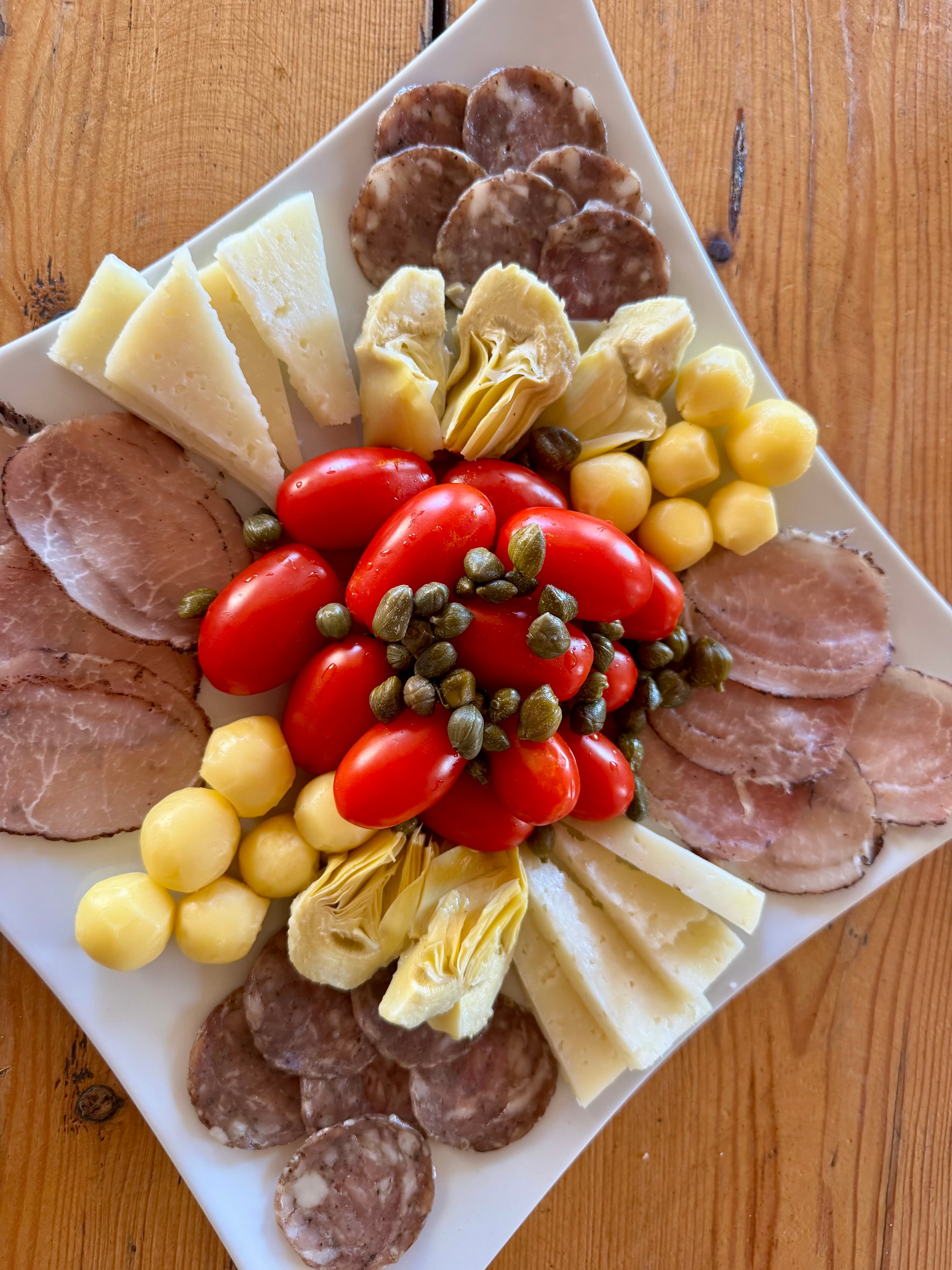
Before we tasted the beers, Tonia served us a plate of local products—except for the cherry tomatoes, which, as she jokingly told us, came from the island of Crete. Many visitors expect to find fish or seafood on this plate to accompany the Nissos beers. However, throughout its history, Tinos suffered greatly from pirate attacks, which didn’t always allow for undisturbed fishing. So on our plates we found traditional Tinos pork cold cuts: louza and sausage. As for cheeses, we tried Tinos graviera and volaki, both made from cow’s milk. The cherry tomatoes were topped with capers, which are found in many parts of the Cyclades because they can thrive even in the islands’ dry climate. But the plate wouldn’t be complete without artichokes, the signature vegetable of Tinos, which, as we learned from Tonia, are grown in the valley of Komi, one of the island’s villages. She didn’t give us specific instructions on how to pair the appetizers with the beers; she simply encouraged us to enjoy the beers with the appetizers. The first beer didn't take long to reach our table.
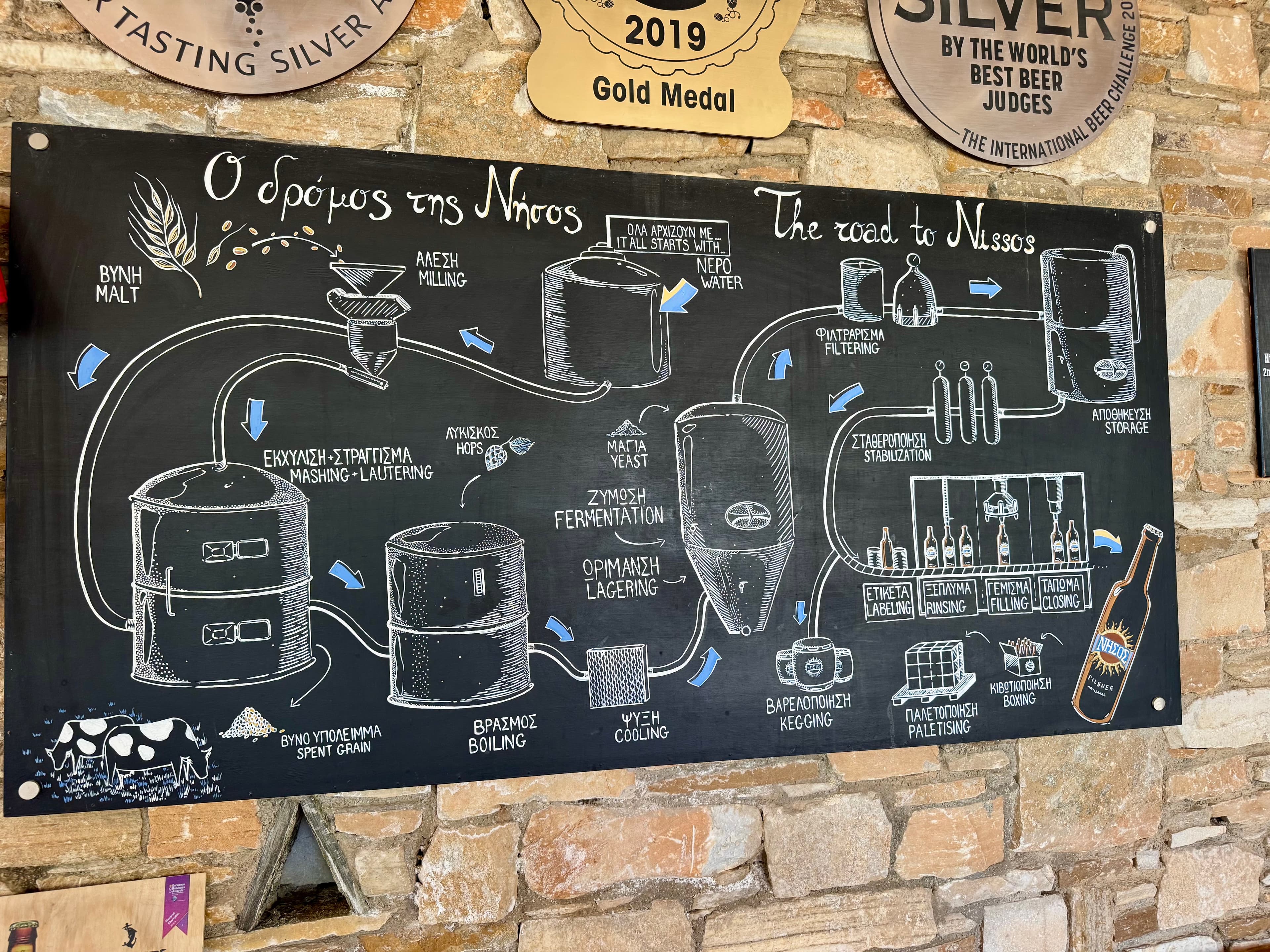
We had already started nibbling and sipping our first cold beer when Tonia started walking us through the beer making process:
“We use four ingredients here to make beer: water, malt, hops and yeast. The water comes from the desalination unit of Agios Fokas. We bring the water here, filter it, and adjust the profile according to the beer we want to create. Malt is any kind of cereal, barley, wheat or rye, that has undergone a specific procedure called malting, which happens in malting factories. They spray the cereal with water, and the cereal is tricked: the seed thinks it's going to become a plant, so it activates everything inside that would help the plant grow. Then they dry the seed again. If you don't do that, there are no fermentable sugars to feed the yeast. The malt is responsible for what we see in the glass, the colour and the thickness. If you want to make a blonde beer, you simply use basic malt; for a red one or a pitch-black one, caramelised and roasted. The milling breaks the malt into smaller pieces, and together with hot water, around 60 to 70 degrees Celsius, it is mixed in the mashing tun. It's like when we make tea: the malt leaves sweet substances in the water, and this syrup is called wort, the sweet liquid, not alcoholic yet, that is going to become beer. The solid residue of the malt, in any other case, we would have thrown in the rubbish.
But since we live on an island, and there are so many cows, instead of throwing it away we give it away, so we make zero waste, and everybody's fine.
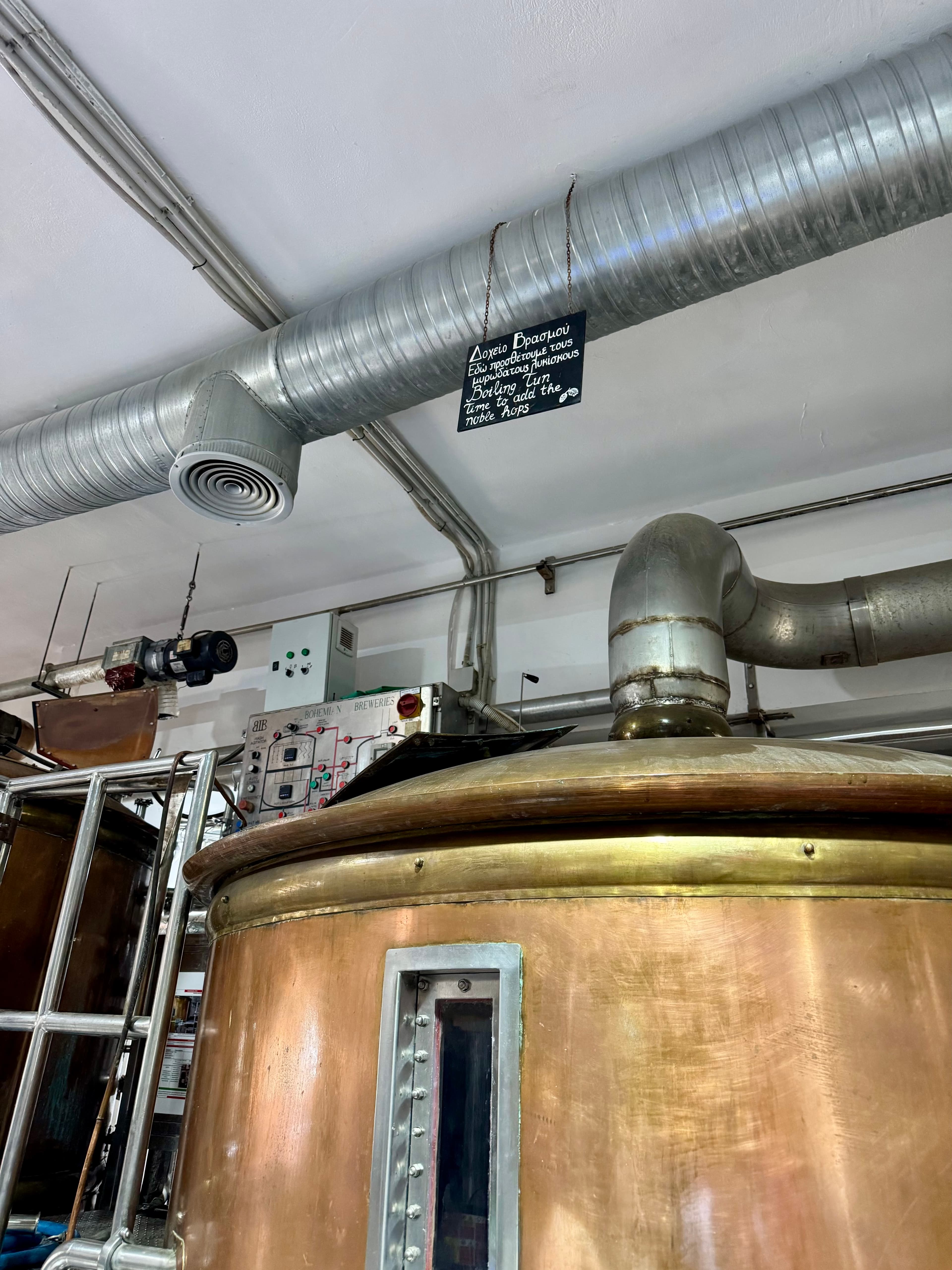
“In the boiling tun the wort boils, and that means it is sterilised. Here we also add the hops, flowers responsible for three major characteristics in the beer: aroma, flavour and bitterness. The malt is responsible for what we see in the glass; the hops for what we feel. There are bittering hops, aromatic hops and flavour hops. If you want an aromatic beer which is not bitter at all, you add aromatic hops and you skip the bitterness. The more you boil the hops, the more bitter it becomes. We use them compressed, in pellets, so they stay fresh longer. The fact that the tuns are copper doesn't make any difference; it's only for beauty. But at 100 degrees the yeast would be burned, unable to perform the fermentation. So the wort goes through the plate cooling system, metal plates through which frozen water circulates, and gradually the temperature goes down from 100 degrees to 10 or 15 degrees for the lagers, 20 to 25 degrees for the ales.
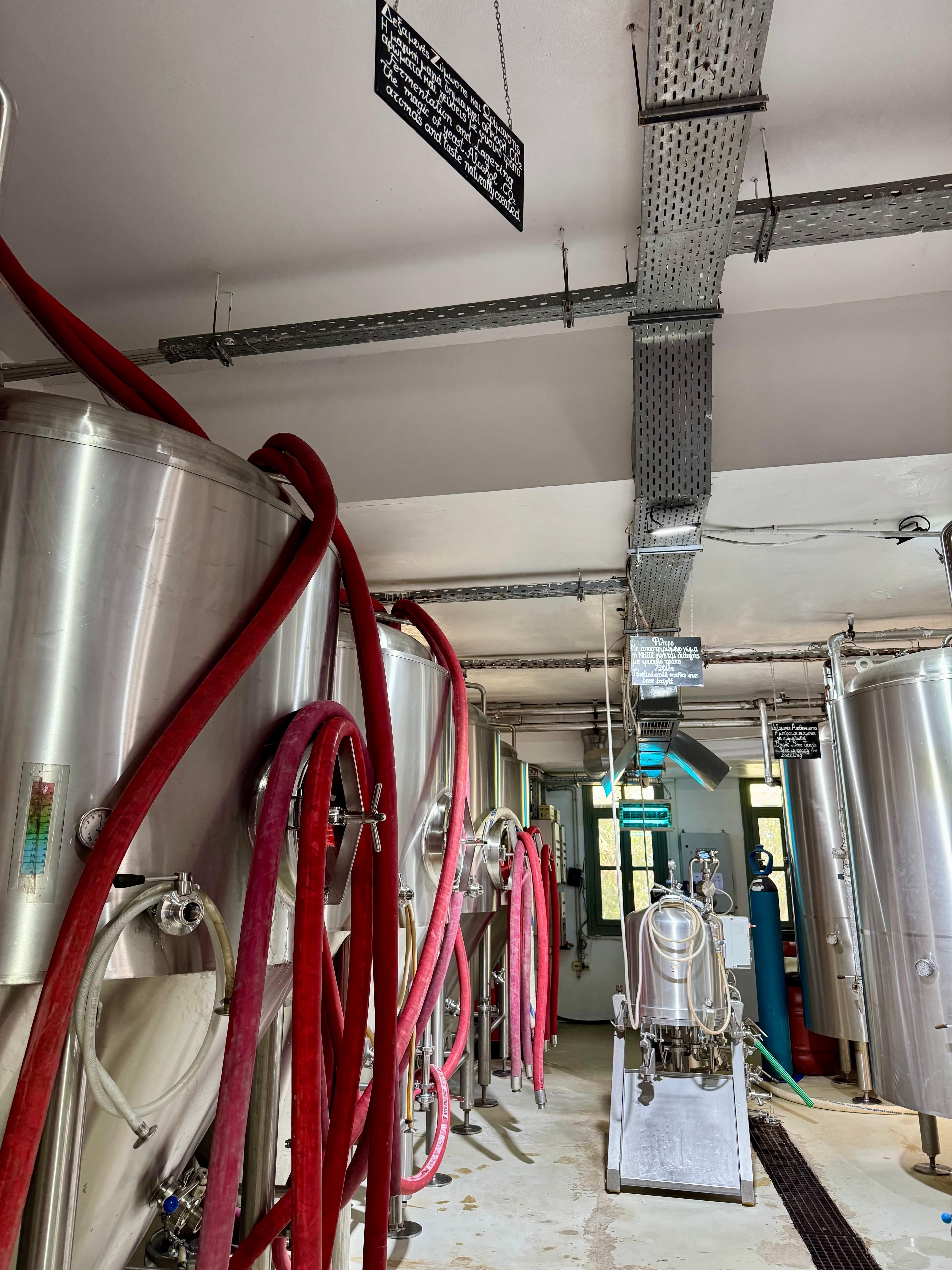
“The fermentation tanks have this strange shape because any leftovers of the malt and the hops fall down and stay there. There are two different types of yeast: the lager, when you put it in the tank, falls down and starts fermenting from bottom to top; the ale expands on the surface and ferments from top to bottom. This is a natural procedure, and the yeast has its own pace. We don't go by the clock. They measure the sugars, and when the yeast has consumed around 65 to 70 percent of the initial sugars, the fermentation is complete. The yeast gives us CO2 and alcohol. There is no longer wort; we call it beer. After the fermentation, the beer remains in the same tank to lager, from the German word that means to store, to let it mature. An ale may be ready in 8 to 15 days; a lager needs 15 days, even 3 months. We leave some space empty in the tank as a safety measure, and a manometer measures the pressure; if there is more than it should, the valve releases the extra pressure. Even if it's Sunday, even if nobody's here, even if it's night.
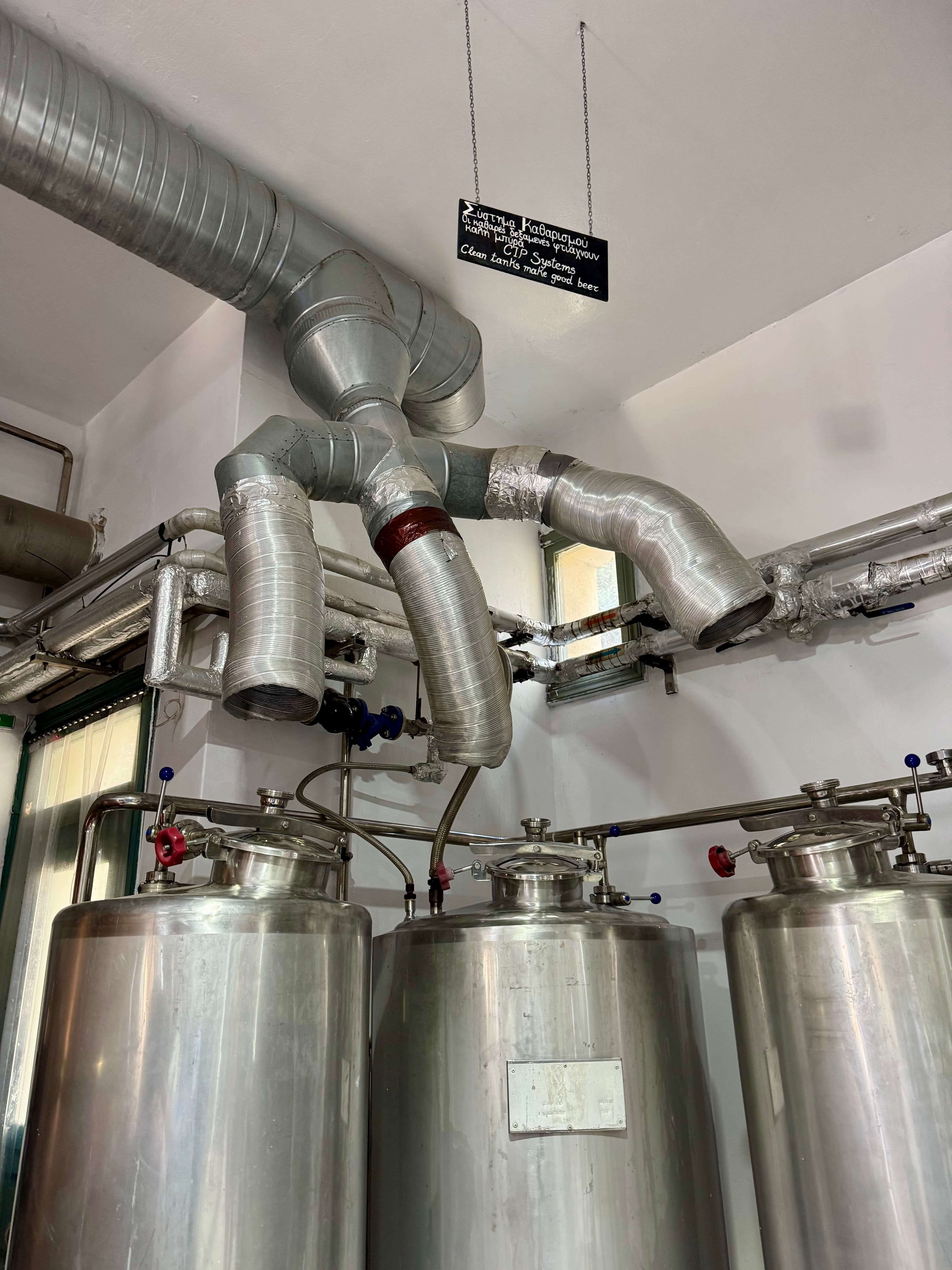
“After the beer is ready, the brewer has to make an important decision: will the beer be filtered or not? The filter is a natural stone with pores, and the particles of the yeast that were floating in the tank remain on the stone, so the beer comes out crystal clear. Many people, especially Greeks, mistakenly believe that an unfiltered beer is inferior in quality because it looks blurry. However, this is not the case, because it contains more vitamin B. Of course, in moderate consumption. Before the filling, a chemist comes daily to perform a PCR analysis. These bacteria are not harmful for human health, but they could create a very sour taste in the beer. Pasteurisation is better for big companies that deal with large amounts of liquid, but since it's a thermal procedure, it takes away some of the freshness of the beer. So instead of pasteurising, we use stabilisation: the microfilters don't kill the bacteria, the bacteria just stick on them. The bottling has four steps: labelling, rinsing, filling and closing, and before the beer leaves the brewery, a second PCR analysis. People think that since people drink more beer in the summer, we produce more in the summer. Actually, from November to March they work like crazy around here, double shifts, because in the summer the water is needed for the villages, for the visitors.”
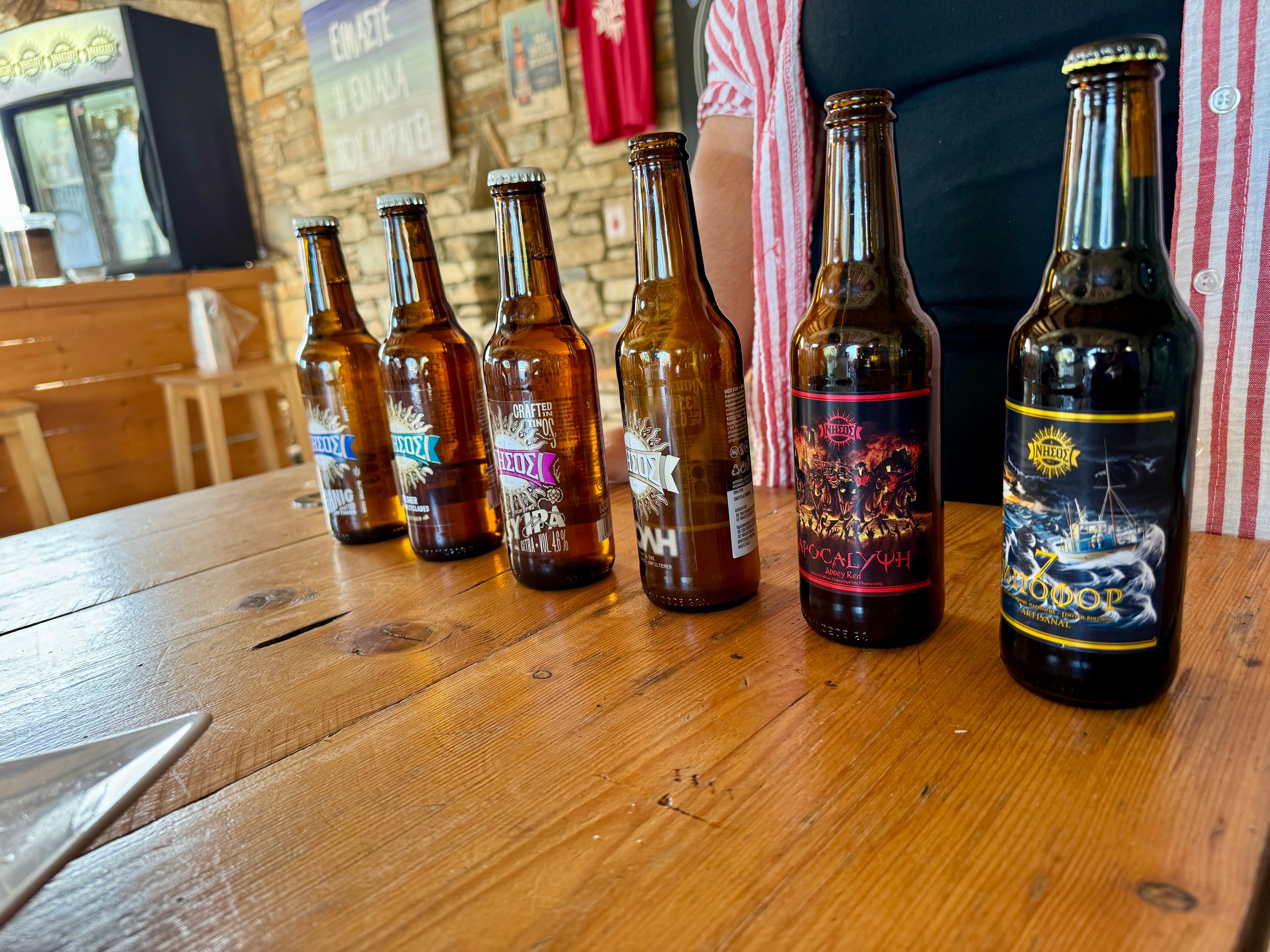
There were six different types of beer to taste, and we didn't start from the first ever produced; we started from the lightest in alcohol and then moved to stronger beers. Tonia attributed distinct characteristics of Tinos to the distinct beers of their product line:
The island's summer, fresh, aromatic and light; the wild beauty, the herbs, the dry land, the dry stones, the dovecotes everywhere; the unfiltered beauty, from the marble quarries on the western side; the religious feature of Tinos; and the weather, the meltemi.
Every time a new beer reached our table, Tonia accompanied the beer tasting with a description in her own words:
“It's called All Day because it's so mild in alcohol, only 4.5, and so mild in taste, there is no bitterness at all. So even at midday, when you're at the beach bar and you want something refreshing, yet alcoholic, you may choose it. It's 100% organic malt and gluten-free, and also very aromatic, since it uses 100% more aromatic hops than the rest. A very nice yellow, with thin bubbles going up pretty fast, and that means this is not a very thick beer.
Nissos
Greece · Tinos, Cyclades · Organic lager · 4.5%
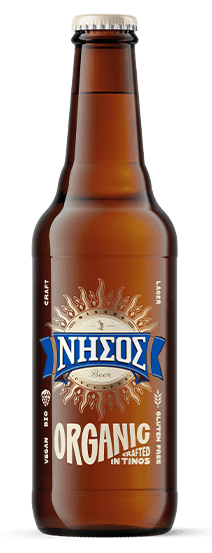
An organic, gluten-free lager brewed so mild it carries almost no bitterness, yet stays properly aromatic.
“This is the first ever produced, released back in 2013. In 2014, when it was one year old, it travelled to the European Beer Star and won a silver award in its category. It belongs to the lager family, but its type is pilsner, because the recipe was created in Pilsen, in Bohemia, today's Czech Republic. When they made this beer, they tried to make a popular type of beer, but not very strong in bitterness. It's darker and thicker than the first one, and the aromas remind us of Tinian herbs, not very fruity, not very flowery. We feel the bitterness at first, but the aftertaste is refreshing.
Nissos
Greece · Tinos, Cyclades · Bohemian-style pilsner · 5.0%
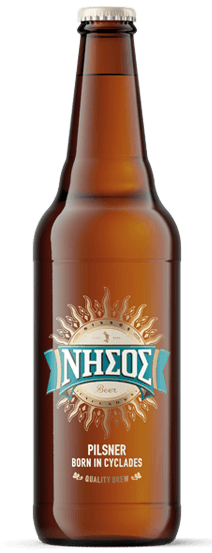
Nissos's very first release (2013), and a silver medalist at the European Beer Star the following year. A Bohemian-style pilsner with Tinian herbs on the nose, an upfront bitterness, and a refreshing finish.
“In Greece, IPA is something very unique; it has been introduced over the last three to four years by microbreweries, and mostly young people have started exploring it. This is a session IPA, milder than an IPA across the Atlantic would be, with 4.6 alcohol. When the British wanted to send their beer to their troops in India, the journey was months long and the beer arrived spoiled, so they used the dry hopping method, adding fresh hops inside the fermentation tank. The beer arrived fresh, and the aromas were so exotic that they started making this new type of beer even in England. The label is pink, like the bougainvillea on the white houses with blue windows of the Cyclades, and like the bougainvillea, dry hopping adds intensity. Exotic notes of pineapple and fresh lemon, watermelon in the taste; a bit more bitter, but so refreshing and so fruity that it covers the bitterness.
Nissos
Greece · Tinos, Cyclades · Dry-hopped session IPA · 4.6%
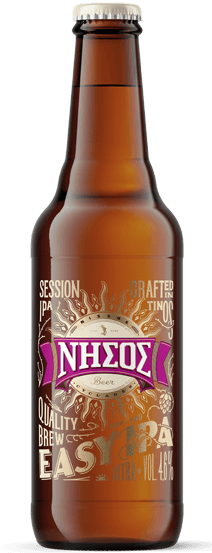
A dry-hopped session IPA with pineapple, fresh lemon, and watermelon fruitiness that carries right through the bitterness.
“Even the logo is a bit blurry, and it's not because you're drunk. This is the unfiltered one. It belongs to the lager family, but its type is Keller, which in German means cellar, because in medieval Germany they were producing beer in the cellars of the restaurants. One day, a restaurant ran out of beer, and the owner explained that the beer in the cellar wasn't filtered, so it wasn't ready. The people said don't worry, and asked for keller beer, straight from the cellar. We can feel notes of bread in the nose, it has a very rich taste, perfect to accompany light meals, and the aftertaste, no matter the slight bitterness, reminds us of yellow fruit like the apricot. This was the visitors' choice last year.
Get new posts in your inbox
No spam. Just new stories, recipes, and places, whenever they're published.
Nissos
Greece · Tinos, Cyclades · Unfiltered Keller-style lager · 6.2%
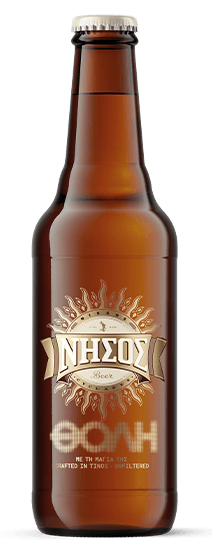
An unfiltered Keller-style lager with fresh bread on the nose, a rich body, and a lingering apricot-like fruitiness in the finish.
“Ruby red, because it uses all the types of malt, the caramelised too. This is an abbey-style beer that uses the technique Belgian monks were using in monasteries, to make beer in order to have income for charity: double fermentation. When the fermentation stops, they add crystallised sugar and an extra wine yeast, and a second fermentation starts, which gives more alcohol, 6.5, notes of caramel because of the sugar and notes of red wine because of the yeast. While boiling, they also let it rest for some minutes, and this is why we can feel cinnamon. The name connects the religious feature of the Belgian monks with a Greek religious feature, and on the label we can see the four horsemen of the Apocalypse, and hands rising from purgatory, asking for salvation. In 2022 it travelled to Belgium and won the gold award at the Brussels Beer Challenge. A rather Christmassy beer: orange, clove, cinnamon, and caramel while you taste it. Perfect for cooking as well, beef and minced meat, and to drink in the winter.
In Greece, we're trying to reverse the idea that beer is only for summer.
Nissos
Greece · Tinos, Cyclades · Abbey-style, double fermentation · 6.5%
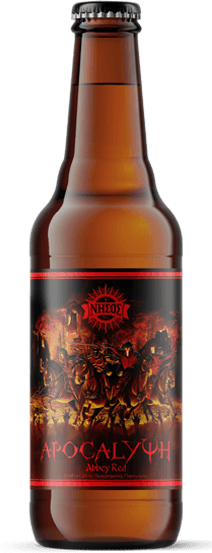
A limited-edition, abbey-style beer with a second fermentation, ruby red in the glass, with orange, clove, cinnamon, and caramel notes. Gold medalist at the Brussels Beer Challenge, 2022.
“This one needs 12 to 14 degrees Celsius. On the label we can see a boat struggling with the waves: all these islands, during the summer, mostly mid-July to mid-August, suffer from strong north winds, the meltemi. It's also a lager, but its type is Baltic porter. Porters, after their shift, wanted to drink some beer, but they couldn't afford it, so in the pubs they were pouring together the leftovers from the rest, and it looked dark. After some years, they made a dark beer in the Baltic that looked like the porter beer, and they called it Baltic porter. It's pitch black like a freddo espresso or a coke, because it uses both basic and roasted malt, and the roasted malt gives the aromas of coffee, cocoa and a bit of chocolate. You can eat the chocolate, then try again, and see how the taste changes. I also make tiramisu with this beer: instead of soaking the ladyfingers in espresso, I use this beer, which has both alcohol and coffee taste.”
Nissos
Greece · Tinos, Cyclades · Baltic porter · 7.0%
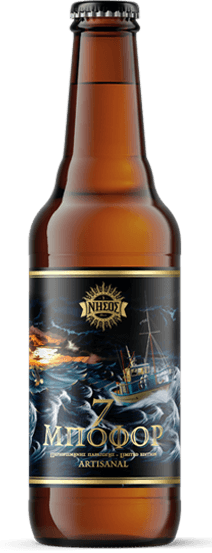
A limited-edition Baltic porter, pitch black, with coffee, cocoa, and chocolate carrying through to a long finish.
Serve Best served at 12–14°C.
When you find yourself on the welcoming island of Tinos, one of the best ways to spend a relaxing afternoon after a day at the beach is to try Nissos beers. And if you don’t make it all the way to the brewery, you can always find them all over the island and even beyond.
Tinos, Greece
Epar.Od. Tinou-Ormou Agiou Ioannis, Tinos 842 00, Greece
One of Greece's first microbreweries, founded in 2012 by Alexandros Kouris in a converted restaurant on Tinos.