Place6′
Dogue's Journey from Panama to Zurich
A wedding that paved the way for visiting coffee farms
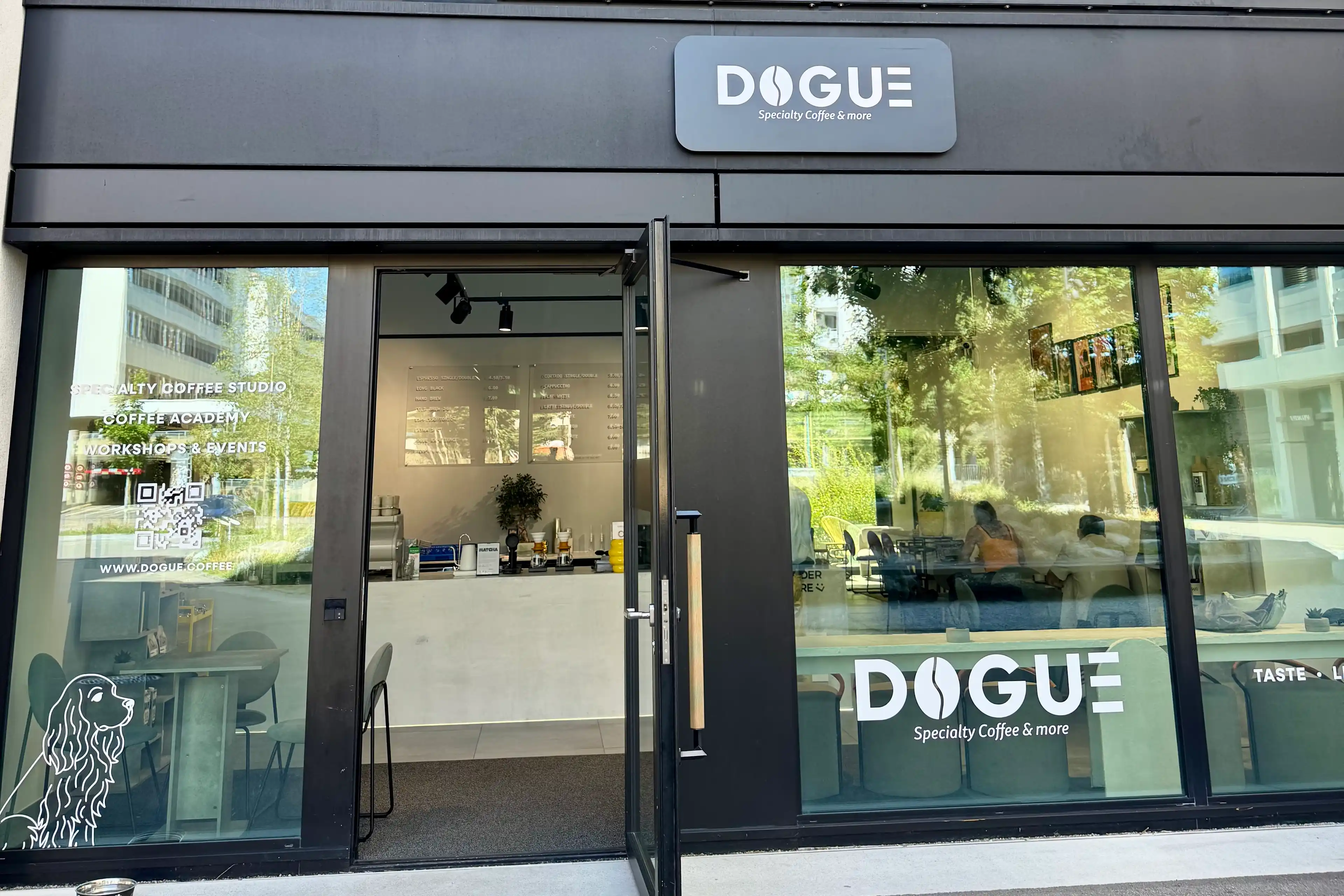
The display case at the entrance to Dogue.
6 October 2026
A wedding that paved the way for visiting coffee farms
The display case at the entrance to Dogue.
If there’s one thing I think still has a future in Zurich, it’s the cafés or small shops that catch your eye as you walk down the street. The city has seen tremendous growth over the past decade, and this includes the construction of new buildings to meet the needs of the city and its ever-growing population, which rarely include a store at street level in their plans. In a neighborhood in Altstetten, fortunately, Dogue is the exception. A long-awaited addition that I hope is here to stay.
I was lucky enough to meet Emil and Semra long before we finally got around to talking about this venture after Dogue opened its doors. One day, just like any other, I happened to be passing by the spot where Dogue is located, and out of curiosity I peeked inside to see if there really was a café behind the windows covered in stickers. To my surprise, Semra opened the door for me, and Emil offered me the first coffee I’d ever had at the café — even before it officially opened. One of the first days of August, I had the chance to talk with Emil about how they ended up here and how they discovered the coffee farms in Panama thanks to a wedding.
Q: Which regions or farms are you currently sourcing coffee from?
Right now the focus isn’t on one single origin. Colombia and Panama are the spotlight, because their terroir shows what coffee can taste like when the climate is right for growing it. This year, fluctuating temperatures affected production in both places: lower yields, higher prices. Beyond that, I want Dogue’s cups to move across origins so the differences in taste come through; for instance, a Geisha variety from Mexico next to one from Colombia. Ethiopia comes up often too; people curious about specialty coffee already know that coffee is grown in Ethiopia and are more willing to try something a little further from what they’re used to.
I think the relationship that stands out is with Finca Al Puente, a farm in Honduras. In 2023 the family behind it visited Bulgaria, and I got to meet them and hear their story directly: how the farm invests in its community by building housing and paying fair wages, and how their production keeps expanding without losing consistency.
Working with people I’ve actually met, and knowing how the coffee was grown before it reaches me, matters more than what’s printed on the bag.
Q: How did the relationship with these growers begin?
Visiting Panama was the real turning point. It was my first time seeing a harvest up close, picking cherries and tasting coffee straight off the farm. We visited both well-known names and smaller producers, and the surprise was that the bigger farms turned out to be the most generous hosts. At Altieri, the family organized a full coffee tour and cupping. Next door at Lamastus, another farm tour walked us through removing the dried skin from the coffee cherry. At Hartman Farm, a cupping turned into five hours with the whole family: a home-cooked meal, an invitation to stay the night, hospitality I still find remarkable. Dogue didn’t exist yet at that point, so no coffee has come from Hartman — at least not yet. Altieri is on the menu currently; coffee from the other farms comes through in smaller quantities.
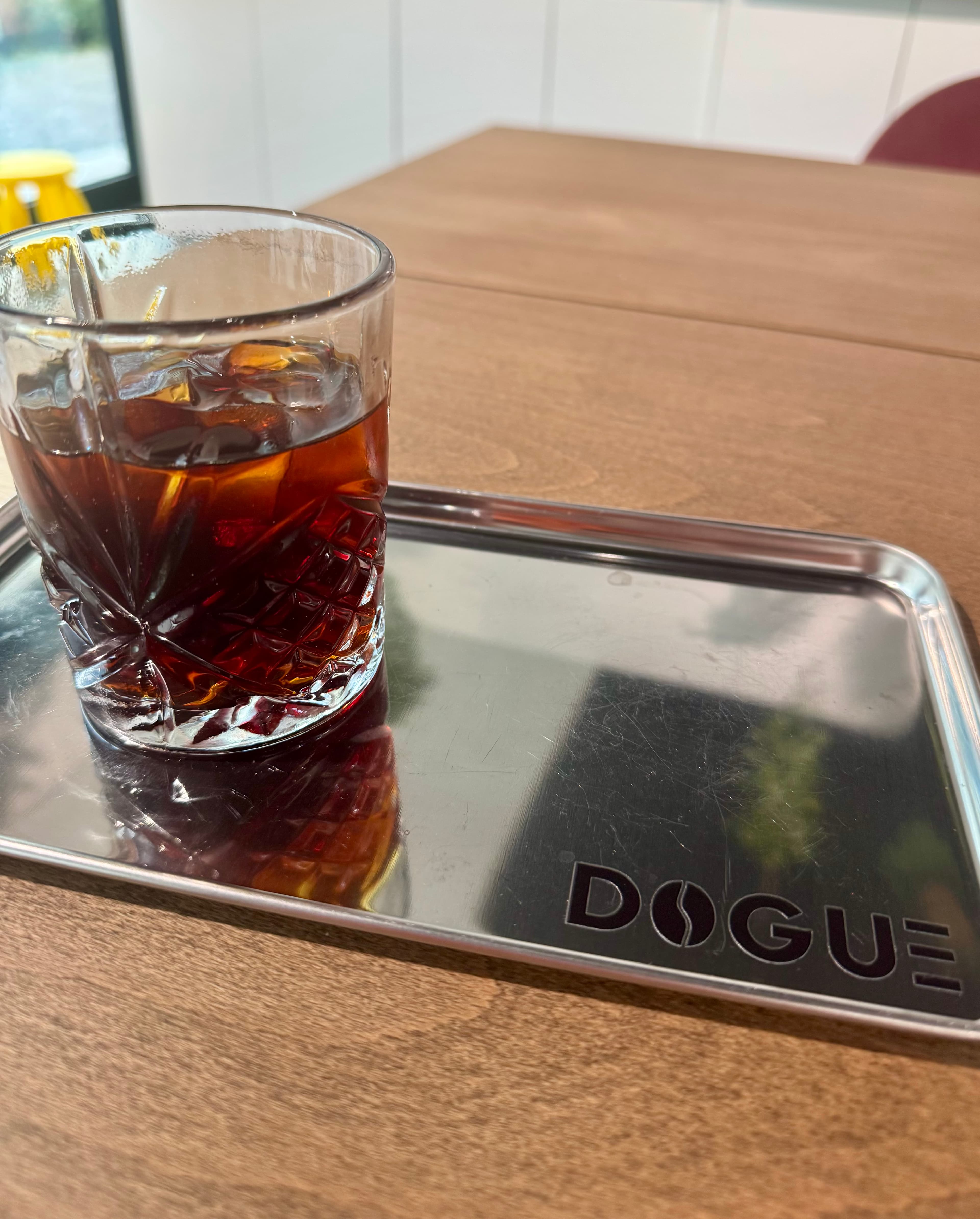
Q: Is there a specific farm or producer with a story that stands out?
Manuel Alexander Barsallo, from Agricola Gesha, wasn’t someone I knew before that Panama trip. I first met the people he works with at the Coffee Festival in Geneva. They invited me to visit their farm if I ever came to Panama, and that's where I later met Manuel. Manuel showed me how things actually work: how to approach farmers, how those relationships get built, and introduced me to the growers directly. A near-stranger ended up opening the door to the entire Panama experience.
Q: How do you decide which beans become espresso vs. filter?
Tasting, mostly. Most of the coffees I work with can go either way. The roaster’s job is finding a level that sits in the middle: understanding what a specific bean can do. From there it’s about espresso craft: temperature, dose, pressure. I still think of myself first and foremost as a barista, chasing the balance between serving something consistently good and staying curious enough to keep experimenting.
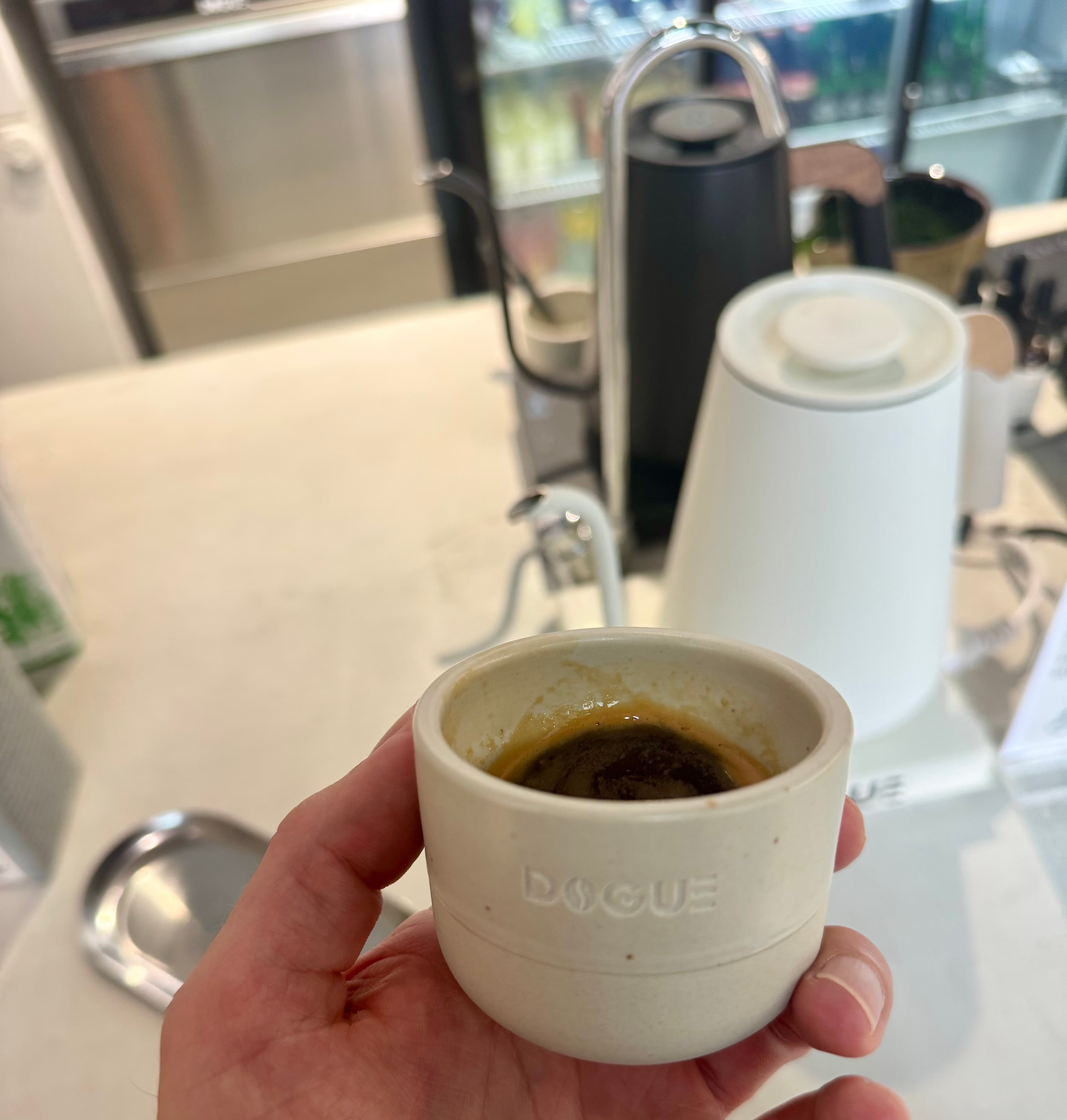
Q: What are your criteria when cupping new samples?
The simplest test comes first: do I actually like it? Beyond that, a coffee has to earn its place on the menu, by bringing something the current lineup doesn’t already offer. In the future I would like to do open cuppings so customers can help shape what gets added; it’s a new idea, still taking shape, and I’ve already brought friends in to cup alongside me and compare what I like against what they like. The final call stays personal. I’d only add a coffee that fits what I want Dogue to serve, and that I like for my own reasons.
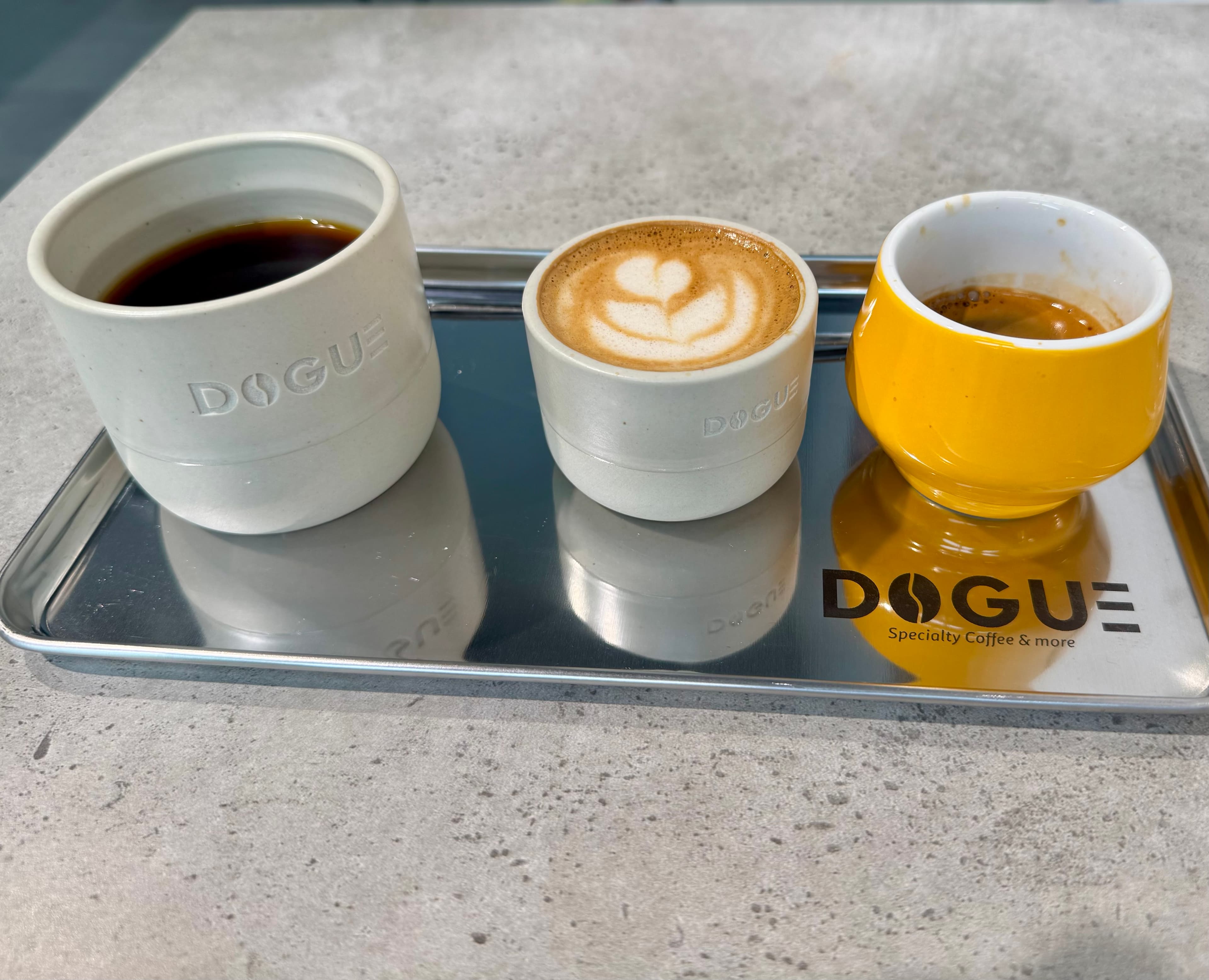
Q: How did you come up with the Dogue Experience?
The name came from Semra. The idea itself is coffee served in three stages, so a guest can actually taste how one coffee changes across preparations: an espresso, a milk drink, and a filter coffee, moving from pressure and concentration toward the bean’s most direct expression. In my view, filter coffee is where a coffee’s real character shows. It’s a lot of coffee in one sitting, meant to be shared and taken slowly — which is why I’ll sit with guests myself and walk through what’s actually happening in the cup at each stage.
Get new posts in your inbox
No spam. Just new stories, recipes, and places, whenever they're published.
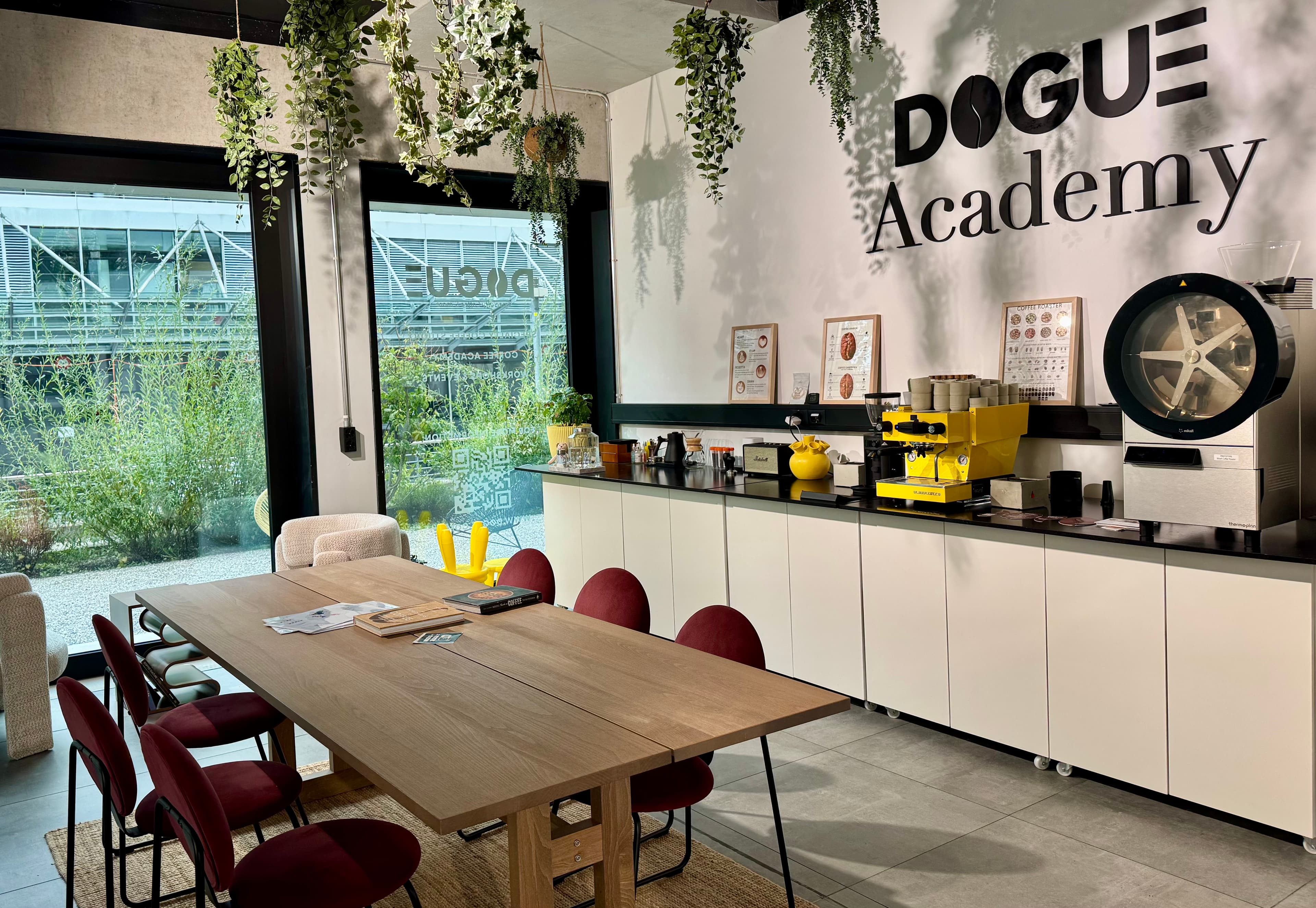
Q: What do you wish customers understood better about the journey from farm to cup?
That the door is open. Before Dogue I helped open a handful of coffee spots in Bulgaria, and the lesson carried over: people can feel whether you actually love what you do, and that’s what makes them want to stay. Coffee at Dogue should be an experience people genuinely enjoy, not something that needs decoding. The spectrum of coffee, and why a specific bean ended up in someone’s cup, should be easy to follow without a lecture. So far, people are buying into the idea of trying something different on every visit.
And the real invitation is simple: if you’re even a little curious, come in.
So if you’re in Zurich and want to try one of the coffees that Emil has chosen to serve, then you know exactly where to find him. I hope more ventures that bring neighborhoods to life continue to open and thrive. See you at the next coffee at Dogue.
Zürich, Switzerland
Baslerstrasse 73, 8048 Zürich, Switzerland
A specialty coffee bar in Altstetten, run by Emil and Semra, sourcing directly from farms in Panama, Colombia, and beyond.